Wednesday, August 07, 2013

1 In 5 U.S. Residents Speak A Language Other Than English At Home

Photo Credit: Ryan Ozawa
A report recently released by the U.S. Census Bureau provides insight to the growing number of U.S. families that speak a language other than English while at home. Interestingly, the report shows "that more than half (58 percent) of U.S. residents 5 and older who speak a language other than English at home also speak English "very well."

Other findings from the report:
"The report shows that the percent speaking English "less than very well" grew from 8.1 percent in 2000 to 8.7 percent in 2007, but stayed at 8.7 percent in 2011. The percent speaking a language other than English at home went from 17.9 percent in 2000 to 19.7 percent in 2007, while continuing upward to 20.8 percent in 2011. 
"This study provides evidence of the growing role of languages other than English in the national fabric," said Camille Ryan, a statistician in the Census Bureau's Education and Social Stratification Branch and the report's author. "Yet, at the same time that more people are speaking languages other than English at home, the percentage of people speaking English proficiently has remained steady." 
Of the 60.6 million people who spoke a language other than English at home in 2011, almost two-thirds (37.6 million) spoke Spanish. Reflecting the overall trend, the percentage speaking Spanish at home grew from 12.0 percent in 2005 to 12.9 percent in 2011. In contrast to the overall trend, however, the percent who spoke Spanish at home but spoke English "less than very well" declined from 5.7 percent to 5.6 percent over the period. 
The recent increase in non-English speakers continues a trend dating back three decades. Between 1980 and 2010, the number of people speaking a language other than English climbed 158 percent, compared with 38 percent for the overall population 5 and older. The seven-fold increase in Vietnamese speakers was the highest percentage jump among 17 of the most common languages, while Spanish speakers posted the largest numerical gain (25.9 million). In contrast, the number speaking Italian, German, Polish, Yiddish and Greek declined over the period. 
Other highlights: 
  • In addition to English and Spanish, there were six languages in 2011 spoken at home by at least 1 million people: Chinese (2.9 million), Tagalog (1.6 million), Vietnamese (1.4 million), French (1.3 million), German (1.1 million) and Korean (1.1 million).
  • The prevalence of people speaking non-English languages at home varied widely across states, from 44 percent of the population in California to 2 percent in West Virginia.
  • Laredo, Texas, led all metro areas with 92 percent of residents age 5 and older speaking a language other than English at home.
  • Metro and micro areas in the West, South and Northeast tended to have higher levels of people speaking non-English languages at home. Those in the Midwest tended to have lower levels, with the exception of Illinois.
  • Of Spanish speakers, 45 percent of foreign-born naturalized citizens spoke English "very well" compared with 23 percent of foreign-born non-citizens. Those who were native-born, had at least a bachelor's degree or were not in poverty were more likely to speak English "very well."
  • Eighty percent or more of French and German speakers spoke English "very well." In contrast, less than 50 percent of those who spoke Korean, Chinese or Vietnamese spoke English "very well". The rate for Spanish speakers was 56 percent."
To look at the complete report, including visual maps illustrating which languages are spoken throughout the United States, please click here.

(HT: Buzzfeed)

Monday, August 05, 2013

In Love’s Service, Only Wounded Soldiers Can Serve

Photo Credit: Wally Gobetz
From Brennan Manning's Abba's Child:
"God not only forgives and forgets our shameful deeds but even turns their darkness into light. All things work together for those who love God, “even,” Augustine of Hippo added, “our sins.” 
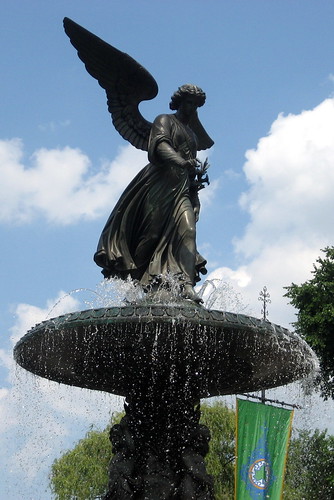
Thornton Wilder’s one-act play “The Angel That Troubled the Waters,” based on John 5:1-4, dramatizes the power of the pool of Bethesda to heal whenever an angel stirred its waters. 
A physician comes periodically to the pool hoping to be the first in line and longing to be healed of his melancholy. The angel finally appears but blocks the physician just as he is ready to step into the water. The angel tells the physician to draw back, for this moment is not for him. The physician pleads for help in a broken voice, but the angel insists that healing is not intended for him. 
The dialogue continues — and then comes the prophetic word from the angel: “Without your wounds where would your power be? It is your melancholy that makes your low voice tremble into the hearts of men and women. The very angels themselves cannot persuade the wretched and blundering children on earth as can one human being broken on the wheels of living. In Love’s service, only wounded soldiers can serve. Physician, draw back.” 
Later, the man who enters the pool first and is healed rejoices in his good fortune and turning to the physician says: “Please come with me. It is only an hour to my home. My son is lost in dark thoughts. I do not understand him and only you have ever lifted his mood. Only an hour.... There is also my daughter: since her child died, she sits in the shadow. She will not listen to us but she will listen to you.” 
Christians who remain in hiding continue to live the lie. We deny the reality of our sin. In a futile attempt to erase our past, we deprive the community of our healing gift. If we conceal our wounds out of fear and shame, our inner darkness can neither be illuminated nor become a light for others. We cling to our bad feelings and beat ourselves with the past when what we should do is let go. As Dietrich Bonhoeffer said, guilt is an idol. But when we dare to live as forgiven men and women, we join the wounded healers and draw closer to Jesus."

Friday, August 02, 2013

Local Pastors Seek Healing In Wake Of Trayvon Martin Trial

Photo Credit: Werth Media
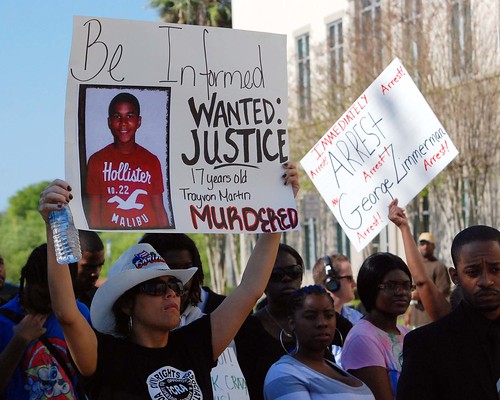
Less than a week after George Zimmerman was acquitted in the killing of Trayvon Martin, rallies were held throughout the United States calling for 'Justice for Trayvon.' Although a Sanford, Florida jury did not find Zimmerman guilty in Trayvon's death, millions of Americans feel that justice has not been realized in the case.

In the aftermath of the shooting of Trayvon and its subsequent trial, a number of issues connected to this tragedy have been the focus of intense media coverage. Although many consider the era in which we currently live to be "post racial", the death of Trayvon has re-ignited national discussions on gun control, racial profiling, homicide rates of young black men and the differing views of the criminal justice system which exist within the white and black communities.

If we have learned anything from the events surrounding the death of Trayvon Martin, it is that we do not all view the world the same way. Even within the Christian community, self-professed followers of Jesus Christ do not agree on who was at fault in Trayvon's death nor what justice looks like in the midst of the Zimmerman's acquittal.

However, a small group of Central Florida pastors, along with some other Christian leaders from other parts of the country, are seeking to listen to one another in order to help facilitate healing both in Sanford and in the rest of the country. Jeff Kunerth of The Orlando Sentinel provides insight:
"A group of black and white Sanford-area pastors united by the shooting death of Trayvon Martin reconvened Wednesday for a racial-reconciliation forum they hope will spread nationwide. They hope Sanford, which did not experience violence after the acquittal of George Zimmerman, will provide a model for other cities. 
"I contend that Sanford, Florida, will be the place people will point to and say, 'These people have learned how to do it,'" said Raleigh Washington, president of the Denver-based Promise Keepers. 
About 30 ministers — including pastors from Atlanta, Los Angeles and Washington — attended the forum at Charisma Media in Lake Mary with hopes of launching a national Reconciliation and Relationship Initiative. The group drafted The Sanford Declaration, which could be used for multiracial forums in other cities.

"Our real vision is to encourage this kind of dialogue all over the country," said Steve Strang, CEO of Charisma Media, who has scheduled a news conference today to announce the group's plans for the nationwide initiative. The press conference will be at 10:30 a.m. outside First Shiloh Missionary Baptist Church, 700 S. Elm Ave., Sanford.

Key to The Sanford Declaration is a commitment to form friendships, fellowships and relationships between pastors that transcend race and culture. Several of the pastors said that without the death of Trayvon Martin, they never would have become close friends with ministers of a different race. 
"A horrible tragedy has brought us together, has slapped us upright and said there's a history here," said Joel Hunter, senior pastor of Northland, A Church Distributed in Longwood. "The inertia of history can only be interrupted by relationships." 
However, the Rev. Harry Rucker, pastor of First Shiloh Missionary Baptist Church, argued that Sanford remains essentially unchanged despite the closer ties between black and white ministers. 
"We're united, we're together, but racism still exists," Rucker said."
In light of the many ways that black and white Christians can often misunderstand one another, dialogue and relationship building across racial lines are a great place to start the healing process. When we enter into the world of another with the intent to understand where they are coming from (and not simply to just let our opinions be heard), trust and reconciliation can begin to take place. Our distrust of one another often occurs because we simply don't know each other. Dr. Martin Luther King, Jr. said the following:
"We often hate each other because we fear each other; we fear each other because we don’t know each other; we don’t know each other because we can not communicate; we can not communicate because we are separated."
Christians of differing persuasions coming together for dialogue can help facilitate the healing in a racially divided community and nation. It doesn't mean we all have to act the same or think alike... or even agree with one another. But in order to be unified within the family of God, we need to be willing to step out of our comfort zone and listen to those different from us. I pray that this tragedy may become a catalyst for lasting unity among Christians in Central Florida...and beyond.

To read complete coverage from The Orlando Sentinel on Trayvon Martin and George Zimmerman, please click here.