Showing posts with label universities. Show all posts

Wednesday, August 22, 2018

What Is True For The College Freshmen Of 2018?

Photo Credit:
THINKGlobalSchool
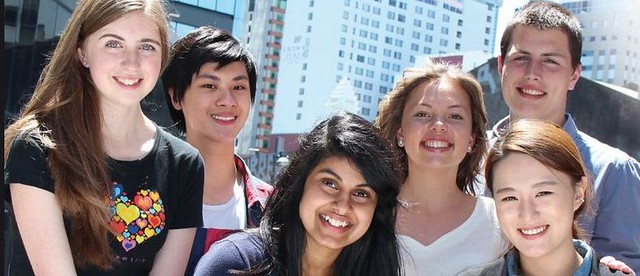
Each year at the start of the new school year Beloit College releases what they call the Mindset List -- a list of important facts, events and people which influence the worldview and perspective that this year's college freshmen class brings with them.

This year's list, which is made up for the graduating class of 2022, represents those students primarily born in 2000. This year's class is unique for me on a personal level as my firstborn child is entering the University of Florida as a freshman this fall.

As you can see, this year's list highlights advances in technology, significant world events, and the many ways that today's college students experience the world differently from their parents.

You can read the complete list here but I've included some entries below that I found particularly interesting:

  • They are the first class born in the new millennium, escaping the dreaded label of “Millennial,” though their new designation—iGen, GenZ, etc. — has not yet been agreed upon by them.
  • Outer space has never been without human habitation.
  • They have always been able to refer to Wikipedia.
  • They have grown up afraid that a shooting could happen at their school, too.
  • People loudly conversing with themselves in public are no longer thought to be talking to imaginary friends.
  • Investigative specials examining the O.J. Simpson case have been on TV annually since their birth.
  • Same-sex couples have always found marital bliss in the Netherlands.
  • When filling out forms, they are not surprised to find more than two gender categories to choose from.
  • Presidential candidates winning the popular vote and then losing the election are not unusual.
  • Parents have always been watching Big Brother, and vice versa.
  • They’ve grown up with stories about where their grandparents were on 11/22/63 and where their parents were on 9/11.
  • There has never been an Enron.
  • The Prius has always been on the road in the U.S.
  • They never used a spit bowl in a dentist’s office.
  • They have never seen a cross-town World Series.
  • There has always been a Survivor.
  • “You’ve got mail” would sound as ancient to them as “number, please” would have sounded to their parents.
  • Mifepristone or RU-486, commonly called the “abortion pill,” has always been available in the U.S.
  • A visit to a bank has been a rare event.
  • They have never had to deal with “chads,” be they dimpled, hanging, or pregnant.
  • Exotic animals have always been providing emotional support to passengers on planes.
  • Thumbprints have always provided log in security—and are harder to lose—than a password.
  • Robots have always been able to walk on two legs and climb stairs.
  • None having served there, American Presidents have always visited Vietnam as Commander-in-Chief.
  • There have always been space tourists willing to pay the price.
  • Mass market books have always been available exclusively as Ebooks.
  • Oprah has always been a magazine.
  • Donny and Marie who?
  • There have always been more than a billion people in India.
  • Films have always been distributed on the Internet.
  • Environmental disasters such as the BP Deepwater Horizon, and the coal sludge spill in Martin City, Ky., have always exceeded the Exxon Valdez oil spill.
  • The detachable computer mouse is almost extinct.

Please remember to pray for the 21 million U.S. college students that are starting classes over the next few weeks. They are part of a changing world...and they also have the opportunity to influence how the world changes.

Wednesday, June 21, 2017

Weekly Web Roundup (6/21/17)

Photo Credit: Richard Bromley
Here is a collection of items from around the web that caught my attention the past couple of weeks:

How Billy Graham Mainstreamed Evangelicals by Frances Fitzgerald (The Daily Beast)
"Graham was, as he himself said, still a country boy. Tall and awkward, he had a rough-hewn voice and was given to flailing his arms and stabbing the air with a raised finger. When he told Bible stories, he used slangy vernacular and acted out the parts—preening and strutting in the role of Belshazzar, or prancing around like an uppity pig in the story of the Prodigal Son. Calling for revival, he would stalk the platform, assaulting the audience with vivid descriptions of the horrors that came from man’s rebellion against God. According to his Youth for Christ peers, Graham had a kind of incandescence on the platform that came from his passionate sincerity."
Practicing Privilege in the Local Church by Michelle Van Loon (Patheos)
"Most of us are occupied trying to get our needs met for belonging and significance. Those needs are really important! God himself wired us that way. When a church staff, each holding positions of social privilege within that small community, are focused on their own “interpersonal dynamics and church politics”, it communicates that they might be focused on getting their needs for belonging and significance met. The experience B. had in the church gave him a new way to think about how he’d functioned in his previous role as pastor. Though he was a very others-focused, servant-hearted guy, he recognized he’d succumbed to the temptation to form and hoard a clique around himself so he could get those needs of his met."
The Number One Reason Missionaries Go Home by Paul Akin (The Gospel Coalition)

I have heard it often communicated that the primary reason why missionaries leave the field is because of difficulties with other team members. Here, Paul Akin suggests five common reasons why this happens: 1) Unmet expectations, 2) Conflict, 3) Stress 4) Comparison/Jealousy and 5) Sin. He briefly offers a few suggestions as solutions.

If Humble People Make the Best Leaders, Why Do We Fall for Charismatic Narcissists by Margarita Mayo
"Charismatic leaders can be prone to extreme narcissism that leads them to promote highly self-serving and grandiose aims.” A clinical study illustrates that when charisma overlaps with narcissism, leaders tend to abuse their power and take advantage of their followers. Another study indicates that narcissistic leaders tend to present a bold vision of the future, and this makes them more charismatic in the eyes of others. Why are such leaders more likely to rise to the top? One study suggests that despite being perceived as arrogant, narcissistic individuals radiate “an image of a prototypically effective leader.” Narcissistic leaders know how to draw attention toward themselves. They enjoy the visibility. It takes time for people to see that these early signals of competence are not later realized, and that a leader’s narcissism reduces the exchange of information among team members and often negatively affects group performance."
The Uniqueness of University Evangelism by Tim Keller & Michael Keller (The Gospel Coalition)
"Universities create environments that encourage students to rethink the beliefs of their upbringing, including their meaning in life, values, and identity. That, of course, is a challenge to students who come into undergraduate courses with a Christian faith. But it also means students from other backgrounds and communities are dislodged from them and are freer to consider the claims of Christianity than they would’ve been at home. Also, while it may be considered impolite in much of society to try to convert people to your belief system, on university campuses this is essentially what everyone’s trying to do to everyone else, with vigor. The free market of ideas and the discussions that ensue inside and outside the lecture room aren’t value-neutral exchanges, but rather places of persuasion where individuals debate and accept differing explanations of the good, the true, and the beautiful. Evangelism fits right in."
Why Parents Need To Limit Screens And Make Boredom Great Again by Brooke Shannon (The Federalist)
"Unfortunately, the increasing ubiquity of screens diminishes opportunities for children’s brains to wander, create, and imagine. From carpools to the classroom to big sister’s sporting events to the dinner table, screens are destroying boredom. Why would a six-year-old stare out the car window or talk to a friend on the way to school when the latest episode of “Paw Patrol” is on? If a three-year-old can play a game on a tablet, why would he watch his big brother’s soccer game? Many waiting rooms have become quieter, and some dinner tables have gone silent. But at what cost? Too much screen time—and not enough boredom—can lead to poor social skills, shorter attention spans, and a need for instant gratification. How many future inventors will be lost without experiencing boredom? Where will the great orators and writers of this generation come from if imagination is not nurtured today?"
Why We Argue Best with Our Mouths Shut by Christine Herman (Christianity Today)
"The problem with persuasion is not just that people are stubborn; people change their minds all the time about all sorts of things. The real challenge arises when someone’s beliefs are tied to their identity. If changing your belief means changing your identity, it comes at the risk of rejection from the community of people with whom you share that identity. Knowing this, it’s not surprising that people tend to seek out information that confirms a belief and outright reject anything that conflicts with it, says Dan Kahan, a psychology professor at Yale Law School. 
“They might not perceive it that way consciously,” he says. But research has shown that this phenomenon—known to psychologists as confirmation bias—is real. Kahan illustrates with a sports analogy: “Fans of opposing teams tend to see different things when there’s a close call,” he says. “And it wouldn’t be good if you stood up on your side of the stadium and said, ‘I think the guy really was out of bounds.’ ” Being rejected by the group around which we have formed our identity can be painful. Thus, in the face of evidence that runs contrary to our beliefs, it only makes sense that we put up our guard."
What Apple Thought the iPhone Might Look Like in 1995 by Adrienne LaFrance (The Atlantic)
"To those who had been watching Apple since the 1980s, however, shrinking computers and videophones seemed to be always just tantalizingly out of reach, emblems of a future that would, fingers crossed, eventually arrive. But when? By 1995, even though Apple’s laptops had dipped to a svelte six pounds, and the transformative power of the internet was becoming apparent, the next great iteration of the web was barely imaginable. Today’s mobile web, the one that would be ushered in by smartphones, was still out of reach. But there were hints of what was to come."
Stuff Dads Never Say

I had the privilege of visiting my home church in Michigan - Colonial Woods Missionary Church - this past Sunday, Father's Day. This video was shown during the service and I got a big kick out of it.


Saturday, October 01, 2016

Weekly Web Roundup (10/1/16)

Photo Credit: Brook Ward
Here are some interesting stories from around the web that I've seen during this past week:

4 Principles for Political Witness in our American Babylon by Bruce Ashford (The Gospel Coalition)
"Similarly, evangelicals shouldn’t submit to the false political gods that flourish and abound in the United States of America. How do we identify the “false gods” in our own nation? We look for anything raised to a level of ultimacy that God alone occupies."
Is Columbus Day Going Extinct? by Lizzie Crocker (The Daily Beast)
"Businesses in the entire state of Alaska, however, will be closed for Indigenous Peoples Day, after Gov. Bill Walker renamed the holiday last year. The city of Cambridge, Massachusetts, will also celebrate its first Indigenous Peoples’ Day, after the City Council voted unanimously in June to change the name of a holiday whose namesake, they decided, was not worthy of celebrating."
Black Women Are Leaning In And Getting Nowhere by Emily Peck (The Huffington Post)
"Part of the problem is “invisibility,” Purdie-Vaughns writes. When the average person thinks of a “woman leader,” she argues, the image that comes to mind is a white woman ― like Sandberg. If you picture a black leader, you’re more likely to think of a black man than a black woman. “Because black women are not seen as typical of the categories ‘black’ or ‘woman,’ people’s brains fail to include them in both categories,” Purdie-Vaughns writes. “Black women suffer from a ‘now you see them now you don’t’ effect in the workplace.”"
Yes, You Should Say Something: Overcoming Awkwardness with Grieving People by Nancy Guthrie (The Gospel Coalition)
"It’s not up to you to say something that answers the significant questions they’re asking. Those take some time to work through, and if they sense your willingness to linger with them a bit in the midst of the questions rather than offer simplistic answers, they’re more likely to want to explore them with you down the road. It’s not up to you to recommend the book they need to read, the counselor they need to see, the drug they need to take. You don’t have to provide a framework for thinking and feeling their way through their loss. Really, you just have to show up and say little. What they need more than someone with a lot of words is someone with a willingness to listen without judgment, someone who seems to be entering into their hurting world for the long haul of grief."
How Should Universities Atone for Their Past Mistakes? by Alia Wong (The Atlantic)
"While black enrollment at colleges and universities has increased dramatically in the last two decades, the share of students at top-tier institutions who are African American has actually dropped. Fewer than 4 percent of students at the most competitive colleges in the United States come from the nation’s lowest socioeconomic quartile. Statues, seals, and buildings continue to honor people who embraced slavery and sought to keep these kinds of students out."
How Did Hitler Rise to Power? : New TED-ED Animation Provides a Case Study in How Fascists Get Democratically Elected (Open Culture)