Showing posts with label first nations. Show all posts

Friday, April 15, 2016

26 Films To Help You Understand Race & Culture

Photo Credit: Wikipedia
Due to my experiences ministering in cross-cultural environments, I'm often asked about resources that can aid others in their own understanding of cultures different than their own. Several years ago, I provided a list of books that I've found particularly helpful in my own journey of learning about the experiences and background of different ethnic groups within the United States.

In a similar vein, I'd like to provide a list here of 26 films that I've personally watched or have had recommended to me that can assist us in entering into the stories of those from a variety of ethnic and cultural experiences.

These are not necessarily "Christian" movies so they may contain elements that some will find objectionable so I encourage you to check the "Parents Guide" on IMDB.com for each of these films before watching them.

One of the challenges of compiling a list like this is that one is bound to leave out a number of worthwhile selections. So instead of seeking to be exhaustive here, I've limited the number of movies. As well, I've attempted to avoid recommending films that are told from the vantage point of someone from majority culture or where the story of ethnic minorities is minimized and the "white savior" takes center stage.

I've listed movies to grow in your understanding of African Americans, Asian Americans, Latinos and Native Americans. In addition, I'm recommending several films I've seen that address the realities of marginalized groups in other parts of the world, as well as dealing with race in general.

African Americans/Blacks

  • The Color Purple (1985) - A black Southern woman struggles to find her identity after suffering years of abuse from her father and others over 40 years.
  • Fruitvale Station (2013) - The story of Oscar Grant III, a 22-year-old Bay Area resident killed by police, who crosses paths with friends, enemies, family, and strangers on the last day of 2008.
  • Hoop Dreams (1994) - A documentary following the lives of two inner-city Chicago teenagers who struggle to become college basketball players on the road to going professional.
  • Malcolm X (1992) - Biographical epic of the controversial and influential Black Nationalist leader, from his early life and career as a small-time gangster, to his ministry as a member of the Nation of Islam.
  • Selma (2014) - A chronicle of Martin Luther King's campaign to secure equal voting rights via an epic march from Selma to Montgomery, Alabama in 1965.

Asians/Asian Americans

  • Bend it Like Beckham (2002) - The daughter of orthodox Sikh rebels against her parents' traditionalism and joins a soccer team.
  • Better Luck Tomorrow (2002) - A group of over-achieving Asian-American high school seniors enjoy a power trip when they dip into extra-curricular criminal activities.
  • Gran Torino (2008) - Disgruntled Korean War veteran Walt Kowalski sets out to reform his neighbor, a Hmong teenager who tried to steal Kowalski's prized possession: a 1972 Gran Torino.
  • The Joy Luck Club (1993) - The life histories of four Asian women and their daughters reflect and guide each other.
  • The Namesake (2006) - American-born Gogol, the son of Indian immigrants, wants to fit in among his fellow New Yorkers, despite his family's unwillingness to let go of their traditional ways.

Hispanics/Latinos

  • Cesar Chavez (2014) - A biography of the civil-rights activist and labor organizer Cesar Chavez.
  • The Lost City (2005) - In Havana, Cuba in the late 1950s, a wealthy family is caught in the violent transition from the oppressive regime of Batista to the government of Fidel Castro.
  • My Family (1995) - This epic film traces over three generations of a Mexican American immigrant family's trials, tribulations, tragedies and triumphs.
  • Selena (1997) - The true story of Selena Quintanilla-Perez, a Texas-born Tejano singer who rose from cult status to performing at the Astrodome, as well as having chart topping albums on the Latin music charts.
  • Stand and Deliver (1988) - The story of Jaime Escalante, a high school teacher who successfully inspired his dropout prone students to learn calculus.

Native Americans/First Nations

  • Bury My Heart at Wounded Knee (2007) - A chronicle of how American Indians were displaced as the U.S. expanded west. Based on the book by Dee Brown.
  • On the Ice (2011) - In Barrow, Alaska, teenagers Qalli and Aivaaq find their bond tested when a seal-hunting trip goes wrong, resulting in the death of their friend.
  • Powwow Highway (1989) - A member of the Northern Cheyenne tribe of Lame Deer battles greedy developers as he tries to persuade the council to vote against a strip-mining contract.
  • Reel Injun (2009) - A documentary film that traces the history of the depiction of Native Americans in Hollywood films.
  • Smoke Signals (1998) - Two friends from the Coeur D'Alene Indian Reservation go on a road trip to retrieve the remains of a recently deceased family member.

Other

  • Crash (2004) - Los Angeles citizens with vastly separate lives collide in interweaving stories of race, loss and redemption.
  • Do the Right Thing (1989) - On the hottest day of the year on a street in the Bedford-Stuyvesant section of Brooklyn, everyone's hate and bigotry smolders and builds until it explodes into violence.
  • Invictus (2009) - Nelson Mandela, in his first term as the South African President, initiates a unique venture to unite the apartheid-torn land: enlist the national rugby team on a mission to win the 1995 Rugby World Cup.
  • The Kite Runner (2007) - After spending years in California, Amir returns to his homeland in Afghanistan to help his old friend Hassan, whose son is in trouble.
  • Rabbit-Proof Fence (2002) - In 1931, three aboriginal girls in Australia escape after being plucked from their homes to be trained as domestic staff and set off on a trek across the Outback.
  • Schindler’s List (1993) - In Poland during World War II, Oskar Schindler gradually becomes concerned for his Jewish workforce after witnessing their persecution by the Nazis.

I hope that you'll take the time to view a few of these movies as we grow in understanding, empathy and compassion towards one another. As always, personal friendships are the best way to learn about other cultures but watching films like those listed here can help us in the process.

Monday, August 15, 2011

Should We Use Native American Sports Mascots?

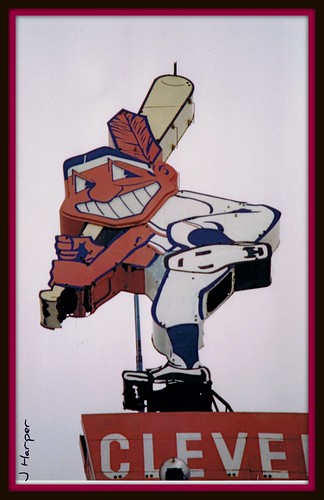
Photo Credit: BGSU86
I want you to take a good look at the image to the left. What comes to your mind when you look at that? If you're from Cleveland, it may remind you of a baseball team that you follow. But if you are of Native American descent, this image likely doesn't bring up pleasant feelings.

There has been a lot of discussion in recent years about the use of Native images in American sports, whether at the professional, collegiate, high school or other levels. If you're like most people, you probably haven't given much thought to it. You've grown up in a society that generally accepts the use of the term Redskins for an NFL team and Atlanta Brave fans doing the "tomahawk chop" at games. So is the move to ban Native American sports mascots just another attempt at political correctness or is it something more than that?

One university, the University of North Dakota, looks to be currently in the final stages of a process to change their name. CNN.com reports:
"The University of North Dakota is one step closer to retiring its nickname and mascot, but changing the school's 90-year-old Native American moniker -- the Fighting Sioux -- has not been without complications.
The school faces a Monday deadline to comply with the NCAA's policy on mascots "deemed hostile or abusive toward Native Americans."
School officials were in the process of coming up with a new name and mascot this year until North Dakota legislators passed a law ordering them to stop, according to UND spokesman Peter Johnson.
The rock and the hard place the school finds itself between marks the last gasp of a decades-long fight not just in North Dakota, but in all of college sports -- the climax (or nadir, depending on some people's perspective) of a nostalgia-imbued resistance to political correctness on the playing field."
I am generally opposed to the use of Native images and mascots for sports teams. These names and images have typically been born out of the tragic history of this nation and continue to perpetuate stereotypes and remind the First Nations people of this land of their mistreatment over the centuries. The argument is often made that the use of these names and images honor the original inhabitants of what is now known as the United States. Sadly, when white people put on "war paint", wear ceremonial headdresses, and do chants at sporting events without any knowledge or appreciation of the culture that these things come from, it comes off as much more of a mocking of that culture than anything honorable.

Although I do believe that in rare cases this is possible (I'll get to that in a minute), there are likely other ways that would serve to honor American Indians more than the caricatures that are often connected to our sports teams. Barbara Munson, of the Oneida Nation, offers some other suggestions:
Indian people do not pay tribute to one another by the use of logos, portraits or statues.
The following are some ways that we exhibit honor:
1. In most cultures to receive an eagle feather is a great honor, and often such a feather also carries great responsibility.
2. An honor song at a Pow-Wow or other ceremony is a way of honoring a person or a group.
3. We honor our elders and leaders by asking them to share knowledge and experience with us or to lead us in prayer. We defer to elders. They go first in many ways in our cultures.
4. We honor our young by not doing things to them that would keep them from becoming who and what they are intended to be.
5. We honor one another by listening and not interrupting.
6. We honor those we love by giving them our time and attention.
7. Sometimes we honor people through gentle joking.
8. We honor others by giving to them freely what they need or what belongs to them already because they love it more or could use it better than we do.
I understand that sports hold a special place in American culture. We are committed to our teams and our loyalty runs deep. We have years worth of paraphernalia connected to our teams and are hesitant to make changes to the names and images of the teams we love. Having grown up in the state of Michigan, I am well familiar with the influence that Native culture has had on current American society. The use of Native names is very common within the state and my college alma mater, Central Michigan University, is known as the Chippewas, a Native tribe that is one of the largest First Nations people groups within North America.

But I am supportive of the use of the Chippewas moniker for CMU. Does this make me a hypocrite? Well, not necessarily. Although I am generally in disagreement of the use of Native names and images in connection with sports teams, CMU is a bit of a unique situation. When I was a student there in the early nineties the university was in the midst of a major review of whether they would keep the Chippewa name or not. It was during a time when other major schools nearby (e.g. Miami (Ohio), Eastern Michigan, etc.) were changing their names and it appeared that Central would follow suit.

But at the end of this review it was decided to keep the name. Why? Because in this case, there is a Chippewa tribal reservation just minutes from the university and CMU and the tribe have a strong relationship. In this instance, the tribe felt that the school did honor their people with the use of that name since 1) It was not a derogatory name (e.g. Redskins) and 2) The school agreed to do away with all Native imagery in connection with their athletic teams.

Because of the tribal approval that is given to the university, CMU was one of the few exceptions that the NCAA gave a few years ago when it banned the use of Native names for its members. Although this issue continues to be discussed, it is still an accepted part of the university. As a student, I was enriched by the Chippewa culture that was part of the university life and took advantage of the opportunity to learn about a culture other than my own.

I'm thankful that I am an alum of an institution that is one of the few cases that actually honors First Nations people in connection with their athletic teams. In other cases, I would like to challenge you to stop supporting institutions that continue to encourage the use of negative stereotypes and images in connection with their teams. It is not a matter of political correctness... it's a matter of doing the right thing.