Showing posts with label asians. Show all posts

Saturday, January 28, 2017

Weekly Web Roundup (1/28/17)

Photo Credit: avidaebella
Here is a collection of items from around the web that caught my attention this past week:

Tired in the Tension: My Reflections on Today’s March (Yo Soy Kristy)
"I live in two very different worlds. I live in a world where friends who follow Jesus saw their march today as a living out of gospel values in both word and deed, even if they disagreed with parts of the platform as Christian women and men. I also live in a world where, to other friends, it was unfathomable that any true follower of Jesus would march next to anyone who thought killing babies was okay. To them, it was a politically liberal march with a liberal agenda. It was a bunch of angry women wearing pink hats yelling about vaginas. That’s it."
The Lonely Path of Racial Reconciliation for Minorities by Jarvis Williams (RAAN)

In this article, Dr. Williams highlights some of the very real challenges that ethnic minority Christians face when seeking to reach across racial and cultural lines.

3 Ways Some Churches Grow Without Getting Bigger by Karl Vaters (Christianity Today)
"In many developing nations, large churches don’t fit the culture or meet the needs of the people. So, instead of getting bigger, church growth means planting new congregations in nearby neighborhoods or villages. In fact, in the places where the church is growing as percentage of the population, it is far more likely to be happening by the multiplication of smaller congregations than by the building of larger ones. Growth by multiplication is the way it’s done for many within the house church movement, too. If the gathering gets large, they split off to new houses. This type of growth is not limited to developing nations and house churches. If your church hasn’t been seeing the kind of "butts-in-the-seats" growth you’ve expected, this may be a new way for you to look at growth."
Set of 30 Bible Stories about Honor & Shame (HonorShame)

For those of us that have grown up in the Western World, we can tend to look at our faith and relationship with God through more of a "guilt/innocence" mindset. For many that come from a more Eastern cultural background, though, an "honor/shame" framework might be more dominant. Here is a list of a number Bible stories that can be viewed through the honor/shame lens.

Reflecting on T4G’s “The Future of the Asian American Church by Andrew Ong (Reformed Margins)
"I understand that the specific question, “Are ethnic churches legitimate and biblically faithful in multiethnic contexts?” was not posed. However, wasn’t that what most of us were hoping to hear discussed? I felt like that question was skirted. Yes, Dr. Jue helpfully laid out why the Asian American church has value and what it could do for the sake of mission. However, all these things could easily applied to Asian American Christians individuals. Why do we specifically need Chinese and/or Korean churches? Ecclesiology was sorely lacking from the discussion. What does it mean for “the church” to be multiethnic? Are we talking about local churches, the universal church, or somehow both? And if both, how should that shape our discussions concerning multi-ethnicity and the church?"
How the Nazis Took Control of Germany by Peter Hayes (The Daily Beast)
"The key to understanding the transformation of Germans’ behavior is straightforward: power magnifies the ideas of those who hold it. Power enabled the Nazi regime to unleash the haters, to intimidate the squeamish, and to change the moral valence of prejudice from something frowned upon to something glorified as patriotic. Once that happened, individual self-interest took care of the rest. Above all, power enabled the propagandists for Nazism to divide the world relentlessly into Us vs. Them and to shut down more nuanced perspectives. To Germans, the world became a perpetual struggle between poor, virtuous, and victimized Us, and malevolent, conspiratorial, and implacable Them. In such an unforgiving environment, all means of self-defense were justified, including preemptively striking Them—taking their rights away, concentrating them in camps and ghettos, wiping them out—before they supposedly had a chance to do their worst."

Friday, April 15, 2016

26 Films To Help You Understand Race & Culture

Photo Credit: Wikipedia
Due to my experiences ministering in cross-cultural environments, I'm often asked about resources that can aid others in their own understanding of cultures different than their own. Several years ago, I provided a list of books that I've found particularly helpful in my own journey of learning about the experiences and background of different ethnic groups within the United States.

In a similar vein, I'd like to provide a list here of 26 films that I've personally watched or have had recommended to me that can assist us in entering into the stories of those from a variety of ethnic and cultural experiences.

These are not necessarily "Christian" movies so they may contain elements that some will find objectionable so I encourage you to check the "Parents Guide" on IMDB.com for each of these films before watching them.

One of the challenges of compiling a list like this is that one is bound to leave out a number of worthwhile selections. So instead of seeking to be exhaustive here, I've limited the number of movies. As well, I've attempted to avoid recommending films that are told from the vantage point of someone from majority culture or where the story of ethnic minorities is minimized and the "white savior" takes center stage.

I've listed movies to grow in your understanding of African Americans, Asian Americans, Latinos and Native Americans. In addition, I'm recommending several films I've seen that address the realities of marginalized groups in other parts of the world, as well as dealing with race in general.

African Americans/Blacks

  • The Color Purple (1985) - A black Southern woman struggles to find her identity after suffering years of abuse from her father and others over 40 years.
  • Fruitvale Station (2013) - The story of Oscar Grant III, a 22-year-old Bay Area resident killed by police, who crosses paths with friends, enemies, family, and strangers on the last day of 2008.
  • Hoop Dreams (1994) - A documentary following the lives of two inner-city Chicago teenagers who struggle to become college basketball players on the road to going professional.
  • Malcolm X (1992) - Biographical epic of the controversial and influential Black Nationalist leader, from his early life and career as a small-time gangster, to his ministry as a member of the Nation of Islam.
  • Selma (2014) - A chronicle of Martin Luther King's campaign to secure equal voting rights via an epic march from Selma to Montgomery, Alabama in 1965.

Asians/Asian Americans

  • Bend it Like Beckham (2002) - The daughter of orthodox Sikh rebels against her parents' traditionalism and joins a soccer team.
  • Better Luck Tomorrow (2002) - A group of over-achieving Asian-American high school seniors enjoy a power trip when they dip into extra-curricular criminal activities.
  • Gran Torino (2008) - Disgruntled Korean War veteran Walt Kowalski sets out to reform his neighbor, a Hmong teenager who tried to steal Kowalski's prized possession: a 1972 Gran Torino.
  • The Joy Luck Club (1993) - The life histories of four Asian women and their daughters reflect and guide each other.
  • The Namesake (2006) - American-born Gogol, the son of Indian immigrants, wants to fit in among his fellow New Yorkers, despite his family's unwillingness to let go of their traditional ways.

Hispanics/Latinos

  • Cesar Chavez (2014) - A biography of the civil-rights activist and labor organizer Cesar Chavez.
  • The Lost City (2005) - In Havana, Cuba in the late 1950s, a wealthy family is caught in the violent transition from the oppressive regime of Batista to the government of Fidel Castro.
  • My Family (1995) - This epic film traces over three generations of a Mexican American immigrant family's trials, tribulations, tragedies and triumphs.
  • Selena (1997) - The true story of Selena Quintanilla-Perez, a Texas-born Tejano singer who rose from cult status to performing at the Astrodome, as well as having chart topping albums on the Latin music charts.
  • Stand and Deliver (1988) - The story of Jaime Escalante, a high school teacher who successfully inspired his dropout prone students to learn calculus.

Native Americans/First Nations

  • Bury My Heart at Wounded Knee (2007) - A chronicle of how American Indians were displaced as the U.S. expanded west. Based on the book by Dee Brown.
  • On the Ice (2011) - In Barrow, Alaska, teenagers Qalli and Aivaaq find their bond tested when a seal-hunting trip goes wrong, resulting in the death of their friend.
  • Powwow Highway (1989) - A member of the Northern Cheyenne tribe of Lame Deer battles greedy developers as he tries to persuade the council to vote against a strip-mining contract.
  • Reel Injun (2009) - A documentary film that traces the history of the depiction of Native Americans in Hollywood films.
  • Smoke Signals (1998) - Two friends from the Coeur D'Alene Indian Reservation go on a road trip to retrieve the remains of a recently deceased family member.

Other

  • Crash (2004) - Los Angeles citizens with vastly separate lives collide in interweaving stories of race, loss and redemption.
  • Do the Right Thing (1989) - On the hottest day of the year on a street in the Bedford-Stuyvesant section of Brooklyn, everyone's hate and bigotry smolders and builds until it explodes into violence.
  • Invictus (2009) - Nelson Mandela, in his first term as the South African President, initiates a unique venture to unite the apartheid-torn land: enlist the national rugby team on a mission to win the 1995 Rugby World Cup.
  • The Kite Runner (2007) - After spending years in California, Amir returns to his homeland in Afghanistan to help his old friend Hassan, whose son is in trouble.
  • Rabbit-Proof Fence (2002) - In 1931, three aboriginal girls in Australia escape after being plucked from their homes to be trained as domestic staff and set off on a trek across the Outback.
  • Schindler’s List (1993) - In Poland during World War II, Oskar Schindler gradually becomes concerned for his Jewish workforce after witnessing their persecution by the Nazis.

I hope that you'll take the time to view a few of these movies as we grow in understanding, empathy and compassion towards one another. As always, personal friendships are the best way to learn about other cultures but watching films like those listed here can help us in the process.

Friday, March 23, 2012

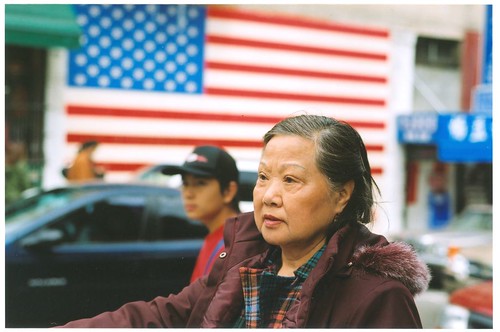
Asians Are Fastest Growing Racial Group in U.S.

Photo Credit: centinel
From Yahoo News:
"Asians are the fastest growing race group in the United States, reflecting a surge in immigration from the entire region over a decade, the US Census Bureau said Tuesday. 
As part of an ongoing analysis of the data it reaped from its 2010 census, the federal agency said those who identified themselves as Asian alone, and not mixed race, grew by 43.3 percent from a decade earlier. 
That was more than four times faster than the rate of growth for the overall US population, which grew 9.7 percent in the same period to 308,745,538. Some 14.7 million people, or 4.8 percent of the total population, identified themselves as Asian alone. Another 2.6 million, or 0.9 percent, said they were Asian in combination with another race group, most commonly white. 
"Net international migration is the biggest component of the change in the Asian population," Elizabeth Hoeffel, a statistician in the Census Bureau's population division, told reporters in a conference call. 
For statistical purposes, the United States defines an Asian as someone "having origins in any of the original peoples of the Far East, Southeast Asia, or the Indian subcontinent."
Those who identified themselves as either Asian alone or Asian mixed with another race grew by at least 30 percent in all states except Hawaii, where they already made up a majority of the population."
Please click here to read the complete post.

(h/t to Holly Sheldon for the link.)

Sunday, May 24, 2009

Asians on Screen

While flipping through the channels last weekend, I came across a riveting documentary on our local PBS station that chronicles the presence of people of Asian descent on television and in film. The film, The Slanted Screen, focuses specifically on the portrayal of Asian men on the small and silver screens. It gives insight into the long struggle that it has been for Asian filmmakers and actors to break through into mainstream success in American film and T.V.

From the website for the documentary:
"They call Hollywood a "dream factory." And it's an appropriate metaphor. Like dreams, the stories we watch in the dark express our fears and desires. But unlike dreams, they have a powerful and lasting effect on social reality. Movies and the mass media help form our worldview, shape our identities, and define our roles – on screen and off.

Unfortunately, these effects frequently work to the detriment of some groups – including Asian American men. Too often, film and television misrepresent the world they claim to reflect. Their stories revise history, and rationalize inequities. Rather than to portray three-dimension individuals, their characters often manifest prejudice and reinforce bigotry. Moreover, their ubiquitous and persistent messages encourage viewers to internalize confining definitions of identity and self-worth.

Ironically, film and television images extol our fundamental ideals of democracy and equality, and at the same time, betray them. Through interviews, voice-over narration, and a fascinating array of film and television clips, The Slanted Screen chronicles depictions of Asian American men and the culture that shapes them. The one-hour documentary presents film and television images from the turn of the century to the turn of the millennium. The Slanted Screen properly situates these images through historical narration, clips and photos."
In addition to The Slanted Screen, I also came across this article which mentions another documentary, Hollywood Chinese, which focuses on the portrayal of Chinese and Chinese Americans actors in film. Check your local listings for airings on PBS. Thanks to Racialicious for the tip.