Showing posts with label sports. Show all posts

Saturday, June 10, 2017

Weekly Web Roundup (6/10/17)

Photo Credit: pennstatenews
Here is a collection of items from around the web that caught my attention the past few weeks:

How "Race Tests" Maintain Evangelical Segregation by Joshua L. Lazard (Religion Dispatches)
"As the Bracey/Moore study alludes to, these evangelical churches are spaces that on paper claim that, to put it colloquially, “race doesn’t matter,” or “It doesn’t matter what color Jesus is.” But obviously it does. Reality shows that ecclesiastical segregation is a sociological trend that exists beyond just white evangelical churches. It also includes congregations and denominations that are decidedly liberal and stand at the opposite end of the theological spectrum. Studies have shown time and time again that this segregation has held true for a multiplicity of reasons. While these reasons range from the difference of praise and worship style and doctrinal differences, to residential segregation or the preference of non-whites creating affirming spaces of their own, white liberal churches aren’t excused from being a part of white institutional spaces as defined by this study."
Being Black, a Woman and an Evangelical by Natasha Sistrunk Robinson (Missio Alliance)
"For those black people who are conscious of this American history and still desire to remain true to the scriptural principles of evangelicalism, it costs us something to present ourselves as evangelical. For the most part, we are able to confidently make this claim because we have been trained in evangelical institutions, we love Jesus and the Good Book, and we believe in the gospel as the ministry of reconciliation. It also means that we often find ourselves leading and ministering in predominately white spaces, churches and institutions. It means that we are often one of a few ethnic minorities within white evangelicalism challenging the thoughts and actions surrounding diversity (or most often the lack thereof), racial reconciliation and biblical justice. We are often on tap to contribute to conversations but rarely on payroll to make decisions."
Considering (and Surviving) Unhealthy Christian Organizations, part 1 by Ed Stetzer (Christianity Today: The Exchange)
"Many times, the leader gets a pass for the fruit of his/her leadership because of some overwhelming characteristic: preaching ability, intelligence, ability to woo others, or more. Yet, the fruit remains below-- a culture toxic to all who swim downstream. The leader is often seen (from the outside) as a great leader, but those inside know him/her as someone who is, well, more concerned about outside appearance than godly leadership."
Sports Spectrum Podcast Interview with Ernie Johnson

The personal story of NBA on TNT studio host Ernie Johnson is powerful. As someone that became a Christian later in life, his family's journey of faith through cancer, adoption and other challenges related to their special needs child is challenging. This interview with Jason Romano is worth a listen.

Are You Married to Your Smartphone? by Dave Boehi (Family Life)
"Adjusting to new forms of technology is nothing new. Just think how telephones and automobiles changed our culture. Or air-conditioning. Radio, television, computers, and many other new inventions sparked significant changes in our culture and in the way we related to our family and friends. But the pace of change since 1995 has been breathtaking. We’ve seen the emergence of the internet and of mobile phones, and then the convergence of the two in 2006 with smartphones. We can now be plugged in wherever we are, 24/7. The technology is evolving so quickly that most of us are barely aware of how our behavior is changing and our relationships are affected. As one reader wrote after I wrote about this issue a few years ago, “These mobile devices can take over your life.” Another said, “I understand technology has its advantages, but we are being ruled by the technology rather than using it as a tool.”
How the Internet is Changing Friendship (The Atlantic)


Saturday, April 29, 2017

Weekly Web Roundup (4/29/17)

Photo Credit:
US Department of Education
Here is a collection of items from around the web that caught my attention the past couple of weeks:

Sorry Weber, Durkheim, and Marx: Educated Evangelicals Are More Religious by Sarah Eekhoff Zylstra (Christianity Today)
"Evangelicals who graduated from college are more likely than those who didn’t enroll to attend religious services at least weekly (68% vs. 55%), to pray daily (83% vs. 77%), and to believe in God with absolute certainty (90% vs. 87%). They’re also more likely to say religion is very important to them (81% vs. 79%). Those numbers aren’t a fluke; when Pew broke the categories down further, the trend continued. Evangelicals who earned a graduate degree after college are the most committed to their faith; those who dropped out of high school are the least committed."
The Missing Piece in American International Missions by Courtlandt Perkins (Reformed African American Network)
"In many places, ethnicity and faith are deeply connected to a people group’s identity, so to only see people with white skin representing Christ speaks volumes about what Christians look like. The human heart naturally doesn’t want to receive Christ due to depravity, but what if the dark skin of a missionary helps them be received into an African village, simply because they look familiar? The unreached will physically see that Jesus changes the lives of people who look like them. African American missionaries could inspire a generation of African missionaries to receive Christ, and take His message to places AA’s could never go. In the same way, sending Hispanic-American missionaries to Latin American countries, we could help deconstruct the notions of white superiority, and point to the reality that white Christians do not have the copyright of international missions. It is obvious the issues run deeper than just numbers. The reality is often rooted in inherit racial bias and historical discrimination. But my friend’s words resound deeply with me: “Diversity is a powerful (and much needed) tool for witness.”"
6 Tech Habits Changing the American Home (Barna Group)
"Technology is literally everywhere in our homes—not only the devices in our pockets but the invisible electromagnetic waves that flood our homes,” writes Andy Crouch in his new book The Tech-Wise Family, written in partnership with original Barna research. “This change has come about overnight, in the blink of an eye in terms of human history and culture. When previous generations confronted the perplexing challenges of parenting and family life, they could fall back on wisdom, or at least old wives’ tales, that had been handed down for generations. But the pace of technological change has surpassed anyone’s capacity to develop enough wisdom to handle it. We are stuffing our lives with technology’s new promises, with no clear sense of whether technology will help us keep the promises we’ve already made."
The Legitimacy of Ethnic Churches in Multi-Ethnic Contexts by Andrew Ong (Reformed Margins)
"While pursuing a church demographic that proportionally matches the community’s might be a helpful and wise benchmark for certain churches, to impose any particular vision of unity and diversity upon a local church strikes me as mechanistic. This is especially true since the automobile has fundamentally altered our conception of communities’ bounds. How many of us worship at the closest Christian church to our home? Binding local churches to the norm of multi-ethnicity is mechanistic if our conception of church unity is absolutely bound by spatial-location. Is a church less faithful if it’s attended by more people who live ten minutes away by car than people who live ten minutes away by foot? Didn’t Jesus just say that his sheep would hear his voice?"
One Teenager's (Supremely Brilliant) Perspective on Social Media (Scott Sauls)
"When I finally spent a week “unplugging” from my phone, I realized that the withdrawals I experienced from disengaging from the app were a sign of the control it had over me. This control scared me and made me angry because I had willingly put myself in an unnecessary position to compare my insides to others’ outsides, to be controlled by my appearance and people’s opinions, and to hurt others and myself with my comments, posts, or digital footprint. This unnerved me because it was a dangerous trap that had been disguised by an attractive, socially acceptable, and necessary staple of popularity. After I deleted my social media accounts, I began to notice how other teenagers my age were trapped in the same digital world that I was. I wanted to understand why this was happening. What exactly are we as a society risking with the constant attachment to our screens?"
Why a racially insensitive photo of Southern Baptist seminary professors matters by Jemar Tisby (The Washington Post)
"But the biggest problem doesn’t show up in the picture. The presence of any person of color would have reduced the chances of this photo ever happening. But a photo like this evolves in an environment that lacks meaningful interaction with people from other cultures, especially on the leadership level. The seminary’s website appears to picture all white men in an administration and an entire preaching faculty. Even if a school has diversity in the student body, if the decision-makers all come from a similar racial and cultural background, then they will remain oblivious to their own racial blind spots."
The Guide to Being a Detroit Sports Fan by Dan Holmes (Detroit Athletic Blog)
"What does it mean to be a Detroit sports fan? What should we all know? What do we need to know? Not everyone has the answers to these questions, so I wrote them all down in one place. Enjoy."

Saturday, January 14, 2017

Weekly Web Roundup (1/14/17)

Photo Credit: misha maslennikov
Here is a collection of items from around the web that caught my attention this past week:

The 5 (Unwritten) Rules of Honor-Shame Cultures  (HonorShame.com)
"In collectivistic societies, identity is defined by the group you belong to. When two people meet, one of the first items of conversation is figuring out which family, clan, or village the other person is from. Since honor is a shared commodity, what one person does brings honor (or shame) upon the entire community. Children are taught from an early age how to bring honor to the family, and people are expected to be loyal to their community, even at personal cost. In Western cultures, family is much more of a voluntary association. At the age of 18 or so, young adults are encouraged to venture out from the home to “find themselves” or “establish their own lives.”"
How to Destroy Your Child Through Sports by Ed Uszynski (Athletes in Action)
"In spite of mini-movements of outcry regarding poor parent and coach behavior at youth events and the intense pressure being put on kids to perform, many of us seem committed to staying on a course that ruins our children’s ability to enjoy games. Instead of sports being experienced as something good, a category called “play” that God created for our good and His glory, too often we use our kids’ playground to exorcise our own demons. 
In more than 25 years of listening to athletes from youth to professional levels process their experience of sports, I’ve learned that these parental behaviors can be counted on not only to ruin their experience of play, but also to create multi-layered psychological and spiritual maladies that stick throughout life."
9 Steps to More Ethical Fundraising (A Life Overseas: The Mission Conversation)
"We were doing all the things we were taught to do—pray, write newsletters, make calls, send letters, schedule meetings—but after two years, we felt stuck. We were at about 50% of our goal and couldn’t seem to make any traction. One day, I just felt I needed to do something to make a statement to our potential supporters that we were as serious about this as we possibly could be and that we held them and their potential donations in the highest esteem. So I decided to write down the ways in which we were committing to respect them and their sacrifice. 
I called this our “Fundraising Code of Ethics.” To me, it was a public covenant we were making to hold ourselves to a standard of maturity, transparency, and responsibility. By making it public, we were welcoming our supporters to hold us to this standard, but we also warned them we would never have a perfect record and asked them to be gracious with us. Like every healthy relationship, trust is absolutely crucial. We are all aware if donors trust you they are more likely to support you. What we learned is that we also need to have enough faith in our supporters to be transparent with them."
Racial Divides in Spiritual Practice (The Barna Group)
"Black communities tend toward communal rhythms of spiritual development while white communities prefer a more individualistic setting. It is unsurprising therefore that white Christians are more likely to view their spiritual life as “entirely private” (42% compared to 32%). Black Christians, on the other hand, are much more likely to believe their personal spiritual life has an impact on others—whether they are relatives, friends, community or society at large. For instance, black Christians are much more likely to believe that their personal spiritual lives have an impact on broader society (46% compared to 27%). 
This was a strong belief of Martin Luther King, and it appears to have had great staying power. He fundamentally believed that one’s personal spiritual life had implications for societal justice, and he called Christians—on both sides of the debate—to bring their faith to bear on the struggle for civil rights, to which he dedicated his life. This impact is also tied to the approach to evangelism: half of black Christians (50% compared to 34%) believe it is their responsibility to tell others about their religious beliefs, further reinforcing the public / private contrast between both groups."
The Longstanding Crisis Facing Tribal Schools by Alia Wong (The Atlantic)
"Children who are disciplined in school are far more likely to end up in prison as adults; it goes without saying that being disciplined as a child via formal law enforcement has similarly deleterious, if not worse, effects. The alleged practices at Havasupai Elementary are, the suit contends, characteristic of those at tribal schools across the country. Indeed, a March 2014 U.S. Department of Education report found that Native Americans across the country are disciplined at disproportionate rates. Unsurprisingly, they’re also incarcerated at a rate 38 percent higher than the national average."
Repealing Obamacare without a Replacement: How It May Hurt Small Church Pastors and Church Planters Near You by Ed Stetzer (Christianity Today)
"I’m not defending Obamacare, it’s success, and certainly not its implementation. And, furthermore, this is not just about pastors—it impacts a whole lot of people in your church (and not in your church). But, I’ve talked to a lot of pastors about this topic, so I’ve made that my focus here. In short, the point here is that big policies aren’t simply big policies. And when they appear (or actually are) broken, there isn’t a simple answer. Big policies impact real people. A plan approved by Congress impacts millions of everyday, hard-working people. And I’ve only focused on one group here, small church pastors and church planters, since I have often heard about this from church planters. Actually, I have spoken in conferences on this very topic: how the ACA has opened the door for many church planters to get insurance."
Twin Sisters Separated at Birth Reunite on Good Morning America

Two sisters, each adopted from China by different American families, meet in person for the first time on ABC's "Good Morning America." Here is their touching story.


Wednesday, January 11, 2017

Ruining Our Children Through Sports

Photo Credit: USAG-Humphreys
I read the following headline in our local newspaper this morning:
"REFS CALL LEADS TO BRAWL BETWEEN PARENTS AT HIGH SCHOOL BASKETBALL GAME."
Intrigued, I read the article.

It seems that a man who was watching his daughter play made a comment about a disagreeable referee's call. The father of a girl on the opposing team told him to "shut up."

The first man called the second man an "idiot" and the second man dared him to "call him an idiot again." The first man accepted the dare and called the other man an idiot for a second time, and the two started wrestling in the gym and punches were thrown. The men continued to fight until someone in the stands pulled them apart.

As a coach of youth sports for many years and a parent of multiple children that have played a number of sports, I know all too well what can happen when the competitive juices get flowing.

Of course most parents simply want to provide an opportunity for their children to play with friends, learn a sport and have fun while getting a little exercise.

But there are some parents that choose to live out their unfulfilled athletic fantasies through their children and put an unbelievable amount of pressure on kids, coaches and referees in order to try to make things go their way.

This article by Ed Uszynski with Athletes in Action offers 8 behaviors that can destroy our children through sports. Ed says this:
"In more than 25 years of listening to athletes from youth to professional levels process their experience of sports, I’ve learned that these parental behaviors can be counted on not only to ruin their experience of play, but also to create multi-layered psychological and spiritual maladies that stick throughout life."
Athletics can be a wonderful part of the life of a child but it can also be a dreaded experience due to poor parenting and coaching.

As a coach, I realize that most players I coach probably won't go very far in their athletic career. Although I have had a few players that have played at the collegiate Division 1 level, most won't advance past their middle school or high school teams when it comes to competitive athletics.

My hope is as my former players grow into adulthood that they will be able to look back upon their experiences in competitive athletics as children and think to themselves, "That was fun. I'm glad I was able to do that. Those were good times."

For my own children that I've coached, my desire for them is that they will have fond memories of having their dad as a coach. It's not always easy, but keeping the end in mind helps a great deal.

Saturday, August 27, 2016

Weekly Web Roundup (8/27/16)

Photo Credit: chefmaggio
Here are some interesting stories from around the web that I've seen during this past week:

Like Families and Soccer Teams: Church and Parachurch by Brian Strider (The Gospel Coalition)
"Working for a parachurch ministry, on the other hand, is more like playing for a soccer team. Team members are selected, and then they gather to play soccer. They don't gather to receive math tutoring, to brush their teeth, or to care for the elderly. They gather for one purpose and for a limited season: to play soccer. But a family is different. It's broader and deeper. Whether you're adopted or born into one, your family is responsible for your entire nurture, growth, and education. Your family is the group of people you live with and learn to love. The relationships are permanent and all-defining. Though you might be disappointed if your soccer league dissolved, you'd be devastated if your family disappeared."
Wind during river fest sends 1,500 floaters to Canada by Nicole Hayden (USA Today)

My hometown of Port Huron, Michigan made the national news this past week when a large number of people floating on the St. Clair River ended up on the Canadian side of the US/Canada border. Here's the story of what happened.

American Students Are Still Segregated by Income, Race by Kenrya Rankin (Colorlines)
"Fully half of American children live in high-poverty school districts—where more than 75 percent of students quality for free or reduced-price lunch—which leaves them more vulnerable to health crises, violence and subpar facilities. Frequently, these impoverished districts border affluent areas where students are bolstered by the funding that comes from higher property taxes. For “Fault Lines: America’s Most Segregating School District Borders,” researchers analyzed 33,500 individual school district boundaries to see just how economically segregated districts are."
The real history of Native American team names by Erik Brady (USA Today)
"Most damning, Native American children were often taken from their families and sent to boarding schools under an assimilation policy that amounted to cultural genocide. Its motto: “Kill the Indian and save the man.” Students were told not to speak their languages, even to each other. Their long hair was cut short. They were taught reading, writing, arithmetic and — in a form of state-sponsored religion — Christianity. “All of this was taking place outside the view of the average American,” Gover says. “At that time, someone living in Philadelphia — or, more tellingly, in Cleveland or Boston — might conclude there are no Indians anymore. They are gone. And, in fact, that was the objective of federal policy. … So there were a lot of very powerful forces at work to deny Native American people of agency over their own identities and their very lives. And that’s when the mascots emerged.”"
Orlando Health, Florida Hospital won't bill Pulse shooting victims by Kate Santich and Christal Hayes (Orlando Sentinel)

The city of Orlando experienced a horrific tragedy earlier this summer when 49 people were murdered by a gunman at the Pulse nightclub. Since then there have been countless examples of people that have cared for and reached out to the victims, as well their families. Now, millions of dollars in hospitals bills will be forgiven. Bravo to Orlando Health and Florida Hospital.

MTV Decoded Answers The Question ‘Are Hispanic People White?’

Many people are confused about who is considered to be Hispanic or Latino and why these terms are not necessarily interchangeable. In this video, Franchesca Ramsey and Kat Lazo of MTV News 'Decoded' series explain how to understand the racial and ethnic identity of Hispanics and Latinos.

Saturday, August 20, 2016

Weekly Web Roundup (8/20/16)

Photo Credit: afunkydamsel
Here are some interesting stories from around the web that I've seen during this past week:

4 Types of People Leaders Must Not Listen To by Eric Geiger
"Wise leaders listen to wise people. Because the people we listen to impact our decisions, our attitudes, and our perceptions, it is critical that we listen to the right people. A leader who listens to the wrong people is just as foolish as a leader who doesn’t listen at all."
Helping College-Bound Native Americans Beat The Odds by Claudio Sanchez
"A test score, the GPA, the ranking, are things that an admissions officer doesn't remember. l'm not just looking for a diamond in the rough or the hard-knock life. They're not always in crisis. They're doing beautiful, amazing things. And I want colleges to recognize that."
What the Pro-Choice and Pro-Life Miss About Simone Biles by Aarol Earls
"As Simone Biles was clinching yet another gold medal in Rio, people on both sides of the abortion debate were pointing to her achievements and background as a justification for their position. 
But both miss out on a very important fact: Simone Biles has value not because she is a young woman inspiring the world or because she is a world champion gymnast who was adopted as a child. Simone has value simply because she is Simone."
The Fine Line Between Safe Space and Segregation by Emily Deruy
"Where most universities were designed around the needs and lives of white students, she said, and most white students can—and do—still avoid having uncomfortable conversations about race, black students “are never at a shortage” for uncomfortable racial conversations. In other words, white students can often elect not to engage in such conversations, where black students cannot escape them."
When Glorifying God Means Coming in Last Place by Stacie Fletcher

One of the most compelling stories of the Rio 2016 is when U.S. 5000m runner Abbey D’Agostino stopped to help fellow runner Nikki Hamblin to her feet after they both fell during the race. Cru staff member and friend Stacie Fletcher writes about how Abbey's faith influenced her decision.

Toddler Imitates Rocky

Watch along as a baby in this video mimics the movements of Rocky Balboa during a well-known training sequence from Rocky II.

Thursday, January 17, 2013

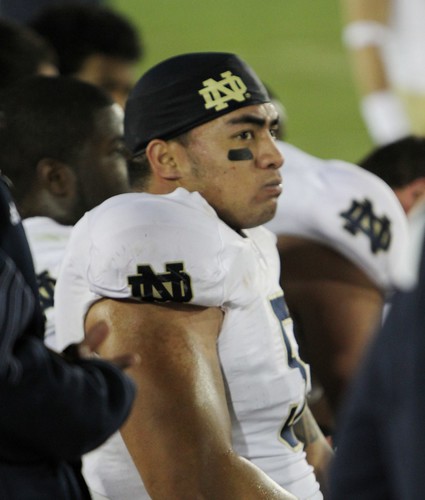
When Our Heroes Lie To Us: My Prayer For Lance Armstrong & Manti Te'o

Photo Credit: Neon Tommy
It's been a rough week for cyclist Lance Armstrong and Notre Dame football player Manti Te'o. It is being reported that Armstrong has admitted to the use of performance enhancing drugs in the past and, as a result, has jeopardized his standing as an American icon. In Te'o's case, it appears that the story of his deceased girlfriend was all a hoax. Whatever role he played in the charade is yet to be determined but, at minimum, it seems that he was not honest about it even after learning of the prank.

These instances, of course, are not the first cases of our athletic heroes disappointing us. In recent memory we've also seen legendary figures like Joe Paterno, Tiger Woods and too many MLB players to name have failed to live up to our expectations of them.

With the advent of social media, the public response is swift and strong when these stories come to light. We can easily cast our judgments about our heroes without knowing all the facts and are quick to make light of their perceived failures. Without excusing the lies of those we've placed on pedestals, I do wonder if the expectations we place on our heroes might be asking too much. Do we allow them to be human...or do we literally expect them to be superhuman?

In a article from a few years ago, ESPN.com's Jeff MacGregor wrote of the failure of a couple revered heroes -- baseball player Alex Rodriguez and Olympic legend Michael Phelps. MacGregor writes:
"And this has been our recent trouble with American "heroes," at least the ones arriving still warm off the humming assembly lines of popular culture. The problem lies not in their manufacture, but in our perception of the final product. Once we've been sold their heroic stories by the media and the for-profit institutions in charge of such things, we refuse to see our heroes for what they really are: complex, fallible human beings just like us who rise briefly out of the mire to do something extraordinary, then return to join us in the hog wallow of moral confusion and squalid appetite that is everyday life. 
Heroes never were meant to be an accurate reflection of daily human enterprise. They were meant to be examples of the rare capacity to exceed ourselves. Go back to ancient mythology, and you'll see what I mean. The Greeks understood that becoming a hero didn't absolve anyone of being human. In fact, that was usually the point of the story. Cautionary. Many of those "heroes" were lucky to get out of those stories alive. Most traded a single act of glory for a lifetime of punishing regret or a grisly death. 
Here in 21st century America, however, we prefer the Candyland version of heroic myth, in which no one is doomed to die or drown or wander forever in a wasteland of pain, but instead sets a record, scores a contract with William Morris, makes a million and marries a swimsuit model, and everything winds up hunky-dory at the end. Nobody has to sleep with his own mother and then claw his eyes out with a brooch."
I don't think it's unreasonable to ask our sports heroes to be people of integrity and to be honest with their fans. But we must realize that they are not perfect and that they will fail us. Athletes are no different than any else in regard to their humanity. They may happen to enjoy tremendous athletic success, but they still struggle with the same insecurities, need for acceptance and even the same sins that we all do. It seems to be an American pastime to worship people as they rise...and ridicule them as they fall. How sad.

Although it disappoints me when our heroes fail us, it doesn't surprise me. In a world where style is so often valued over substance and where we expect our heroes to perform superhuman feats, it's not unreasonable to surmise that some will cross ethical lines to achieve what they think we want them to become.

I don't know all the facts about Lance Armstrong and Manti Te'o. But I do think it's fair to say that some of their behavior is wrong, even though we are not in the position to know their motives and what led them to deceive the public. I, too, struggle with wanting to please others and pretend to be something that I am not so that others will like me more. But as I've gotten older, I've learned that presenting a false self to others is ultimately not fulfilling. Because at some point, our true self will be revealed, the imposter that we've been presenting to others will become unmasked and we will be seen for who we truly are.

I don't think we have to be fake with God since He knows all about us and loves us anyway. The conditional love of fans will never match the unconditional love of God.  My prayer is that Lance and Manti would both come to realize the love, forgiveness and acceptance that can be found through an ongoing relationship with Jesus Christ. I don't know their personal lives so they may already have a relationship with God. But I hope they would both be able to experience God in such a way that they would be able to live honest and forthright lives in front of others. Although I'm sure they will both have difficult days ahead, my guess is that they will be resting a little easier at night knowing that the darkness they've been living in has now been revealed in the light.

The heart of the Christian message is that we can never be good enough to earn God's favor but through faith in Christ, God accepts us as a new person. We no longer have to pretend to be something we are not. In the words of Pastor Tim Keller, the humble Christian understands that they are "more wicked than we ever dared believe, but more loved and accepted in Christ than we ever dared hope." May this be true of our heroes and of us. Amen.

Thursday, August 23, 2012

The Greatest Moments In The History Of Sports

Here's a compilation of some of the greatest moments in the history of sports. For those that know me, it's probably no surprise that my favorite moment happens at the 3:07 mark. Enjoy!


Friday, November 04, 2011

Making A Positive Impact Through Coaching Youth Sports

My football team from last year
Upon graduation from high school and entering college in the fall of 1991, there were two things I wanted to do with my life career-wise. I wanted to be an elementary school teacher and a coach. I enjoyed the satisfaction that came with teaching children and having enjoyed participating in multiple sports throughout my childhood and youth, I particularly enjoyed the combination of teaching and athletics that coaching brings.

I had the chance to coach junior high school football and basketball while in college and looked forward to the opportunity to potentially coach as a profession. But God had other plans for me and led me into Christian ministry with college students. The chance to coach athletics didn't really present itself for a number of years after college but I was able to get back into the game several years ago due to my son's participation in a league near our home.

I have found coaching flag football and basketball in an Upward league especially rewarding. Upward is a Christian-based sports league that teaches children the importance of sportsmanship, teamwork and positive attitude. It also places competition in its proper perspective by limiting the amount of practice time that each team has and ensures that each child gets an equal amount of playing time. It's been a joy coaching in a league that recognizes that athletic competition can be fun without having a win-at-all-costs attitude.

The New York Times recently wrote of the difference that positive coaching can make in the lives of youngsters. David Bornstein writes:
"Coaches can be enormously influential in the lives of children. If you ask a random group of adults to recall something of significance that happened in their fourth or fifth grade classroom, many will draw a blank. But ask about a sports memory from childhood and you’re likely to hear about a game winning hit, or a dropped pass, that, decades later, can still elicit emotion. The meaning that coaches or parents help young people derive from such moments can shape their lives.

But today’s youth coaches often struggle to provide sound, evidence-based, and age-appropriate guidance to players. Part of the problem is that of the 2.5 million American adults who serve as volunteer coaches for youth sports less than 10 percent receive any formal training. Most become coaches because their kid is on the team ― and they basically improvise. I did this in soccer and, through my over-eagerness, almost destroyed my then-6-year-old son’s delight for the game.

But a bigger problem is that youth sports has come to emulate the win-at-all-costs ethos of professional sports. While youth and professional sports look alike, adults often forget that they are fundamentally different enterprises. Professional sports is an entertainment business. Youth sports is supposed to be about education and human development.

That’s why it is so disturbing that, over the past two decades, researchers have found that poor sportsmanship and acts of aggression have become common in youth sports settings. Cheating has also become more accepted. Coaches give their stars the most play. Parents and fans boo opponents or harangue officials (mimicking professional events). They put pressure on children to perform well, with hopes for scholarships or fulfilling their own childhood dreams. Probably the most serious indictment of the system is that the vast majority of youths ― some 70 to 80 percent ― drop out of sports shortly after middle school. For many, sports become too competitive and selective. In short, they stop being fun."
Sports can teach kids a number of important life lessons and they can be a tremendous way to teach kids how to be humble winners and gracious losers. But they don't need over-competitive adults spoiling the fun. Parents and coaches have the opportunity to provide a memorable, fun experience for kids through participation in athletics. But they can also take something that used to be fun for a child and ruin it through too high of expectations and not letting kids be kids.

While growing up, I had the privilege to play for many very good coaches and a few bad ones. I seek to model the things I learned from my good coaches and do the opposite of those who had a skewed perspective on what is most important in life. Simply put, the number one goal for someone who is coaching youth sports is to provide their players with a fun experience. Kids have fun by improving as a player, by coming together as a team, by doing things they didn't think they were capable of and by just getting to play a sport they love. I'm grateful that, hopefully, I help kids get to enjoy sports the way I did as a kid.

To read the complete New York Times article please click here.

(h/t to Linda Perukel for the link.)

Friday, October 07, 2011

Detroit's Sports Teams Bring Healing

My family at Comerica Park, 2011
Photo Credit: Sandy Gresko
Detroit's sports teams are on a roll. The Tigers just advanced to the American League Championship Series. The Lions are 4-0 and preparing for a rare Monday Night Football appearance. The Michigan Wolverines are 5-0 and looking like they are ready to restore the program to its former glory. It's a good time to be a sports fan from Michigan.

So even as our teams are succeeding, the thoughts of Michiganders near and far never stray for too long from the challenges faced by our beloved Motown.

Detroit writer and radio host Pat Caputo writes of the ability of the city's sports teams to bring healing. From CNN.com:
"History has shown that when the city's sports teams start doing well, it's a sign of healing in Detroit. In 1968, when the Tigers won the World Series, it brought a racially divided region together after race riots. In 1984, the local economy rebounded from the recession at the same time the Tigers again won the World Series.

What makes 2011 different? The Tigers' magical summer is being followed by a surprisingly solid performance from the usually underperforming Lions, behind a triple threat of quarterback Matthew Stafford, wide receiver Calvin Johnson and defensive tackle Ndamukong Suh.

It's not just that the Lions are winning but how they're doing it. They were down 20 points against the Minnesota Vikings on the road September 25 and then, the following Sunday, down 24 points against the Cowboys on the road.

The Lions won both games, representing the city's come-from-behind spirit and fight to win in the midst of adversity.

This tenacity is not lost on [Jim] Schwartz, the [Lions'] coach, who has seen the Lions at their worst and now their best.

"When I became the Lions coach, it didn't take me long to understand what the team means to the people here," Schwartz said. "No matter how bad it has been, they have never stopped caring. They are vocal but never apathetic. It's like a lawn that has been dormant. It just takes one good watering, and it's back."

Eminem's tag line in January's Chrysler ad -- "that's who we are. That's our story" -- sums up the motivation for these teams who know that the wins are helping Detroit's image and giving residents a sense of hope and pride that's been missing.

It seems that Detroit is back -- for now."
 To read Caputo's full article please click here.

Monday, August 15, 2011

Should We Use Native American Sports Mascots?

Photo Credit: BGSU86
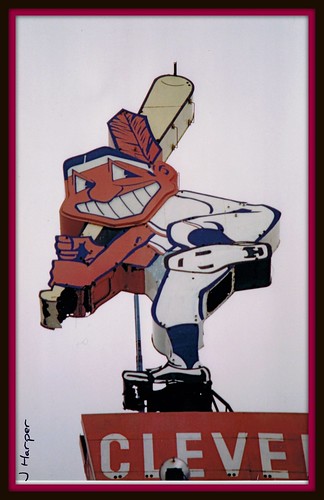
I want you to take a good look at the image to the left. What comes to your mind when you look at that? If you're from Cleveland, it may remind you of a baseball team that you follow. But if you are of Native American descent, this image likely doesn't bring up pleasant feelings.

There has been a lot of discussion in recent years about the use of Native images in American sports, whether at the professional, collegiate, high school or other levels. If you're like most people, you probably haven't given much thought to it. You've grown up in a society that generally accepts the use of the term Redskins for an NFL team and Atlanta Brave fans doing the "tomahawk chop" at games. So is the move to ban Native American sports mascots just another attempt at political correctness or is it something more than that?

One university, the University of North Dakota, looks to be currently in the final stages of a process to change their name. CNN.com reports:
"The University of North Dakota is one step closer to retiring its nickname and mascot, but changing the school's 90-year-old Native American moniker -- the Fighting Sioux -- has not been without complications.
The school faces a Monday deadline to comply with the NCAA's policy on mascots "deemed hostile or abusive toward Native Americans."
School officials were in the process of coming up with a new name and mascot this year until North Dakota legislators passed a law ordering them to stop, according to UND spokesman Peter Johnson.
The rock and the hard place the school finds itself between marks the last gasp of a decades-long fight not just in North Dakota, but in all of college sports -- the climax (or nadir, depending on some people's perspective) of a nostalgia-imbued resistance to political correctness on the playing field."
I am generally opposed to the use of Native images and mascots for sports teams. These names and images have typically been born out of the tragic history of this nation and continue to perpetuate stereotypes and remind the First Nations people of this land of their mistreatment over the centuries. The argument is often made that the use of these names and images honor the original inhabitants of what is now known as the United States. Sadly, when white people put on "war paint", wear ceremonial headdresses, and do chants at sporting events without any knowledge or appreciation of the culture that these things come from, it comes off as much more of a mocking of that culture than anything honorable.

Although I do believe that in rare cases this is possible (I'll get to that in a minute), there are likely other ways that would serve to honor American Indians more than the caricatures that are often connected to our sports teams. Barbara Munson, of the Oneida Nation, offers some other suggestions:
Indian people do not pay tribute to one another by the use of logos, portraits or statues.
The following are some ways that we exhibit honor:
1. In most cultures to receive an eagle feather is a great honor, and often such a feather also carries great responsibility.
2. An honor song at a Pow-Wow or other ceremony is a way of honoring a person or a group.
3. We honor our elders and leaders by asking them to share knowledge and experience with us or to lead us in prayer. We defer to elders. They go first in many ways in our cultures.
4. We honor our young by not doing things to them that would keep them from becoming who and what they are intended to be.
5. We honor one another by listening and not interrupting.
6. We honor those we love by giving them our time and attention.
7. Sometimes we honor people through gentle joking.
8. We honor others by giving to them freely what they need or what belongs to them already because they love it more or could use it better than we do.
I understand that sports hold a special place in American culture. We are committed to our teams and our loyalty runs deep. We have years worth of paraphernalia connected to our teams and are hesitant to make changes to the names and images of the teams we love. Having grown up in the state of Michigan, I am well familiar with the influence that Native culture has had on current American society. The use of Native names is very common within the state and my college alma mater, Central Michigan University, is known as the Chippewas, a Native tribe that is one of the largest First Nations people groups within North America.

But I am supportive of the use of the Chippewas moniker for CMU. Does this make me a hypocrite? Well, not necessarily. Although I am generally in disagreement of the use of Native names and images in connection with sports teams, CMU is a bit of a unique situation. When I was a student there in the early nineties the university was in the midst of a major review of whether they would keep the Chippewa name or not. It was during a time when other major schools nearby (e.g. Miami (Ohio), Eastern Michigan, etc.) were changing their names and it appeared that Central would follow suit.

But at the end of this review it was decided to keep the name. Why? Because in this case, there is a Chippewa tribal reservation just minutes from the university and CMU and the tribe have a strong relationship. In this instance, the tribe felt that the school did honor their people with the use of that name since 1) It was not a derogatory name (e.g. Redskins) and 2) The school agreed to do away with all Native imagery in connection with their athletic teams.

Because of the tribal approval that is given to the university, CMU was one of the few exceptions that the NCAA gave a few years ago when it banned the use of Native names for its members. Although this issue continues to be discussed, it is still an accepted part of the university. As a student, I was enriched by the Chippewa culture that was part of the university life and took advantage of the opportunity to learn about a culture other than my own.

I'm thankful that I am an alum of an institution that is one of the few cases that actually honors First Nations people in connection with their athletic teams. In other cases, I would like to challenge you to stop supporting institutions that continue to encourage the use of negative stereotypes and images in connection with their teams. It is not a matter of political correctness... it's a matter of doing the right thing.

Sunday, December 13, 2009

Thoughts on Tiger Woods

In the past couple of weeks on at least two different occasions I sat down to write about Tiger Woods and all that has been going on since that fateful car accident Thanksgiving weekend. But in both instances, I couldn't formulate what I wanted to say and just deleted the post.

I'm not sure what I think or how I feel about this whole mess. On one hand I can't fathom how someone with so much would be so reckless in his personal life. On the other hand, I feel sorry for a guy that is facing public scrutiny in a way that only few can even begin to relate to.

Although Tiger Woods is an icon that has transcended his sport, he is also just a man with the same frailties and weaknesses that you and I possess. As more and more details have emerged during this ordeal, I truly wonder what is going through Tiger's head as he ponders his next steps and what his life is going to look like once he decides to emerge from his Windermere mansion.

On an encouraging note, I am pleased to hear that he is taking an indefinite leave from golf in order to work on his marriage and get his personal life in order. There has been much damage done to his marriage, his reputation and his marketability. In order to come out of this whole thing a better person, he needs to examine why he thought that running into the arms of women that weren't his wife would bring him life and satisfaction.

As people with a sin nature each of us are prone to run to things that won't ultimately bring us life. It could be sex. Or it could be food or alcohol or drugs or television or any other number of things that can't take the place of God. One of the pastors at my church, Dave Abney, has quoted G.K. Chesterton as saying,
"Every man who knocks on the door of a brothel is looking for God"
I wonder if Tiger did the things he did was because he needed an escape from the expectation that he needed to be perfect? It's a realization that we must all come to that we are imperfect people that live in an imperfect world. Tiger's a sinner just like I'm a sinner. I hope that somebody in his life shares with him that there is One who loves him in his imperfections and would love to help him experience true life. Perhaps you've done some pretty bad stuff, too, and realize you need some help. This might be a good first step.