It has been over twenty years since God started me on a journey of learning as I began a lifestyle of crossing cultures within my ministry and daily life. Initially much of this was directly related to my role as a campus missionary with Cru. But, over time, my appreciation for those from different cultural backgrounds has grown to the degree where I have a high value of regularly interacting with those whose cultural values are different than my own.
Part of this journey has also involved learning about what it means to be part of multi-cultural teams and to live in multi-ethnic community. I have had the privilege of being on multi-ethnic teams where I have been both in the minority and in the majority. I have also enjoyed the opportunity to be led -- both spiritually and vocationally -- by those that are of a different ethnic background than me.
In addition to the many ways I've benefited personally and learned from friends and colleagues over these past two decades, I have also found a number of books that have helped put words to the feelings I have experienced. These authors have assisted me in the process of learning more about myself and others and helped in answering questions that had me perplexed.
Here are 13 books that I recommend to guide you in learning what it means to live in multi-ethnic, Christian community. I've read each of these books, except for a few. In those cases, I trust the authors and the content enough to recommend them to you. Here they are (in no particular order):
1.
Many Colors: Cultural Intelligence for a Changing Church by Soong-Chan Rah
"Soong-Chan Rah's book is intended to equip evangelicals for ministry and outreach in our changing nation. Borrowing from the business concept of "cultural intelligence," he explores how God's people can become more multiculturally adept. From discussions about cultural and racial histories, to reviews of case-study churches and Christian groups that are succeeding in bridging ethnic divides, Rah provides a practical and hopeful guidebook for Christians wanting to minister more effectively in diverse settings."
2.
The Wolf Shall Dwell with the Lamb: A Spirtuality for Leadership in a Multi-Cultural Community by Eric Law
"This groundbreaking work explores how certain cultures consciously and unconsciously dominate in multicultural situations and what can be done about it."
3.
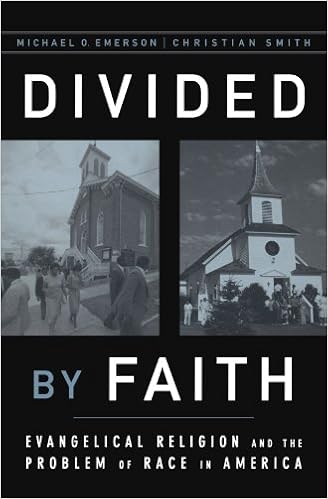
Divided by Faith: Evangelical Religion and the Problem of Race in America by Michael O. Emerson & Christian Smith
"Through a nationwide telephone survey of 2,000 people and an additional 200 face-to-face interviews, Michael O. Emerson and Christian Smith probed the grassroots of white evangelical America. They found that despite recent efforts by the movement's leaders to address the problem of racial discrimination, evangelicals themselves seem to be preserving America's racial chasm. In fact, most white evangelicals see no systematic discrimination against blacks. But the authors contend that it is not active racism that prevents evangelicals from recognizing ongoing problems in American society. Instead, it is the evangelical movement's emphasis on individualism, free will, and personal relationships that makes invisible the pervasive injustice that perpetuates racial inequality."
4.
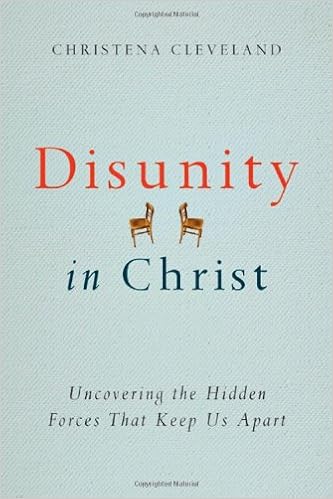
Disunity in Christ: Uncovering the Hidden Forces that Keep Us Apart by Christena Cleveland
"Despite Jesus' prayer that all Christians "be one," divisions have been epidemic in the body of Christ from the beginning to the present. We cluster in theological groups, gender groups, age groups, ethnic groups, educational and economic groups. We criticize freely those who disagree with us, don't look like us, don't act like us and don't even like what we like. Though we may think we know why this happens, we probably don't. In this eye-opening book, learn the hidden reasons behind conflict and divisions."
5.
Living in Color: Embracing God's Passion for Ethnic Diversity by Randy Woodley
"Though our Christian experience is often blandly monochromatic, God intends for us to live in dynamic, multihued communities that embody his vibrant creativity. Randy Woodley, a Keetowah Cherokee, casts a biblical, multiethnic vision for people of every nation, tribe and tongue. He carefully unpacks how Christians should think about racial and cultural identity, demonstrating that ethnically diverse communities have always been God's intent for his people. Woodley gives practical insights for how we can relate to one another with sensitivity, contextualize the gospel, combat the subtleties of racism, and honor one another's unique contributions to church and society."
6.
Cross-Cultural Servanthood: Serving the World in Christlike Humility by Duane Elmer
"Duane Elmer asked people around the world how they felt about Western missionaries. The response? "Missionaries could be more effective if they did not think they were better than us." The last thing we want to do in cross-cultural ministry is to offend people in other cultures. Unfortunately, all too often and even though we don't mean it, our actions communicate superiority, paternalism, imperialism and arrogance. Our best intentions become unintentional insults. How can we minister in ways that are received as true Christlike service? Cross-cultural specialist Duane Elmer gives Christians practical advice for serving other cultures with sensitivity and humility."
7.
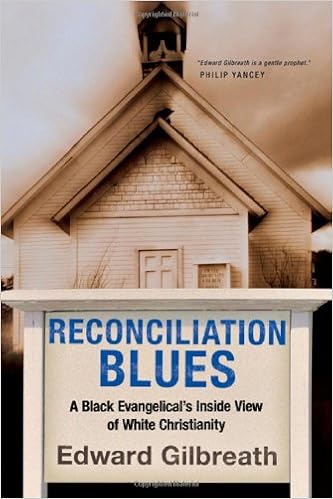
Reconciliation Blues: A Black Evangelical's Inside View of White Christianity by Edward Gilbreath
"What is the state of racial reconciliation in evangelical churches today? Are we truly united? In Reconciliation Blues journalist Edward Gilbreath gives an insightful, honest picture of both the history and the present state of racial reconciliation in evangelical churches. In his thoughtful overview he looks at a wide range of figures, such as Howard O. Jones, Tom Skinner, Dr. Martin Luther King Jr., Jesse Jackson and John Perkins. Charting progress as well as setbacks, his words offer encouragement for black evangelicals feeling alone, clarity for white evangelicals who want to understand more deeply, and fresh vision for all who want to move forward toward Christ's prayer "that all of them may be one.""
8.
Right Color, Wrong Culture: The Type of Leader Your Organization Needs to Become Multiethnic by Bryan Loritts
"Increasingly, leaders recognize the benefit of multi-ethnic organizations and are compelled to hire diverse individuals who will help them reflect a new America. [Loritts] brings a challenge to leaders in this fable of self-discovery and change, as he explores the central, critical problem leaders often encounter when transitioning their church, business, or organization to reflect a multi-ethnic reality: finding a leader who is willing to immerse themselves in the environments and lives of people who are different from them."
9.
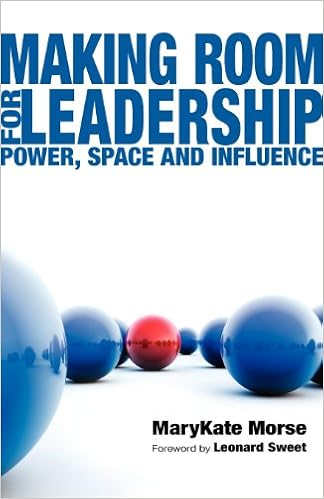
Making Room for Leadership: Power, Space and Influence by MaryKate Morse
"You don't just lead with your voice and your decisions. You lead with your body. The way you take up space in a room, the way you use or don't use your body in group settings, influences others. And all of us hold power to lead in our bodies. Yet, pastor and spiritual director MaryKate Morse contends, most of us are unaware of the ways we do or can use our bodies to influence others. Some of us cower in the corner, trying to hide. Others try to speak but are never heard. Still others are the focal point as soon as they walk in a room. What makes the difference? And how can we learn to lead in our own individual way with confidence?"
10.
Bridging the Diversity Gap: Leading Toward God's Multi-Ethnic Kingdom by Alvin Sanders
"In a diverse, divided world, pastors and church leaders are faced with the question of how to lead across ethnic lines to bring healing and unity to the body of Christ. How can the church more accurately reflect the vision of God's kingdom, gathering together every tribe and nation? It all begins with leaders whose minds and hearts have been transformed by the gospel. Author Alvin Sanders believes the church is facing a chairos moment—the right time—to address the issue of ethnic division and tension within the church. Through this book, he offers a how-to resource for Christian leaders to lead their organizations in a majority-minority, multi-ethnic America."
11.
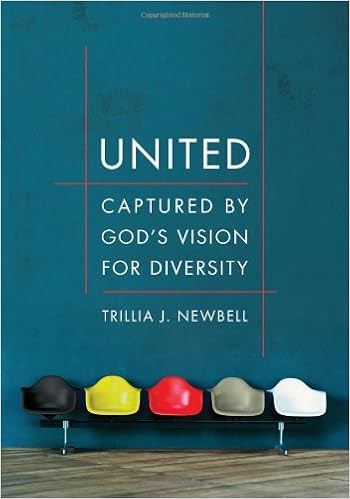
United: Captured by God's Vision for Diversity by Trillia J. Newbell
"On the Last Day every tongue and tribe will be represented in the glorious chorus praising God with one voice. Yet today our churches remain segregated. Can we reflect the beauty of the last day this day? United will inspire, challenge, and encourage readers to pursue the joys of diversity through stories of the author's own journey and a theology of diversity lived out. It’s time to capture a glimpse of God’s magnificent creativity. In the pages of United, Trillia Newbell reveals the deeply moving, transforming power of knowing—really knowing—someone who is equal yet unique. As we learn to identify in Christ rather than in our commonalities, we begin to experience the depth and power of gospel unity."
12.
Breaking Down Walls: A Model for Reconciliation in an Age of Racial Strife by Raleigh Washington & Glen Kehrein
This is a classic resource for Christians from different cultural backgrounds that are seeking to understand one another. Breaking Down Walls suggest several principles on how we can be reconciled with one another for God's glory. This was one of the first books that I ever read on this subject.
13.
Red, Brown, Yellow, Black, White—Who's More Precious In God's Sight?: A call for diversity in Christian missions and ministry by Leroy Barber & Velma Maia Thomas
"[This book] highlights the historic patterns that have created racial discrepancies within missions. With a no-blame attitude, powerful personal narratives from a dozen other black, Hispanic, Asian, Native American and white Christians, interactive histories of missions, and the writings of MLK and Howard Thurman (the entire "Letter From Birmingham Jail" and Howard Thurman's motivational speech "Sound of the Genuine"), Barber addresses this tough issue in a way that will inspire and motivate readers of all races toward change."
I hope you find these books helpful for you in your own journey toward multi-ethnic community and I'd love to hear from you any suggestions about other books you have found beneficial as well.