Showing posts with label books. Show all posts

Saturday, April 01, 2017

Weekly Web Roundup (4/1/17)

Photo Credit: fazen
Here is a collection of items from around the web that caught my attention over this past week:

The LAUNCH Survey: Helpful and Hindering Factors for Launching into Long-Term Missions by  Megan R. Brown and John W. McVay (The Exchange)
"Clearly, relationships are key in journeying toward lifelong service in the Kingdom of God overseas. Nearly all of the respondents indicated that God’s guidance and call were essential to their successful pursuit of overseas work. Additionally, having a good support network, including friends and family, a mentor, long-term workers, and a good agency, team, or leader were remembered to be helpful in the process. This is congruent with studies completed in recent years (Matenga and Gold 2016). A 2013 qualitative study with missionaries from Australia found that 100% of the interviewees were influenced by other missionaries prior to launch (Hibbert, Hibbert, and Silberman 2015). Additionally, surveys completed by the Christian Community Health Fellowship found that 80% of students who did a rotation early in their training with a Christian physician who was practicing quality faith-based medicine, as well as attending a healthcare missions conference, chose a path to serve the poor through missional medicine (CCHF Follow-Up Survey)."
Here’s How Many Books You Can Expect to Read Before You Die (Mental Floss)

Ever wonder how many books you've read in your lifetime? Or how many you'll be able to read before the end of your life? This handy chart helps give you an idea of how your regular reading habits play out over the course of a lifetime.

Crux listens as Africans ask: Why isn't it big news when terrorists slaughter our people? by Terry Mattingly (Get Religion)
"Of course, as Pope Francis has noted (in the kind of statement that draws relatively little news coverage), there is more to ideological or cultural colonization than money and political power. There is the cultural power of elite media, especially entertainment media, and the causes favored by their leaders. Who typically receives more news coverage today, a YouTube sensation pop star or a Wall Street magnate whose decisions affect millions? But there is an even larger question here: Who do ordinary readers want to read about? In other words, does this problem have something to do with the values of the marketplace, in this age when power is measured in Twitter followers and mouse "clicks"? Which story would receive the most coverage in African media, the death of Beyonce or the latest massacre of a hundred Christians in Northern Nigeria by Boko Haram? I think I know the answer to that question, even though it makes me angry."
Check Your Privilege Obsession by Tish Harrison Warren (Christianity Today)
"At their worst, privilege enforcers descend into sheer cruelty. Bovy includes a story about online commenters blasting the “privilege” of a promising 22-year-old who tragically died. No longer able to gather around a common humanity with our shared frailty and pain, we are reduced to ruthlessly sorting between those who “deserve” our sympathy and those who don’t. I wonder if our privilege obsession arises in part from an epistemic problem: In a world that considers individual experience the primary arbiter of truth, how do we navigate the cacophony of conflicting reality-claims? One way is to create a hierarchy where some voices are valued more than others. Therefore, the “privilege” framework, like fundamentalism or certain forms of religious rhetoric, can demand unquestioning adherence."
America's Cult of Ignorance—And the Death of Expertise by Tom Nichols (The Daily Beast)
"These are dangerous times. Never have so many people had so much access to so much knowledge and yet have been so resistant to learning anything. In the United States and other developed nations, otherwise intelligent people denigrate intellectual achievement and reject the advice of experts. Not only do increasing numbers of lay people lack basic knowledge, they reject fundamental rules of evidence and refuse to learn how to make a logical argument. In doing so, they risk throwing away centuries of accumulated knowledge and undermining the practices and habits that allow us to develop new knowledge."

Wednesday, March 29, 2017

13 Books to Help You Live in Multi-Ethnic Community

It has been over twenty years since God started me on a journey of learning as I began a lifestyle of crossing cultures within my ministry and daily life. Initially much of this was directly related to my role as a campus missionary with Cru. But, over time, my appreciation for those from different cultural backgrounds has grown to the degree where I have a high value of regularly interacting with those whose cultural values are different than my own.  

Part of this journey has also involved learning about what it means to be part of multi-cultural teams and to live in multi-ethnic community. I have had the privilege of being on multi-ethnic teams where I have been both in the minority and in the majority. I have also enjoyed the opportunity to be led -- both spiritually and vocationally -- by those that are of a different ethnic background than me.

In addition to the many ways I've benefited personally and learned from friends and colleagues over these past two decades, I have also found a number of books that have helped put words to the feelings I have experienced. These authors have assisted me in the process of learning more about myself and others and helped in answering questions that had me perplexed.

Here are 13 books that I recommend to guide you in learning what it means to live in multi-ethnic, Christian community. I've read each of these books, except for a few. In those cases, I trust the authors and the content enough to recommend them to you. Here they are (in no particular order):

1. Many Colors: Cultural Intelligence for a Changing Church by Soong-Chan Rah
"Soong-Chan Rah's book is intended to equip evangelicals for ministry and outreach in our changing nation. Borrowing from the business concept of "cultural intelligence," he explores how God's people can become more multiculturally adept. From discussions about cultural and racial histories, to reviews of case-study churches and Christian groups that are succeeding in bridging ethnic divides, Rah provides a practical and hopeful guidebook for Christians wanting to minister more effectively in diverse settings."

2. The Wolf Shall Dwell with the Lamb: A Spirtuality for Leadership in a Multi-Cultural Community by Eric Law
"This groundbreaking work explores how certain cultures consciously and unconsciously dominate in multicultural situations and what can be done about it."


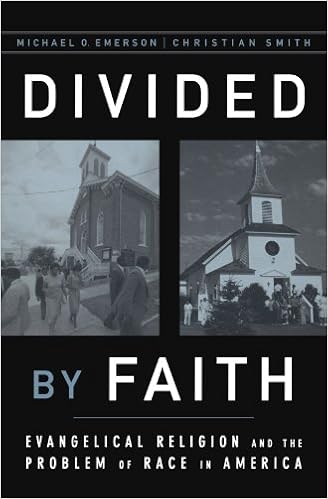
3. Divided by Faith: Evangelical Religion and the Problem of Race in America by Michael O. Emerson & Christian Smith
"Through a nationwide telephone survey of 2,000 people and an additional 200 face-to-face interviews, Michael O. Emerson and Christian Smith probed the grassroots of white evangelical America. They found that despite recent efforts by the movement's leaders to address the problem of racial discrimination, evangelicals themselves seem to be preserving America's racial chasm. In fact, most white evangelicals see no systematic discrimination against blacks. But the authors contend that it is not active racism that prevents evangelicals from recognizing ongoing problems in American society. Instead, it is the evangelical movement's emphasis on individualism, free will, and personal relationships that makes invisible the pervasive injustice that perpetuates racial inequality."

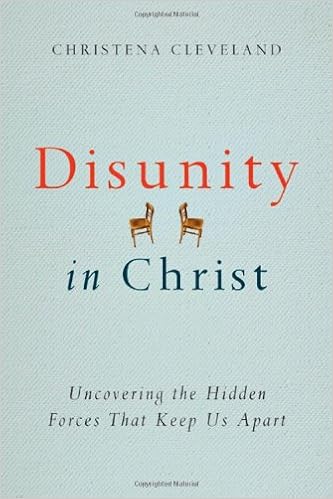
4. Disunity in Christ: Uncovering the Hidden Forces that Keep Us Apart by Christena Cleveland
"Despite Jesus' prayer that all Christians "be one," divisions have been epidemic in the body of Christ from the beginning to the present. We cluster in theological groups, gender groups, age groups, ethnic groups, educational and economic groups. We criticize freely those who disagree with us, don't look like us, don't act like us and don't even like what we like. Though we may think we know why this happens, we probably don't. In this eye-opening book, learn the hidden reasons behind conflict and divisions."

5. Living in Color: Embracing God's Passion for Ethnic Diversity by Randy Woodley
"Though our Christian experience is often blandly monochromatic, God intends for us to live in dynamic, multihued communities that embody his vibrant creativity. Randy Woodley, a Keetowah Cherokee, casts a biblical, multiethnic vision for people of every nation, tribe and tongue. He carefully unpacks how Christians should think about racial and cultural identity, demonstrating that ethnically diverse communities have always been God's intent for his people. Woodley gives practical insights for how we can relate to one another with sensitivity, contextualize the gospel, combat the subtleties of racism, and honor one another's unique contributions to church and society."

6. Cross-Cultural Servanthood: Serving the World in Christlike Humility by Duane Elmer
"Duane Elmer asked people around the world how they felt about Western missionaries. The response? "Missionaries could be more effective if they did not think they were better than us." The last thing we want to do in cross-cultural ministry is to offend people in other cultures. Unfortunately, all too often and even though we don't mean it, our actions communicate superiority, paternalism, imperialism and arrogance. Our best intentions become unintentional insults. How can we minister in ways that are received as true Christlike service? Cross-cultural specialist Duane Elmer gives Christians practical advice for serving other cultures with sensitivity and humility."

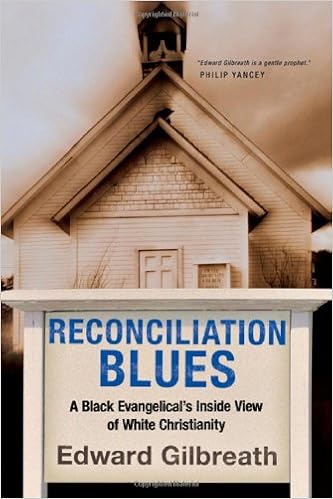
7. Reconciliation Blues: A Black Evangelical's Inside View of White Christianity by Edward Gilbreath
"What is the state of racial reconciliation in evangelical churches today? Are we truly united? In Reconciliation Blues journalist Edward Gilbreath gives an insightful, honest picture of both the history and the present state of racial reconciliation in evangelical churches. In his thoughtful overview he looks at a wide range of figures, such as Howard O. Jones, Tom Skinner, Dr. Martin Luther King Jr., Jesse Jackson and John Perkins. Charting progress as well as setbacks, his words offer encouragement for black evangelicals feeling alone, clarity for white evangelicals who want to understand more deeply, and fresh vision for all who want to move forward toward Christ's prayer "that all of them may be one.""

8. Right Color, Wrong Culture: The Type of Leader Your Organization Needs to Become Multiethnic by Bryan Loritts
"Increasingly, leaders recognize the benefit of multi-ethnic organizations and are compelled to hire diverse individuals who will help them reflect a new America. [Loritts] brings a challenge to leaders in this fable of self-discovery and change, as he explores the central, critical problem leaders often encounter when transitioning their church, business, or organization to reflect a multi-ethnic reality: finding a leader who is willing to immerse themselves in the environments and lives of people who are different from them."

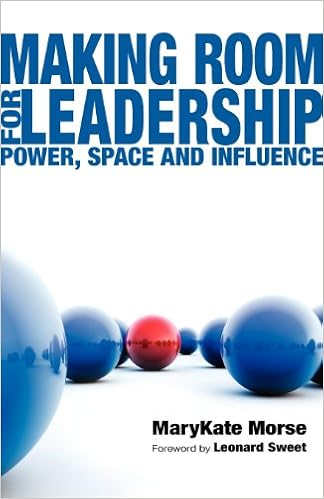
9. Making Room for Leadership: Power, Space and Influence by MaryKate Morse
"You don't just lead with your voice and your decisions. You lead with your body. The way you take up space in a room, the way you use or don't use your body in group settings, influences others. And all of us hold power to lead in our bodies. Yet, pastor and spiritual director MaryKate Morse contends, most of us are unaware of the ways we do or can use our bodies to influence others. Some of us cower in the corner, trying to hide. Others try to speak but are never heard. Still others are the focal point as soon as they walk in a room. What makes the difference? And how can we learn to lead in our own individual way with confidence?"

10. Bridging the Diversity Gap: Leading Toward God's Multi-Ethnic Kingdom by Alvin Sanders
"In a diverse, divided world, pastors and church leaders are faced with the question of how to lead across ethnic lines to bring healing and unity to the body of Christ. How can the church more accurately reflect the vision of God's kingdom, gathering together every tribe and nation? It all begins with leaders whose minds and hearts have been transformed by the gospel. Author Alvin Sanders believes the church is facing a chairos moment—the right time—to address the issue of ethnic division and tension within the church. Through this book, he offers a how-to resource for Christian leaders to lead their organizations in a majority-minority, multi-ethnic America."

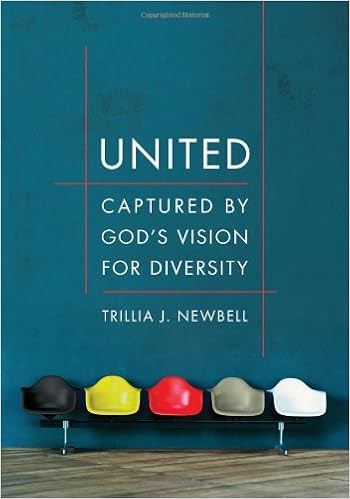
11. United: Captured by God's Vision for Diversity by Trillia J. Newbell
"On the Last Day every tongue and tribe will be represented in the glorious chorus praising God with one voice. Yet today our churches remain segregated. Can we reflect the beauty of the last day this day? United will inspire, challenge, and encourage readers to pursue the joys of diversity through stories of the author's own journey and a theology of diversity lived out. It’s time to capture a glimpse of God’s magnificent creativity. In the pages of United, Trillia Newbell reveals the deeply moving, transforming power of knowing—really knowing—someone who is equal yet unique. As we learn to identify in Christ rather than in our commonalities, we begin to experience the depth and power of gospel unity."

12. Breaking Down Walls: A Model for Reconciliation in an Age of Racial Strife by Raleigh Washington & Glen Kehrein
This is a classic resource for Christians from different cultural backgrounds that are seeking to understand one another. Breaking Down Walls suggest several principles on how we can be reconciled with one another for God's glory. This was one of the first books that I ever read on this subject.


13. Red, Brown, Yellow, Black, White—Who's More Precious In God's Sight?: A call for diversity in Christian missions and ministry by Leroy Barber & Velma Maia Thomas
"[This book] highlights the historic patterns that have created racial discrepancies within missions. With a no-blame attitude, powerful personal narratives from a dozen other black, Hispanic, Asian, Native American and white Christians, interactive histories of missions, and the writings of MLK and Howard Thurman (the entire "Letter From Birmingham Jail" and Howard Thurman's motivational speech "Sound of the Genuine"), Barber addresses this tough issue in a way that will inspire and motivate readers of all races toward change."

I hope you find these books helpful for you in your own journey toward multi-ethnic community and I'd love to hear from you any suggestions about other books you have found beneficial as well.

Saturday, February 25, 2017

Weekly Web Roundup (2/25/17)

Photo Credit: Marco Nürnberger
Here is a collection of items from around the web that caught my attention this past week:

In the time you spend on social media each year, you could read 200 books by Charles Chu (Quartz)
"Here’s the simple truth behind reading a lot of books: It’s not that hard. We have all the time we need. The scary part—the part we all ignore—is that we are too addicted, too weak, and too distracted to do what we all know is important… All it takes to start reading a lot more is to take “empty time” spent Twitter-stalking celebrities or watching Desperate Housewives and convert some of it to reading time. The theory is simple. It’s the execution that’s hard."
Why Your Denomination Is Segregated (Christianity Today)
"Not all denominations’ equally reached enslaved people with their message, says Eric Washington, a history professor at Calvin College. The “stodgy” and “erudite” tradition of Anglicanism didn’t resonate as broadly—although former Methodist Absalom Jones was ordained as the first African American Episcopalian priest by the end of the 18th century. In contrast, many African slaves were drawn to Methodism’s theological emphasis on born-again conversions and total depravity and its preachers’ open-air, multiethnic services, says Washington. “[In Methodism,] there was no education requirement to be an exhorter or lay preacher,” said Washington, who is also the director of Calvin’s African and African Diaspora Studies. “So enslaved men who had a recognized gift to preach or exhort—they were encouraged in that.”"
Being Prophetic Without Being a Self-Righteous Know-It-All by Dennis R. Edwards (Missio Alliance)
"Being a prophet often means being rejected—for what one says and does for God, not for being a jerk! Furthermore, biblical prophets were known as godly people. That same Elijah is hailed as an example of one who knew how to pray (Jas 5:17). God constantly reminds me of the importance of cultivating an inner life that glorifies God. I know I will never pray well enough or fast consistently enough, or spend enough time in silence, or meditate enough…but I’ll keep trying. It was when Elijah was depressed that he took a pilgrimage to Mt. Horeb and heard God’s gentle voice. Prophets hear from God as we pursue God."
The Single Voice (Yo Soy Kristy)
"What this means is that as ministry leaders seek to diversify their organizations-with speakers at conferences, VP’s on executive teams, or simply diverse leadership at all levels- they tend to only want ONE person from certain ethnic groups to be their token minority. What this creates is a scarcity mentality among minorities who are all vying for that one space. It ends up pitting women of color against one another. Rather than fighting to make room for more of us, we often quietly shut the leadership door behind us, secretly glad we got the spotlight for that moment."
Give Your Kids the Gift of Absence by Amy Julia Becker (Christianity Today)
"Jesus sent his disciples out into the villages without him so they could learn about leadership, make mistakes, and return to him to learn more. As parents, we too can send our kids out into the backyard, the neighborhood, or the woods so they can make mistakes and grow. We can send them to school with incomplete homework, send them to our friends to talk through problems, and, when our own resources prove inadequate, send them to the church (and other communities) for equipping."

Sunday, June 30, 2013

The Importance of Reading Authors Outside our Tribe

Photo Credit: theloushe
In a recent interview on The Gospel Coalition blog, Pastor Tullian Tchividjian offers his perspective on the importance of reading and the importance of exposing yourself to works you may not already agree with. He says the following:
"My nightstand is a mess—the biggest eyesore in our bedroom (according to my wife). I have about 30 books piled up on top of each other. I'm constantly reading, and I'm always reading more than one book at a time. I have everything from books I've been asked to endorse to books I'm consulting for my current sermon series to books I'm reading for fun. 
I'm also a curious reader, which means I'm always reading books by people just to find out how they write and what they say about certain things—which means I'm not simply reading books by people within my theological tradition. One of my concerns about some who would consider themselves "reformed" is that they only read books by other "reformed" people. This, in my opinion, is a big mistake. And when some do read books outside their own theological tradition, they only do so with an eye to critique instead of an eye to learn. At least this was my mistake for far too many years. I graduated from a well-known reformed seminary (and am unbelievably grateful for the education I received there), and I never heard of any of the books, theologians, or scholars I list below (except one). I have, therefore, greatly varied my reading over the past five years or so and am reading many more books by writers, thinkers, and scholars outside of my theological  tradition. Seven years ago I heard Tim Keller say, "When you read one thinker, you become a clone. Two thinkers, you become confused. Ten thinkers, you begin developing your own voice. Two or three hundred thinkers, you become wise."
The easy thing for avid readers is to simply read those that we know we already agree with or enjoy. Although this can help cement the beliefs we hold, we rarely will be challenged in our thinking. This can, at times, lead to the presumption that most others think as we do. I think it's also good for us to expose ourselves to the writings of those that are unfamiliar to us or not of "our tribe." This can help us in seeing the holes in some of our thinking, shore up that which we know to be true and cause us to look at the world differently.

As a Christian, I seek to make the Bible the guide for all other reading that I do. I try to read the Bible more than anything else and attempt to use God's Word as the lens through which I read other writings. Although I don't end up agreeing with the assertions of every author I read, there is much to be learned from those outside of our denominational affiliations or our cultural background.

For example, there are some blogs that I read in order to learn about the culture in which we live even though I don't agree with the perspective that is taken most of the time. However, I'm able to gain some insight into the thinking that is common in today's society and this helps me in relating to others from backgrounds that are different than mine.

Reading a broad range of authors can help us learn what it is that we believe and what makes us unique from others. It can help enhance our view of the world as we learn from those that have had different experiences and take the opportunity to see things through the eyes of another. I think I'm a different person than I was twenty years ago, due in no small part because of the broad range of people that I have read. And, hopefully, I'll continue to change for the better over the next twenty years.

For a list of the 25 books that have greatly influenced my life, please see this previous post.

Monday, May 21, 2012

25 Books That Have Changed My Life

Photo Credit: sarah_browning
"A truly good book teaches me better than to read it. I must soon lay it down, and commence living on its hint. What I began by reading, I must finish by acting." ~ Henry David Thoreau

One of the greatest gifts that I received as a child was a love of reading. I hope I've passed that love onto my children and to those that I have had the privilege of leading over the years. Books contain the potential to inspire, challenge, convict, educate, entertain and even change us when we apply what we've learned.

By far, the book that has changed my life the most is the Holy Bible. After that, there are countless others that have changed the way I view God, myself, others and the world in which we live.

I was once advised that when you find an author whose words resonate deep within your soul by penning the thoughts and feelings you've had but couldn't describe, then try to read everything that person has ever written. With writers like Brennan Manning, Elisabeth Elliot or Randy Alcorn, I've attempted to do just that.

But so that certain authors don't take up most of the spots on the list below, I'm only citing each author once. Here are 25 books that have changed my life (in alphabetical order):
1.  The 21 Irrefutable Laws of Leadership: Follow Them and People Will Follow You by John C. Maxwell 
2.  Abba's Child: The Cry of the Heart for Intimate Belonging by Brennan Manning 
3.  The Autobiography of Malcolm X by Malcolm X & Alex Haley
4.  Born Again by Charles W. Colson 
5.  Breaking Down Walls: A Model for Reconciliation in an Age of Racial Strife by Glen Kehrein & Raleigh Washington 
6.  Changes That Heal by Henry Cloud 
7.  Come Help Change The World by Bill Bright 
8.  Desiring God: Meditations of a Christian Hedonist by John Piper 
9.  Disciplines Of A Godly Man by R. Kent Hughes 
10. Dominion by Randy Alcorn 
11. Eternal Security - Can You Be Sure? by Charles Stanley 
12. Every Man's Battle: Winning the War on Sexual Temptation One Victory at a Time by Stephen Arterburn, Fred Stoeker and Mike Yorkey 
13. From Slavery to Freedom: A History of African Americans by John Hope Franklin

14. Just As I Am: The Autobiography of Billy Graham by Billy Graham 
15. Knowing God by J. I. Packer 
16. Let Prayer Change Your Life by Becky Tirabassi 
17. Mere Christianity by C.S. Lewis 
18. More Than A Carpenter by Josh McDowell 
19. My Utmost For His Highest by Oswald Chambers 
20. Ordering Your Private World by Gordon MacDonald 
21. Roaring Lambs: A Gentle Plan to Radically Change Your World by Bob Briner
22. Shadow of the Almighty: The Life and Testament of Jim Elliot by Elisabeth Elliot
23. The Forgotten Trinity: Rediscovering the Heart of Christian Belief by James R. White 
24. The Master Plan Of Evangelism by Robert E. Coleman 
25. To Kill A Mockingbird by Harper Lee
Without these books I would not be the person I am so I am indebted to the authors who wrote them. Hopefully my listing them might inspire you to check out some of the books that I've found helpful in my own journey.

What books have changed you?

Monday, April 09, 2012

The Hunger Games, Race & Disappointed Readers

Photo Credit: k-ideas
The Hunger Games, the young adult novel by Suzanne Collins, has not only taken bestseller lists by storm the past several years, but its film adaptation has been the leader at the box office the past few weeks. Released less than three weeks ago, it had the third highest grossing opening weekend in cinematic history and has already generated over $400 million worldwide.

In spite of the immense popularity of the film, some fans of the book have taken to social media to demonstrate their displeasure with what they witnessed on screen.

CNN.com tells the story:
"In "The Hunger Games," wealthy Capitol citizens of all races and ethnicities come together to watch the 74th annual bloodbath of the same name. It seems some present-day moviegoers, however, are a bit less "post-racial." 
Earlier this week, some "Hunger Games" fans tweeted their discontent because the characters of Cinna, Thresh and Rue are played by black actors in the big screen adaptation. This, despite the fact that both Thresh (Dayo Okeniyi) and Rue (Amandla Stenberg) are described as having "dark skin" in Suzanne Collins' novel, while Cinna (Lenny Kravitz) is simply described as having short brown hair. 
Whether fans' remarks -- such as, "Awkward moment when Rue is some black girl and not the little innocent blonde girl you picture" -- stem from poor reading comprehension or intolerance, they're indicative of a larger issue in Hollywood, said Harry M. Benshoff, an associate professor of radio, TV and film at the University of North Texas who co-wrote "America on Film: Representing Race, Class, Gender and Sexuality at the Movies." 
"Hollywood has never been on the forefront of the civil rights movement," said Benshoff, who hasn't read or watched "The Hunger Games." 
Despite certain character descriptions being spelled out in the book, Benshoff said, people typically project themselves onto a character in order to empathize with that person. 
"For a white person reading a book, they're very rarely going to go, 'I'm just assuming this is a black character' if he or she isn't marked as such," he said. "A nonwhite person might project their own identity onto the character."
Even when characters are described by the author as having "dark skin," some readers still assumed that the characters were white. This is just one demonstration of how our own racial prejudices and biases can cause us to not see what is quite apparent to others. All too often Hollywood has represented characters of color with white actors. In this case, Hollywood got it right... but some fans of The Hunger Games didn't.

One fan, whose Twitter handle is not included in order to protect the guilty, tweeted this:
"Call me racist but when I found out Rue was black her death wasn’t as sad.”
Sadly, there is probably more of this sentiment out there than we realize.

To read the complete CNN.com story please click here.

Tuesday, June 28, 2011

Why Physical Books Are Important In The Internet Age

Photo Credit: moriza
From Johann Hari:
"In the age of the internet, physical paper books are a technology we need more, not less. In the 1950s, the novelist Herman Hesse wrote: "The more the need for entertainment and mainstream education can be met by new inventions, the more the book will recover its dignity and authority. We have not yet quite reached the point where young competitors, such as radio, cinema, etc, have taken over the functions from the book it can't afford to lose."

We have now reached that point. And here's the function that the book – the paper book that doesn't beep or flash or link or let you watch a thousand videos all at once – does for you that nothing else will. It gives you the capacity for deep, linear concentration. As Ulin puts it: "Reading is an act of resistance in a landscape of distraction.... It requires us to pace ourselves. It returns us to a reckoning with time. In the midst of a book, we have no choice but to be patient, to take each thing in its moment, to let the narrative prevail. We regain the world by withdrawing from it just a little, by stepping back from the noise."

A book has a different relationship to time than a TV show or a Facebook update. It says that something was worth taking from the endless torrent of data and laying down on an object that will still look the same a hundred years from now. The French writer Jean-Phillipe De Tonnac says "the true function of books is to safeguard the things that forgetfulness constantly threatens to destroy." It's precisely because it is not immediate – because it doesn't know what happened five minutes ago in Kazakhstan, or in Charlie Sheen's apartment – that the book matters.

That's why we need books, and why I believe they will survive. Because most humans have a desire to engage in deep thought and deep concentration. Those muscles are necessary for deep feeling and deep engagement. Most humans don't just want mental snacks forever; they also want meals."
To read Hari's complete article entitled, "How to Survive the Age of Distraction", please click here.

(h/t to Tim Challies)