Showing posts with label racial reconciliation. Show all posts

Saturday, July 01, 2017

Weekly Web Roundup (7/1/17)

Photo Credit: Golden_Ribbon
Here is a collection of items from around the web that caught my attention the past couple of weeks:

Watch Your Mouth by Randy Nabors
"The consciousness of racial injustice and its attendant social, economic, psychic, emotional, and physical realities are like a punch in the gut.  We have no alternative but to spell them out, to both the ignorant and the resistant.  Yet, if we allowed hate to fill us, these truths could inflame our hearts and push us to be fiery-eyed zealots and avengers, we instead seek to speak the truth in love; as Ephesians 4:15 teaches us to do.  This is not always easy to do, to speak hard truths in love.  We cannot be flippant about what love means (claiming we love people but producing no demonstrable proof) in our communication, especially not in having read the James passage in how the “wisdom from above” is to be imparted.  In other words people who hear hard truths from us must also hear and feel the love as far as it may depend on us."
Surprise! We Need to Learn from Christians from Other Cultures by Amy Medina
"When we talk about church in America with our Tanzanian friends, it's their turn to be shocked.  Your church services are only an hour and fifteen minutes long?  And that's the only service you attend all week?  And you've never, ever done an all-night prayer vigil? Like, never?  Are there even any Christians in America? In America, your devotion to Christ is measured by the amount of personal time you spend in prayer and Bible study.  Am I right or am I right?  Well, in Tanzania, your devotion to Christ is measured by the amount of time you spend in prayer and worship with others. Of course, you might protest that measuring godliness sounds like legalism.  Which is true--but we still do it, don't we? If you are American, what would you say to a Christian who never did personal devotions, but spent many hours every week in church worship services? Would you even know where to put that person in your spiritual hierarchy?  And would you be able to back up your conclusion with Scripture? It's easy for us, as foreigners, to come to Tanzania and point out what they are doing wrong. Those deficiencies pop up to us broadly and clearly.  But I wonder, what if a Tanzanian Christian came to the States and was given a voice in the white American Church?  What deficiencies would be glaringly obvious to him?"
I preached about a gun rights advocate. He wasn't who I thought. by Amy Butler (USA Today)
"I sat there, startled briefly by the unlikely situation in which we found ourselves. We couldn’t be more different. But Todd and I share at least one fundamental belief: nobody is the stereotype we believe they are. We do ourselves and our world a fundamental disservice when we won’t summon the courage to listen to each other and try as hard as we can to find the things we share, small as they may be."
Poll shows a dramatic generational divide in white evangelical attitudes on gay marriage by Sarah Pulliam Bailey (The Washington Post)
"The question for many evangelicals has been whether LGBT issues are matters where they can agree to disagree and still work together, perhaps like the question of when children should be baptized or whether women can be ordained. When the issue came up for World Vision, one of the largest Christian nonprofits in the country, in 2012, the answer was a sharp no — it lost thousands of donors right away. And InterVarsity Christian Fellowship, a major ministry, announced last fall that its employees must affirm its views that marriage is between a man and a woman. Some evangelicals believe there’s a difference between supporting gay marriage as a public policy matter and gay marriage as sanctioned by churches. A large majority of white evangelicals (including younger generations) continue to see homosexual relations as morally wrong, according to the General Social Survey. The 2016 survey found 75 percent of white evangelicals saying homosexual sexual relations are always or nearly always wrong. That number is down from 82 percent in 1996 and 90 percent in 1987. The survey does not show a large generational gap, however. In 2014-2016 surveys, 70 percent of Generation X/millennial white evangelicals said same-sex sexual relations are nearly always or always wrong, compared to 81 percent of baby boomers/older generations."
7 ways the iPhone has made life worse by Kara Alaimo (CNN)

I'm an iPhone user but I share the concerns listed in this article from Kara Alaimo. Here she lists seven ways that she feels our smartphones have made our lives worse:
1. They're bad for our brains.
2. While we're busy on our phones, we're ignoring the world around us.
3. We're also ignoring one other.
4. They're ruining our relationships.
5. They promote FOMO ("fear of missing out") syndrome.
6. We have come to need constant validation.
7. We're expected to be available for work 24-7.
Smartphones can be useful if we use them and they don't use us. But these concerns are worth considering.

My 3 Big Fears in Parenting Teenagers by Trevin Wax (The Gospel Coalition)
"As fathers and mothers, we model the love of God to our kids in different ways. I know that whenever my children think of their Heavenly Father, they will in some way associate Him with their earthly father. The responsibility of modeling the character of God to my children makes me feel so honored and so inadequate. My fear for the teenage years is that, in the midst of the drama, the mood swings, the debates and disagreements, and the inevitable growth of independence, I will respond in ways that push my kids away from God instead of toward Him. That I will consistently model something untrue about God. For this reason, I pray that God would give me a soft and repentant heart, a willingness to own up to my sins, so that our kids would see that leadership in the home is not opposed to admitting I'm wrong, or that I need forgiveness. I also pray that God will not allow my fear of making mistakes to make me passive and thus forfeit my leadership role through apathy. A good father needs to have a combination of grace and boldness, with strands of love and authority tied so tightly you can't untangle one without the other."

Wednesday, March 29, 2017

13 Books to Help You Live in Multi-Ethnic Community

It has been over twenty years since God started me on a journey of learning as I began a lifestyle of crossing cultures within my ministry and daily life. Initially much of this was directly related to my role as a campus missionary with Cru. But, over time, my appreciation for those from different cultural backgrounds has grown to the degree where I have a high value of regularly interacting with those whose cultural values are different than my own.  

Part of this journey has also involved learning about what it means to be part of multi-cultural teams and to live in multi-ethnic community. I have had the privilege of being on multi-ethnic teams where I have been both in the minority and in the majority. I have also enjoyed the opportunity to be led -- both spiritually and vocationally -- by those that are of a different ethnic background than me.

In addition to the many ways I've benefited personally and learned from friends and colleagues over these past two decades, I have also found a number of books that have helped put words to the feelings I have experienced. These authors have assisted me in the process of learning more about myself and others and helped in answering questions that had me perplexed.

Here are 13 books that I recommend to guide you in learning what it means to live in multi-ethnic, Christian community. I've read each of these books, except for a few. In those cases, I trust the authors and the content enough to recommend them to you. Here they are (in no particular order):

1. Many Colors: Cultural Intelligence for a Changing Church by Soong-Chan Rah
"Soong-Chan Rah's book is intended to equip evangelicals for ministry and outreach in our changing nation. Borrowing from the business concept of "cultural intelligence," he explores how God's people can become more multiculturally adept. From discussions about cultural and racial histories, to reviews of case-study churches and Christian groups that are succeeding in bridging ethnic divides, Rah provides a practical and hopeful guidebook for Christians wanting to minister more effectively in diverse settings."

2. The Wolf Shall Dwell with the Lamb: A Spirtuality for Leadership in a Multi-Cultural Community by Eric Law
"This groundbreaking work explores how certain cultures consciously and unconsciously dominate in multicultural situations and what can be done about it."


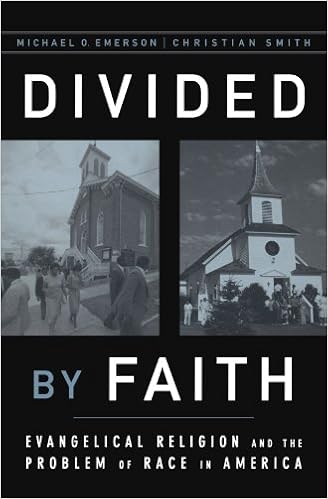
3. Divided by Faith: Evangelical Religion and the Problem of Race in America by Michael O. Emerson & Christian Smith
"Through a nationwide telephone survey of 2,000 people and an additional 200 face-to-face interviews, Michael O. Emerson and Christian Smith probed the grassroots of white evangelical America. They found that despite recent efforts by the movement's leaders to address the problem of racial discrimination, evangelicals themselves seem to be preserving America's racial chasm. In fact, most white evangelicals see no systematic discrimination against blacks. But the authors contend that it is not active racism that prevents evangelicals from recognizing ongoing problems in American society. Instead, it is the evangelical movement's emphasis on individualism, free will, and personal relationships that makes invisible the pervasive injustice that perpetuates racial inequality."

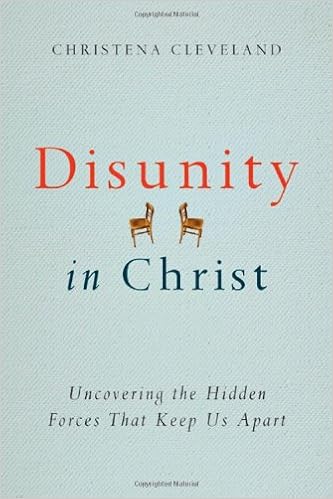
4. Disunity in Christ: Uncovering the Hidden Forces that Keep Us Apart by Christena Cleveland
"Despite Jesus' prayer that all Christians "be one," divisions have been epidemic in the body of Christ from the beginning to the present. We cluster in theological groups, gender groups, age groups, ethnic groups, educational and economic groups. We criticize freely those who disagree with us, don't look like us, don't act like us and don't even like what we like. Though we may think we know why this happens, we probably don't. In this eye-opening book, learn the hidden reasons behind conflict and divisions."

5. Living in Color: Embracing God's Passion for Ethnic Diversity by Randy Woodley
"Though our Christian experience is often blandly monochromatic, God intends for us to live in dynamic, multihued communities that embody his vibrant creativity. Randy Woodley, a Keetowah Cherokee, casts a biblical, multiethnic vision for people of every nation, tribe and tongue. He carefully unpacks how Christians should think about racial and cultural identity, demonstrating that ethnically diverse communities have always been God's intent for his people. Woodley gives practical insights for how we can relate to one another with sensitivity, contextualize the gospel, combat the subtleties of racism, and honor one another's unique contributions to church and society."

6. Cross-Cultural Servanthood: Serving the World in Christlike Humility by Duane Elmer
"Duane Elmer asked people around the world how they felt about Western missionaries. The response? "Missionaries could be more effective if they did not think they were better than us." The last thing we want to do in cross-cultural ministry is to offend people in other cultures. Unfortunately, all too often and even though we don't mean it, our actions communicate superiority, paternalism, imperialism and arrogance. Our best intentions become unintentional insults. How can we minister in ways that are received as true Christlike service? Cross-cultural specialist Duane Elmer gives Christians practical advice for serving other cultures with sensitivity and humility."

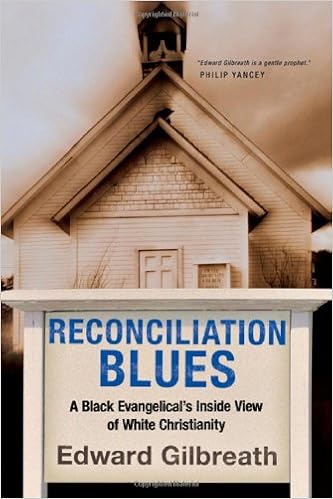
7. Reconciliation Blues: A Black Evangelical's Inside View of White Christianity by Edward Gilbreath
"What is the state of racial reconciliation in evangelical churches today? Are we truly united? In Reconciliation Blues journalist Edward Gilbreath gives an insightful, honest picture of both the history and the present state of racial reconciliation in evangelical churches. In his thoughtful overview he looks at a wide range of figures, such as Howard O. Jones, Tom Skinner, Dr. Martin Luther King Jr., Jesse Jackson and John Perkins. Charting progress as well as setbacks, his words offer encouragement for black evangelicals feeling alone, clarity for white evangelicals who want to understand more deeply, and fresh vision for all who want to move forward toward Christ's prayer "that all of them may be one.""

8. Right Color, Wrong Culture: The Type of Leader Your Organization Needs to Become Multiethnic by Bryan Loritts
"Increasingly, leaders recognize the benefit of multi-ethnic organizations and are compelled to hire diverse individuals who will help them reflect a new America. [Loritts] brings a challenge to leaders in this fable of self-discovery and change, as he explores the central, critical problem leaders often encounter when transitioning their church, business, or organization to reflect a multi-ethnic reality: finding a leader who is willing to immerse themselves in the environments and lives of people who are different from them."

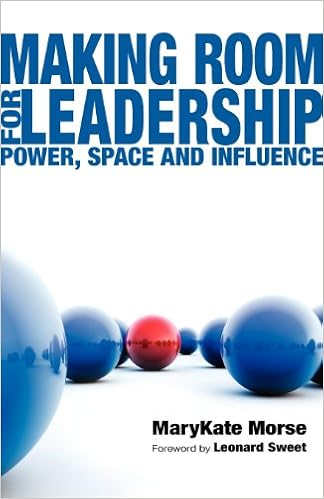
9. Making Room for Leadership: Power, Space and Influence by MaryKate Morse
"You don't just lead with your voice and your decisions. You lead with your body. The way you take up space in a room, the way you use or don't use your body in group settings, influences others. And all of us hold power to lead in our bodies. Yet, pastor and spiritual director MaryKate Morse contends, most of us are unaware of the ways we do or can use our bodies to influence others. Some of us cower in the corner, trying to hide. Others try to speak but are never heard. Still others are the focal point as soon as they walk in a room. What makes the difference? And how can we learn to lead in our own individual way with confidence?"

10. Bridging the Diversity Gap: Leading Toward God's Multi-Ethnic Kingdom by Alvin Sanders
"In a diverse, divided world, pastors and church leaders are faced with the question of how to lead across ethnic lines to bring healing and unity to the body of Christ. How can the church more accurately reflect the vision of God's kingdom, gathering together every tribe and nation? It all begins with leaders whose minds and hearts have been transformed by the gospel. Author Alvin Sanders believes the church is facing a chairos moment—the right time—to address the issue of ethnic division and tension within the church. Through this book, he offers a how-to resource for Christian leaders to lead their organizations in a majority-minority, multi-ethnic America."

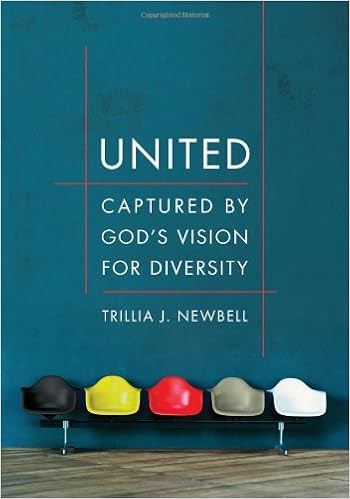
11. United: Captured by God's Vision for Diversity by Trillia J. Newbell
"On the Last Day every tongue and tribe will be represented in the glorious chorus praising God with one voice. Yet today our churches remain segregated. Can we reflect the beauty of the last day this day? United will inspire, challenge, and encourage readers to pursue the joys of diversity through stories of the author's own journey and a theology of diversity lived out. It’s time to capture a glimpse of God’s magnificent creativity. In the pages of United, Trillia Newbell reveals the deeply moving, transforming power of knowing—really knowing—someone who is equal yet unique. As we learn to identify in Christ rather than in our commonalities, we begin to experience the depth and power of gospel unity."

12. Breaking Down Walls: A Model for Reconciliation in an Age of Racial Strife by Raleigh Washington & Glen Kehrein
This is a classic resource for Christians from different cultural backgrounds that are seeking to understand one another. Breaking Down Walls suggest several principles on how we can be reconciled with one another for God's glory. This was one of the first books that I ever read on this subject.


13. Red, Brown, Yellow, Black, White—Who's More Precious In God's Sight?: A call for diversity in Christian missions and ministry by Leroy Barber & Velma Maia Thomas
"[This book] highlights the historic patterns that have created racial discrepancies within missions. With a no-blame attitude, powerful personal narratives from a dozen other black, Hispanic, Asian, Native American and white Christians, interactive histories of missions, and the writings of MLK and Howard Thurman (the entire "Letter From Birmingham Jail" and Howard Thurman's motivational speech "Sound of the Genuine"), Barber addresses this tough issue in a way that will inspire and motivate readers of all races toward change."

I hope you find these books helpful for you in your own journey toward multi-ethnic community and I'd love to hear from you any suggestions about other books you have found beneficial as well.

Saturday, January 28, 2017

Weekly Web Roundup (1/28/17)

Photo Credit: avidaebella
Here is a collection of items from around the web that caught my attention this past week:

Tired in the Tension: My Reflections on Today’s March (Yo Soy Kristy)
"I live in two very different worlds. I live in a world where friends who follow Jesus saw their march today as a living out of gospel values in both word and deed, even if they disagreed with parts of the platform as Christian women and men. I also live in a world where, to other friends, it was unfathomable that any true follower of Jesus would march next to anyone who thought killing babies was okay. To them, it was a politically liberal march with a liberal agenda. It was a bunch of angry women wearing pink hats yelling about vaginas. That’s it."
The Lonely Path of Racial Reconciliation for Minorities by Jarvis Williams (RAAN)

In this article, Dr. Williams highlights some of the very real challenges that ethnic minority Christians face when seeking to reach across racial and cultural lines.

3 Ways Some Churches Grow Without Getting Bigger by Karl Vaters (Christianity Today)
"In many developing nations, large churches don’t fit the culture or meet the needs of the people. So, instead of getting bigger, church growth means planting new congregations in nearby neighborhoods or villages. In fact, in the places where the church is growing as percentage of the population, it is far more likely to be happening by the multiplication of smaller congregations than by the building of larger ones. Growth by multiplication is the way it’s done for many within the house church movement, too. If the gathering gets large, they split off to new houses. This type of growth is not limited to developing nations and house churches. If your church hasn’t been seeing the kind of "butts-in-the-seats" growth you’ve expected, this may be a new way for you to look at growth."
Set of 30 Bible Stories about Honor & Shame (HonorShame)

For those of us that have grown up in the Western World, we can tend to look at our faith and relationship with God through more of a "guilt/innocence" mindset. For many that come from a more Eastern cultural background, though, an "honor/shame" framework might be more dominant. Here is a list of a number Bible stories that can be viewed through the honor/shame lens.

Reflecting on T4G’s “The Future of the Asian American Church by Andrew Ong (Reformed Margins)
"I understand that the specific question, “Are ethnic churches legitimate and biblically faithful in multiethnic contexts?” was not posed. However, wasn’t that what most of us were hoping to hear discussed? I felt like that question was skirted. Yes, Dr. Jue helpfully laid out why the Asian American church has value and what it could do for the sake of mission. However, all these things could easily applied to Asian American Christians individuals. Why do we specifically need Chinese and/or Korean churches? Ecclesiology was sorely lacking from the discussion. What does it mean for “the church” to be multiethnic? Are we talking about local churches, the universal church, or somehow both? And if both, how should that shape our discussions concerning multi-ethnicity and the church?"
How the Nazis Took Control of Germany by Peter Hayes (The Daily Beast)
"The key to understanding the transformation of Germans’ behavior is straightforward: power magnifies the ideas of those who hold it. Power enabled the Nazi regime to unleash the haters, to intimidate the squeamish, and to change the moral valence of prejudice from something frowned upon to something glorified as patriotic. Once that happened, individual self-interest took care of the rest. Above all, power enabled the propagandists for Nazism to divide the world relentlessly into Us vs. Them and to shut down more nuanced perspectives. To Germans, the world became a perpetual struggle between poor, virtuous, and victimized Us, and malevolent, conspiratorial, and implacable Them. In such an unforgiving environment, all means of self-defense were justified, including preemptively striking Them—taking their rights away, concentrating them in camps and ghettos, wiping them out—before they supposedly had a chance to do their worst."

Saturday, December 10, 2016

Weekly Web Roundup (12/10/16)

Photo Credit: Thomas Hawk
Here are some interesting items that I saw across the web over this past week:

Reimagining Racial Bridge Building in the Age of Social Media by Judy Wu Dominick
"I had indeed allowed my social media feed to become an interloper and provocateur in our marriage.  It makes me wonder about the extent to which the health and stability of all our face-to-face interactions, especially with people who are different from us, are being threatened by the endless electronic stream of quips, memes, rants, demands, news (both real and fake, trivial and earth-shattering), entertainment, propaganda, and sensationalism.  If the best-selling book EAT THIS, NOT THAT! helps people make healthier food choices that benefit their bodies, we need a similar guide for healthier internet consumption that benefits our souls, psyches, and bridge-building work.  A good start would be to choose the meaty over the bitty, the considered over the cutting, and reason over emotionalism."
Dakota Access Pipeline to be Rerouted by Caroline Kenny, Gregory Krieg, Sara Sidner and Max Blau (CNN)
"Celebrations, tears of joy, chanting and drumming rang out among thousands of protesters at the Standing Rock site after the Army Corp of Engineers announced it will look for an alternate route for the Dakota Access Pipeline to cross under Lake Oahe in North Dakota. For months, members of the Sioux tribe and their supporters have camped out, fighting the pipeline they say could be hazardous and damage the water supply of their reservation nearby. "People have said that this is a make it or a break it, and I guess we made it," Chief Arvol Looking Horse, Keeper of the White Buffalo Calf Pipe, announced to a cheering crowd of protesters."
Looking back at what really happened between Alabama and Rich Rodriguez 10 years ago by Paul Talty (AL.com)
"Ten years ago today, possibly the most important moment in Alabama football history took place in West Virginia. No, it wasn't the day Nick Saban, a West Virginia native, said yes to replacing Mike Shula. It was the day West Virginia coach Rich Rodriguez said no."
5 Powerful Ways Becoming A Morning Person Unlocks Your Leadership by Carey Nieuwhof
"Work patterns are a lot like traffic patterns: at 5 a.m. you have the road to yourself. At 8 a.m., it could take you three times as long to travel the same distance. These days I do everything I can to beat traffic, not just on the road, but in life. I do most of my shopping at off hours.  My wife and I have even begun to do off-season travel. Why? Because we end up having more time to do what matters most. Ditto with work."
6 Reasons to Get Better at Leading Meetings by Paul Axtell (Harvard Business Review)
"The ability to manage conversations so that they are productive, inclusive, and focused on getting work done is an organizational skill that transcends expertise. Being really good at a core discipline (say, marketing, business development, or social media) is important, but being an expert only gets you so far. If you can add to your repertoire of skills the ability to facilitate conversations, you’ll add more value to your organization, and be recognized for doing so."
Jimmy and Dwayne Johnson Surprise 'Tonight Show' Staffer with Military Homecoming

Tonight Show host Jimmy Fallon and Dwayne "The Rock" Johnson recently surprised one of Jimmy's staffers. Watch the video. You won't regret it.

Saturday, October 22, 2016

Weekly Web Roundup (10/22/16)

Photo Credit: Duke TIP
Here are some interesting stories that I have noticed from around the web this past week:

Most College Students Are Leaving the Church. Here's How This Congregation Is Bucking the Trend by Daniel Darling (Christianity Today)
"I believed the college campus is the largest mission field in our city and the "10/40 Window" of America. We didn't want a church of exclusively college students, but rather a church of all ages that was passionate about reaching the campus. In the early days, though, people weeded themselves out quickly; they’d walk in and say, "Ugh, look at all these college students." Instead, we built the church with people who would say, "Wow, look at all these college students!""
Black Millennials lead in digital, Nielsen says by Jessica Guynn (USA Today)
"African-American Millennials spend about two hours more a week (eight hours and 29 minutes versus six hours and 28 minutes) using the Internet on personal computers than total Millennials, and about an hour more weekly (three hours and 47 minutes versus two hours and 33 minutes) watching video on personal computers. African-American millennials are 25% more likely than all Millennials to say they are among the first of their social or work circle to try new tech products."
From Cultural Competency to Cultural Humility by Natasha Iwalani Hicks (Next Church)
"In the past I used to get fired up about the assumptions that people make about me and my cultural/ethnic background, especially because it often came with a lack of expectation based on my appearance and my quiet presence.  However, as I have grown to be more and more comfortable in my own skin and to truly value my experiences as a multi-cultural person, I have increasingly learned to lean in and to engage in conversation instead of allowing anger or disappointment to lead my response.  I will admit though, that I still do experience those knee-jerk responses of anger and disappointment at times, especially when I see assumptions being placed upon others."
White Evangelicals Noticeably More Forgiving of 'Immoral Behavior' in Elected Officials Today Than in 2011 (Sojourners)
"A poll by PRRI, published Oct. 19, reveals that 72 percent of white evangelical Protestants now believe that immoral behavior by an elected official doesn’t mean the official is incapable of performing their duties. This is a dramatic increase from the year 2011, when only 30 percent of white evangelical Protestants shared this view."
White Privilege in Western Missions (A Life Overseas)
"Even (and perhaps especially) in missions work, the resources that are used, the ideas that are disseminated, and the methods that are implemented are most likely created, introduced, or advanced by white men. While their intentions are undoubtedly benevolent, this comes at a cost. When those with white privilege are the only people with influence, people of color inevitability feel stripped of power. When theirs are the only voices we hear, people of color feel unheard.  When there is a lack of representation and diversity within the missions community, people of color feel dismissed. These seemingly benign acts of commission and omission seem trivial taken on their own, but when experienced day after day, what we hear is “I don’t need you.”  The message we receive is that we are weaker, less honorable, and unpresentable."
Racial Reconciliation May Not Be What You Think It Is by Rich Villodas (Missio Alliance)
"To be sure, diversity is a good thing, but in itself it is not reconciliation. On the surface diversity looks wonderful. However, the temptation is for us to stop there. When we do we are no different from New York City subway cars. NYC subway cars are crowds of diverse, anonymous people in close proximity. But the church is called be more than a sanctified subway car."