Friday, January 13, 2012

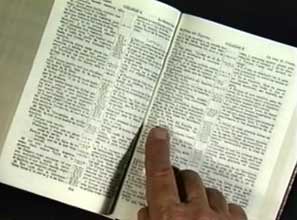
Slavery & Christian Heroes of the Faith

Photo Credit: WELS.net
In a recent blog post, Trevin Wax tackles a difficult question for the modern Christian -- How do we respond to the great heroes of our faith that openly subscribed to racial prejudices and may have even owned slaves themselves?

Due to the uncomfortable nature of this topic, most of us choose to ignore the question. We would rather act like we don't know that Jonathan Edwards, the great Puritan preacher, owned slaves or that Martin Luther, the courageous instigator of the Christian Reformation, is widely known to have been anti-Semitic?

So how do we wrestle through the reality that some of those that are generally regarded for their deep understanding of the gospel failed so miserably to live out this understanding as it pertained to their fellow man?

Wax offers this:
"The one thing we cannot do is to explain away our theological forebears’ attitudes and actions by appealing to the historical context of their time. It’s true we must take into consideration their context in order to understand them and refrain from unnecessary vilification. But we must make sure that as we point out the general social ethics of the day we do not diminish the sinfulness of their practice. Otherwise, we run the risk of elevating right doctrine over right practice in a way that departs from the teaching of the apostles. 
Attitudes and actions matter. When Paul confronted Peter for separating himself from the Gentiles, he wasn’t worried that Peter had abandoned justification as a doctrine. Paul called him out because Peter was denying the truth by his practice. In other words, we cannot paper over the sinful actions of our forefathers by appealing to the soundness of their doctrinal beliefs. And let’s be clear. Racial and ethnic superiority is antithetical to the doctrine upon which the church of Jesus Christ stands or falls. 
...Slavery is a great evil, but even slavery cannot stand in the way of the grace and glory of the gospel. And just as we learn from the blind spots of the generations who have gone before us, we trust that the blood of Christ will cover our own blind spots. That’s why the more we walk with God, the more we cry like David: "Cleanse me from my hidden faults.""
The men and women that went before us were fallible human beings, just as we are today. Because they "missed it" in such an important area does not negate the truth of the message they preached, even if they failed to always live it out in their own lives. These men were influenced by the culture they lived in...and we are influenced by ours. It's a reminder that just because a popular preacher advocates something, it doesn't always mean it lines up with what Scripture teaches. We should always compare what we're being taught to what the Bible actually says.

Just as we are horrified to learn that Bible-believing Christians participated in the slave trade, future generations will be shocked to learn of issues that we tolerated (e.g. abortion). If history has taught us anything, it is not that people are inherently good and that the gospel is not needed but it has shown us that we are wicked and in desperate need of a Savior. Fortunately for us, that Savior is not found among sinful Christian leaders but He stands at the right hand of the Father pleading on our behalf.

To read the rest of Trevin's well-written post please click here.

Wednesday, January 11, 2012

A Primer For Politicians: The Facts About Poverty & Race

Photo Credit: tizzie
"Stereotype: A fixed, commonly held notion or image of a person or group, based on an oversimplification of some observed or imagined trait of behavior or appearance." (From Media Awareness Network)

Those of us in the U.S. are in the midst of another presidential election and the issue of race is figuring prominently into the national conversation once again. When discussing the issue of race, there are a number of misconceptions that politicians often contribute to by reinforcing stereotypes that are based in perception...but not reality.

For example, take recent comments made by Republican presidential candidates Rick Santorum and Newt Gingrich. When commenting about the state of the welfare system in the United States, Santorum is quoted as saying this:
"I don’t want to make black people’s lives better by giving them somebody else’s money. I want to give them the opportunity to go out and earn the money."
Newt Gingrich, when commenting on the realities of poverty in America's inner cities, says this:
"Look,” Gingrich said, “at a time when you have up to 43% black teenage unemployment, you have entire communities that are devastated, you have neighborhoods where nobody has worked and nobody has any habit of work, I’d be delighted to — that’s why I want to challenge Obama to 7 three hour debates — I’d be delighted to have a conversation about our current approach to children. 
“Young children who are poor ought to learn how to go to work,” he continued. “What I’ve said is, for example, it would be great if inner city schools and poor neighborhood schools actually hired the children to do things. Some of the things they could do is work in the library, work in the front office. Some of them frankly, could be janitorial."
It can be agreed that poverty is a problem that needs tangible and long-term solutions. But one of the misconceptions that politicians like those quoted above have, along with many of us, is that poverty is a black issue. For many people, when the topic of conversation turns to poor people or the subject of welfare, there is a stereotype in many peoples' minds that poor=black. It is simply not true.

Here are the facts: According to The Root.com, the numbers from the 2010 census tell us that 31 million of the 46 million people living in poverty are white. Although the stereotype that many of us may assume to be true is that the bulk of those who are living in poverty are black, just a little over two out of every ten Americans living in poverty are African American. And poor white people don't just live in rural areas -- nearly half of the urban poor are those that look like me.

Furthermore, many people of all races who fall below the poverty line are employed or actively seeking work in this troubled economy. These individuals, considered the "working poor", comprise nearly 60% of all those who are considered poor. So any person who says that everyone who grows up below the poverty line doesn't know what an honest day's work looks like simply does not know the realities on this matter. In fact, some of those who we define as poor are some of the hardest working people that any of us will ever meet.

My concerns here in raising this issue are not that there are politicians who desire to see those in poverty elevate themselves into a higher economic class. Nor do my hesitations come from a place of not wanting economically disadvantaged individuals to earn a living for themselves. I think it is good and right that those in poverty seek employment, if at all possible. My trouble is with the condescending tone that accompanies these pronouncements, as well as the perpetuation of the stereotype that poor=black.

From personal experience, I know that this myth that all (or at least most) black people come from poverty or grew up in the inner-city is well-ingrained in the psyche of many of us. For example, I've spent much of my adult life ministering to African American college students. Although some of the students I've worked with have come from less than ideal family situations and grew up in economically distressed neighborhoods, many of them grew up in stable, two-parent homes in nice communities.

But time and time again I've had people assume that my ministry focus is in "the hood" after they've learned I work with African Americans. I say I minister to African American college students...and their mind immediately shifts to an "urban community" with "disadvantaged youth." Yes, I've spent some time ministering in poor communities in urban areas but most of my work with students has been spent on college campuses in college towns.

My desire is that the leaders at the highest level of our country would at least know the facts when it comes to addressing complicated challenges like systemic poverty in distressed communities across our country. People from all ethnic groups face economic challenges. It is not just a black problem. It is an issue for all of us. If political leaders are sincere in wanting to solve problems like cyclical poverty, my suggestions is that they spend some time in disadvantaged communities -- whether that's in the barrios of Los Angeles, the streets of Harlem or the hills of Appalachia.

Wednesday, January 04, 2012

The Importance Of Character Over Reputation

Photo Credit: tartanpodcast
Do you find yourself giving more thought to what others think about you or more thought to developing your own character? Donald Miller, an author who I respect for his honesty and vulnerability, offers a challenging perspective on why our character should matter more to us than our reputation.

Miller has this to say:
"So, what would it look like for us to have great character in 2012 and stop working on our reputation? Who really cares what people think? 
I learned this lesson several years ago. I ran into a person who worked endlessly on their reputation but had terrible character. When their character was revealed (which happens in intimacy) they were a complete let down. The truth is, they wouldn’t have been a let down at all if they would have been themselves. 
People don’t judge who we are, they judge who we’ve led them to believe we are. The more time and effort we put into making ourselves look great, the longer and harder the fall when the truth comes out. And eventually the truth comes out. 
What I took from that relationship was difficult, but it’s something we have to face in our early twenties, usually, and that’s there’s a difference between our reputation and our character. Since then, I’ve decided not to work very hard on my reputation. Or at least I hope that’s true. I air most of my dirty laundry, so nobody will judge me. People only judge those who claim to be better than others, more holy, more righteous more moral. When I’m ethical, I just look good. When somebody who works on their reputation isn’t ethical, they find themselves in social court. Working on our reputation is just a dumb move."
To read more of Miller's thoughts on this important topic please read the complete post here.