Showing posts with label racism. Show all posts

Saturday, April 29, 2017

Weekly Web Roundup (4/29/17)

Photo Credit:
US Department of Education
Here is a collection of items from around the web that caught my attention the past couple of weeks:

Sorry Weber, Durkheim, and Marx: Educated Evangelicals Are More Religious by Sarah Eekhoff Zylstra (Christianity Today)
"Evangelicals who graduated from college are more likely than those who didn’t enroll to attend religious services at least weekly (68% vs. 55%), to pray daily (83% vs. 77%), and to believe in God with absolute certainty (90% vs. 87%). They’re also more likely to say religion is very important to them (81% vs. 79%). Those numbers aren’t a fluke; when Pew broke the categories down further, the trend continued. Evangelicals who earned a graduate degree after college are the most committed to their faith; those who dropped out of high school are the least committed."
The Missing Piece in American International Missions by Courtlandt Perkins (Reformed African American Network)
"In many places, ethnicity and faith are deeply connected to a people group’s identity, so to only see people with white skin representing Christ speaks volumes about what Christians look like. The human heart naturally doesn’t want to receive Christ due to depravity, but what if the dark skin of a missionary helps them be received into an African village, simply because they look familiar? The unreached will physically see that Jesus changes the lives of people who look like them. African American missionaries could inspire a generation of African missionaries to receive Christ, and take His message to places AA’s could never go. In the same way, sending Hispanic-American missionaries to Latin American countries, we could help deconstruct the notions of white superiority, and point to the reality that white Christians do not have the copyright of international missions. It is obvious the issues run deeper than just numbers. The reality is often rooted in inherit racial bias and historical discrimination. But my friend’s words resound deeply with me: “Diversity is a powerful (and much needed) tool for witness.”"
6 Tech Habits Changing the American Home (Barna Group)
"Technology is literally everywhere in our homes—not only the devices in our pockets but the invisible electromagnetic waves that flood our homes,” writes Andy Crouch in his new book The Tech-Wise Family, written in partnership with original Barna research. “This change has come about overnight, in the blink of an eye in terms of human history and culture. When previous generations confronted the perplexing challenges of parenting and family life, they could fall back on wisdom, or at least old wives’ tales, that had been handed down for generations. But the pace of technological change has surpassed anyone’s capacity to develop enough wisdom to handle it. We are stuffing our lives with technology’s new promises, with no clear sense of whether technology will help us keep the promises we’ve already made."
The Legitimacy of Ethnic Churches in Multi-Ethnic Contexts by Andrew Ong (Reformed Margins)
"While pursuing a church demographic that proportionally matches the community’s might be a helpful and wise benchmark for certain churches, to impose any particular vision of unity and diversity upon a local church strikes me as mechanistic. This is especially true since the automobile has fundamentally altered our conception of communities’ bounds. How many of us worship at the closest Christian church to our home? Binding local churches to the norm of multi-ethnicity is mechanistic if our conception of church unity is absolutely bound by spatial-location. Is a church less faithful if it’s attended by more people who live ten minutes away by car than people who live ten minutes away by foot? Didn’t Jesus just say that his sheep would hear his voice?"
One Teenager's (Supremely Brilliant) Perspective on Social Media (Scott Sauls)
"When I finally spent a week “unplugging” from my phone, I realized that the withdrawals I experienced from disengaging from the app were a sign of the control it had over me. This control scared me and made me angry because I had willingly put myself in an unnecessary position to compare my insides to others’ outsides, to be controlled by my appearance and people’s opinions, and to hurt others and myself with my comments, posts, or digital footprint. This unnerved me because it was a dangerous trap that had been disguised by an attractive, socially acceptable, and necessary staple of popularity. After I deleted my social media accounts, I began to notice how other teenagers my age were trapped in the same digital world that I was. I wanted to understand why this was happening. What exactly are we as a society risking with the constant attachment to our screens?"
Why a racially insensitive photo of Southern Baptist seminary professors matters by Jemar Tisby (The Washington Post)
"But the biggest problem doesn’t show up in the picture. The presence of any person of color would have reduced the chances of this photo ever happening. But a photo like this evolves in an environment that lacks meaningful interaction with people from other cultures, especially on the leadership level. The seminary’s website appears to picture all white men in an administration and an entire preaching faculty. Even if a school has diversity in the student body, if the decision-makers all come from a similar racial and cultural background, then they will remain oblivious to their own racial blind spots."
The Guide to Being a Detroit Sports Fan by Dan Holmes (Detroit Athletic Blog)
"What does it mean to be a Detroit sports fan? What should we all know? What do we need to know? Not everyone has the answers to these questions, so I wrote them all down in one place. Enjoy."

Saturday, February 11, 2017

Weekly Web Roundup (2/11/17)

Photo Credit: Moinikon
Here is a collection of items from around the web that caught my attention this past week:

Why Christian Kids Leave the Faith by Tim Challies
"For some people Christianity is outright rejected and replaced by an alternate system of beliefs. For others, though, Christianity is merely displaced by competing passions, concerns, or emphases. They may commit themselves to success in business and allow religion to take a back seat, or they may passionately pursue sports and find it more exciting and fulfilling than their faith. Some endure times of trial or torment and in the midst of those troubles find their faith has fallen by the wayside. In either case, faith, once an important part of their life, falls in significance until it fades far into the background. It’s less that these people reject their faith and more that they lose interest in it or even forget about it."
Getting My Friend Back 25 Years Later by Joshua Rogers

This is a touching story of how a grown man was spurred on by his young daughters to make an effort to reconnect with his estranged best friend from middle school. Get your tissues ready.

Thoughts on Sharing our Stories by Marilyn Gardner (A Life Overseas)
"The person who has read a book cannot claim experiential knowledge. A person who has spent ten days on a cruise ship and has visited nine ports in those ten days is hardly an expert on every country where they have stopped. Yet they sometimes claim to be. The person who has gone on a short-term mission or volunteer trip needs to be careful to tell their story with integrity and honesty, not as an expert, but as a learner. It is easy to make broad assessments of places and people based on a limited view and a single story. At the same time, when we travel and when we live in places, we do experience the world through a different lens, and we do want to communicate those experiences. Much of my life is a learning process of how to communicate what I have experienced and be fair and wise within that communication."
The Headache and Hope of Multi-Ethnic Ministry by Adam Mabry (The Gospel Coalition)
"I’m not saying every church has to meet some false standard of diversity. Nor am I suggesting churches mostly composed of one ethnic group are bad. Yet if any church isn’t concerned with the other tribes—unconcerned to reach them, to know them, and to be known by them—how is that not the same kind of self-preferential partiality of which Peter was guilty? We carry the lunch tray of our cultural preferences to the table filled with persons like us because we just don’t want the headache of dealing with the other."
A Timeline of Black Christianity Before the Civil War by A.G. Miller (Christianity Today)

Here is an interesting timeline of some of the key moments of African American history as it relates to Christianity.

How Children Learn Who’s In And Who’s Out by Natasha Sistrunk Robinson (The Redbud Post)
"As an African American child, my mother taught me about race. She didn’t teach me so I would hate the other. She taught me so I would be informed, so I could better understand history and attempt to process why someone might think differently, and so I would have examples of what was and is a righteous response to hateful people. From her teaching and example, I learned my responsibility to educate myself and to advocate on behalf of others. As an African American parent of an African American daughter, this is part of the teaching and training that takes place in my home. Education about racial injustices is a necessity for her survival, and it was a necessity for mine. That’s why my mother taught me, that’s why I teach my daughter, and why I don’t want her to be colorblind."
Jennie Allen and the Longterm Impact of College Ministry by Tim Casteel
"College Ministers: What you are doing matters. Meeting with hundreds of disinterested freshmen to find a handful that want to know Jesus and make Him known. Turning over a multitude of rocks to find one or two gems. Teaching students how and why to read God’s Word. Discipling students who will make disciples. We rarely get to see the fruit of what we so laboriously sow. Students graduate and get married and get jobs and move off. And we go back to meeting with hundreds of disinterested freshmen to find a handful…"

Saturday, October 01, 2016

Weekly Web Roundup (10/1/16)

Photo Credit: Brook Ward
Here are some interesting stories from around the web that I've seen during this past week:

4 Principles for Political Witness in our American Babylon by Bruce Ashford (The Gospel Coalition)
"Similarly, evangelicals shouldn’t submit to the false political gods that flourish and abound in the United States of America. How do we identify the “false gods” in our own nation? We look for anything raised to a level of ultimacy that God alone occupies."
Is Columbus Day Going Extinct? by Lizzie Crocker (The Daily Beast)
"Businesses in the entire state of Alaska, however, will be closed for Indigenous Peoples Day, after Gov. Bill Walker renamed the holiday last year. The city of Cambridge, Massachusetts, will also celebrate its first Indigenous Peoples’ Day, after the City Council voted unanimously in June to change the name of a holiday whose namesake, they decided, was not worthy of celebrating."
Black Women Are Leaning In And Getting Nowhere by Emily Peck (The Huffington Post)
"Part of the problem is “invisibility,” Purdie-Vaughns writes. When the average person thinks of a “woman leader,” she argues, the image that comes to mind is a white woman ― like Sandberg. If you picture a black leader, you’re more likely to think of a black man than a black woman. “Because black women are not seen as typical of the categories ‘black’ or ‘woman,’ people’s brains fail to include them in both categories,” Purdie-Vaughns writes. “Black women suffer from a ‘now you see them now you don’t’ effect in the workplace.”"
Yes, You Should Say Something: Overcoming Awkwardness with Grieving People by Nancy Guthrie (The Gospel Coalition)
"It’s not up to you to say something that answers the significant questions they’re asking. Those take some time to work through, and if they sense your willingness to linger with them a bit in the midst of the questions rather than offer simplistic answers, they’re more likely to want to explore them with you down the road. It’s not up to you to recommend the book they need to read, the counselor they need to see, the drug they need to take. You don’t have to provide a framework for thinking and feeling their way through their loss. Really, you just have to show up and say little. What they need more than someone with a lot of words is someone with a willingness to listen without judgment, someone who seems to be entering into their hurting world for the long haul of grief."
How Should Universities Atone for Their Past Mistakes? by Alia Wong (The Atlantic)
"While black enrollment at colleges and universities has increased dramatically in the last two decades, the share of students at top-tier institutions who are African American has actually dropped. Fewer than 4 percent of students at the most competitive colleges in the United States come from the nation’s lowest socioeconomic quartile. Statues, seals, and buildings continue to honor people who embraced slavery and sought to keep these kinds of students out."
How Did Hitler Rise to Power? : New TED-ED Animation Provides a Case Study in How Fascists Get Democratically Elected (Open Culture)


Thursday, August 25, 2016

How To Help A Self-Admitted Prejudiced Person Change

Photo Credit: memotions
One of the biggest challenges we face in our own personal development is dealing with the prejudice we hold in our hearts towards those that are different than us.

Along with that, we also grapple with the knowledge that discussing these issues leads to the possibility of being accused a racist, which is potentially one of the greatest fears that well-meaning white people have.

For those of us that desire to deal with the uneasy places within our hearts, the tension of coming to grips with our prejudice AND the uncertainty of sharing about these dark places inside of us can leave many of us in a place of emotional paralysis, even as we are seeking to change and view others more positively.

On a recent episode of C-SPAN's "Washington Journal", Heather McGee, president of Demos Action, demonstrates a level of grace rarely seen today towards a self-admitted prejudiced person that wants to change. You can watch the interaction here. Please pay particular note to the suggestions that Ms. McGee offers to the caller.


This is a great model of how to enter into the journey of someone that wants to grow in this area but isn't sure how. Beyond the empathy that she demonstrates, the practical suggestions that Ms. McGee offers are quite helpful.

(HT: Black Voices)

Sunday, August 07, 2016

Weekly Web Roundup (8/7/16)

Photo Credit: vince2012
Here are some interesting stories from around the web that I've seen during this past week:

Christians Have to Care About Injustice in the World by Rasool Berry
"If we want to truly follow Jesus, we must be committed to justice, because He is. When we look at the Bible holistically, we see the mandate is for every citizen in the kingdom of God to eradicate injustice The command is there, hidden in plain sight like a plot twist in a movie that our eyes missed because they were looking for something else."
For Many Latinos, Racial Identity Is More Culture Than Color by Mireya Navarro
"Yet race matters. How Latinos identify themselves — and how the census counts them — affects the political clout of Latinos and other minority groups. Some studies have found that African-Latinos tend to be significantly more supportive of government-sponsored health care and much less supportive of the death penalty than Latinos who identify as white, a rift that is also found in the broader white and black populations."
Rio 2016: The diverse women’s gymnastics team is great. But it will not “calm race relations.” by Jenée Desmond-Harris
"There’s a more straightforward, emotional reaction to the diverse team, too. In the words of the social media celebrations of the many fans who’ve shared images of the five leotard-clad young women, "Representation matters!" What they’re saying is that for black and Latino people — especially little girls — to be able to turn on the TV and see people who look like them in this rare-until-now context is a big deal. Many white Americans who are simply pleased to see a team that includes more reflections of the ethnic makeup of the country we live in are equally enthused."
Racial Trauma is Real: The Impact of Police Shootings on African Americans from Psychology Benefits Society
"In addition to the mental health symptoms of individuals who have encounters with law enforcement, those who witness these events directly or indirectly may also be impacted negatively. In an attempt to capture how racism and discrimination negatively impacts the physical and mental health of people of color, many scholars have coined the term “racial trauma” or race-based traumatic stress. Racial trauma may result from racial harassment, witnessing racial violence, or experiencing institutional racism (Bryant-Davis, & Ocampo, 2006; Comas-Díaz, 2016). The trauma may result in experiencing symptoms of depression, anxiety, low self-esteem, feelings of humiliation, poor concentration, or irritability."
'Meet the Parents' Re-Cut as a Thriller

The popular comedy, Meet the Parents, was re-imagined as a thriller in the trailer seen here. Quite well done.


Saturday, July 23, 2016

Weekly Web Roundup (7/23/16)

Photo Credit: Will Montague
Here are some interesting stories from around the web during this past week:

Are We Distracting Ourselves to Death? by Karen Swallow Prior
"Surely, distractions have been around since shepherds have been taking their eyes off sheep to chase butterflies, but such accidents point to the way technology can help us lose our sense of reality and its inherent dangers. When a reality that exists only inside our head—or our handheld devices—collides with the material, tangible world, we are entering the hyperreal."
Tips on Beginning a First Conversation on Racism in a Church by Christena Cleveland

Noted social psychologist and racial reconciliation leader Christena Cleveland was recently asked by a black pastor on staff at a multi-ethnic church about how to address issues of racism and equity within his church. This is her advice.

Why Democrats and Republicans Literally Speak Different Languages by Derek Thompson
"For several decades now, Republicans and Democrats have become more polarized. There are plenty of reasons for that, including the demise of the Southern Dixiecrats and the geographic sorting of the country into ideologically homogenous neighborhoods. But the two major parties are now divided by a common language: Democrats discuss “comprehensive health reform,” “estate taxes,” “undocumented workers,” and “tax breaks for the wealthy,” while Republicans insist on a “Washington takeover of health care,” “death taxes,” “illegal aliens,” and “tax reform.” When did the two major political parties create their own vocabularies? Around 1990. That’s according to a fascinating new paper by the economists Matthew Gentzkow and Jesse M. Shapiro and Microsoft Research’s Matt Taddy."
The Story of Making a Murderer Isn't Over Yet

Netflix announced they'll be making more episodes of the popular documentary series, Making a Murderer. New episodes will focus on the post-conviction process and its emotional toll on those involved.

Fans Play Star Wars Theme for John Williams Outside His House

This is what happened when two guys with horns made a spontaneous decision to set up and play the Star Wars theme in front of John Williams' house. Watch the video to find out.


Friday, April 15, 2016

26 Films To Help You Understand Race & Culture

Photo Credit: Wikipedia
Due to my experiences ministering in cross-cultural environments, I'm often asked about resources that can aid others in their own understanding of cultures different than their own. Several years ago, I provided a list of books that I've found particularly helpful in my own journey of learning about the experiences and background of different ethnic groups within the United States.

In a similar vein, I'd like to provide a list here of 26 films that I've personally watched or have had recommended to me that can assist us in entering into the stories of those from a variety of ethnic and cultural experiences.

These are not necessarily "Christian" movies so they may contain elements that some will find objectionable so I encourage you to check the "Parents Guide" on IMDB.com for each of these films before watching them.

One of the challenges of compiling a list like this is that one is bound to leave out a number of worthwhile selections. So instead of seeking to be exhaustive here, I've limited the number of movies. As well, I've attempted to avoid recommending films that are told from the vantage point of someone from majority culture or where the story of ethnic minorities is minimized and the "white savior" takes center stage.

I've listed movies to grow in your understanding of African Americans, Asian Americans, Latinos and Native Americans. In addition, I'm recommending several films I've seen that address the realities of marginalized groups in other parts of the world, as well as dealing with race in general.

African Americans/Blacks

  • The Color Purple (1985) - A black Southern woman struggles to find her identity after suffering years of abuse from her father and others over 40 years.
  • Fruitvale Station (2013) - The story of Oscar Grant III, a 22-year-old Bay Area resident killed by police, who crosses paths with friends, enemies, family, and strangers on the last day of 2008.
  • Hoop Dreams (1994) - A documentary following the lives of two inner-city Chicago teenagers who struggle to become college basketball players on the road to going professional.
  • Malcolm X (1992) - Biographical epic of the controversial and influential Black Nationalist leader, from his early life and career as a small-time gangster, to his ministry as a member of the Nation of Islam.
  • Selma (2014) - A chronicle of Martin Luther King's campaign to secure equal voting rights via an epic march from Selma to Montgomery, Alabama in 1965.

Asians/Asian Americans

  • Bend it Like Beckham (2002) - The daughter of orthodox Sikh rebels against her parents' traditionalism and joins a soccer team.
  • Better Luck Tomorrow (2002) - A group of over-achieving Asian-American high school seniors enjoy a power trip when they dip into extra-curricular criminal activities.
  • Gran Torino (2008) - Disgruntled Korean War veteran Walt Kowalski sets out to reform his neighbor, a Hmong teenager who tried to steal Kowalski's prized possession: a 1972 Gran Torino.
  • The Joy Luck Club (1993) - The life histories of four Asian women and their daughters reflect and guide each other.
  • The Namesake (2006) - American-born Gogol, the son of Indian immigrants, wants to fit in among his fellow New Yorkers, despite his family's unwillingness to let go of their traditional ways.

Hispanics/Latinos

  • Cesar Chavez (2014) - A biography of the civil-rights activist and labor organizer Cesar Chavez.
  • The Lost City (2005) - In Havana, Cuba in the late 1950s, a wealthy family is caught in the violent transition from the oppressive regime of Batista to the government of Fidel Castro.
  • My Family (1995) - This epic film traces over three generations of a Mexican American immigrant family's trials, tribulations, tragedies and triumphs.
  • Selena (1997) - The true story of Selena Quintanilla-Perez, a Texas-born Tejano singer who rose from cult status to performing at the Astrodome, as well as having chart topping albums on the Latin music charts.
  • Stand and Deliver (1988) - The story of Jaime Escalante, a high school teacher who successfully inspired his dropout prone students to learn calculus.

Native Americans/First Nations

  • Bury My Heart at Wounded Knee (2007) - A chronicle of how American Indians were displaced as the U.S. expanded west. Based on the book by Dee Brown.
  • On the Ice (2011) - In Barrow, Alaska, teenagers Qalli and Aivaaq find their bond tested when a seal-hunting trip goes wrong, resulting in the death of their friend.
  • Powwow Highway (1989) - A member of the Northern Cheyenne tribe of Lame Deer battles greedy developers as he tries to persuade the council to vote against a strip-mining contract.
  • Reel Injun (2009) - A documentary film that traces the history of the depiction of Native Americans in Hollywood films.
  • Smoke Signals (1998) - Two friends from the Coeur D'Alene Indian Reservation go on a road trip to retrieve the remains of a recently deceased family member.

Other

  • Crash (2004) - Los Angeles citizens with vastly separate lives collide in interweaving stories of race, loss and redemption.
  • Do the Right Thing (1989) - On the hottest day of the year on a street in the Bedford-Stuyvesant section of Brooklyn, everyone's hate and bigotry smolders and builds until it explodes into violence.
  • Invictus (2009) - Nelson Mandela, in his first term as the South African President, initiates a unique venture to unite the apartheid-torn land: enlist the national rugby team on a mission to win the 1995 Rugby World Cup.
  • The Kite Runner (2007) - After spending years in California, Amir returns to his homeland in Afghanistan to help his old friend Hassan, whose son is in trouble.
  • Rabbit-Proof Fence (2002) - In 1931, three aboriginal girls in Australia escape after being plucked from their homes to be trained as domestic staff and set off on a trek across the Outback.
  • Schindler’s List (1993) - In Poland during World War II, Oskar Schindler gradually becomes concerned for his Jewish workforce after witnessing their persecution by the Nazis.

I hope that you'll take the time to view a few of these movies as we grow in understanding, empathy and compassion towards one another. As always, personal friendships are the best way to learn about other cultures but watching films like those listed here can help us in the process.

Tuesday, September 01, 2015

Understanding Marginalization Of Sub-Dominant Cultures

Photo Credit:
United Nations Photo
"Dominant cultures" and "sub-dominate cultures" might be terms that are foreign concepts to many of us. I often find it helpful to define terms, which I'll attempt to do here, so that we're on the same page with one another as we grow in cultural understanding together.

In its simplest sense, a dominant culture is a culture within a nation or geographic area that determines what is "normal." To put it another way, members of a dominant culture are those who most often get to experience their values, beliefs, customs, and way of life as that which is considered the norm.

Within the United States, it is those of us that have a European American heritage that would be considered the dominant culture. Additionally, because those of us of European descent are more than half of the U.S. population, we can also be considered the majority culture.

On the flip side, a sub-dominant culture are those where the values, beliefs, customs and way of life of its members are not considered the norm. Examples within the U.S. could be Muslims of Middle Eastern heritage, Americans of Chinese descent or Mexican Americans. Within the U.S., we might also refer to those that identify within these groups (as well as many other sub-dominant groups) as ethnic minorities.

However, dominant/majority and sub-dominant/minority are not necessarily interchangeable terms. For example, Afrikaners within apartheid-era South Africa (and in many ways, still today) were most certainly of the dominant culture since they held positions of governmental authority, owned the bulk of land and established cultural norms. However, they would not be considered the ethnic majority since less than one out of every ten South Africans identify as an Afrikaner.

It is probably helpful to consider dominance/sub-dominance as related to power and ethnic majority/ethnic minority as related to numbers of a population. Although sub-dominant and ethnic minority groups often are the same groups within a society, it is possible for an ethnic minority group (e.g. Afrikaners in South Africa) to be the dominant group.

Understanding these nuances can be helpful for us in recognizing the ways that sub-dominate and ethnic minority cultures can be marginalized within a society. In Suffering & the Sovereignty of God, Dr. Carl Ellis offers the following insights as to how marginalization can take place and the role that Christians can play in addressing it:
"Marginalization happens when that which is valid is regarded as invalid merely because it differs from the prevailing standards of creature-ism [i.e. judging the Creator by the standard of the creature]. Thus, people who fit this description are relegated to a position of insignificance, devalued importance, minor influence, or diminished power. How does marginalization affect human interaction? 
Every society has a dominant culture and at least one sub-dominant culture. Each of these has a corresponding cultural agenda and intra-cultural consciousness. Those in the dominant culture tend not to realize they have a culture, and those in the sub-dominant culture know very well that everybody has a culture. 
All in the sub-dominant culture are exposed to the dominant cultural agenda. But few in the dominant culture are even aware that there is a sub-dominant cultural agenda. Therefore, to those in the dominant culture, the concerns of the sub-dominant culture tend to be marginalized. We can define these dominant and sub-dominant cultures in terms of race, generation, gender, geography, language, etc.  
This begs the question: who is going to show the world how to deal with these kind of power differential dynamics? It must be the body of Christ. There are four dimensions of marginalization:   
1) Relational (face-to-face) marginalization, 
2) Systemic marginalization - which is marginalization by way of time-honored conventions and protocols, 
3) Marginalization by design - which is intentional marginalization resulting from subjugation [e.g. the African slave trade], 
4) Marginalization by default - which is marginalization resulting from a lack of either real or perceived power... 
One thing that exacerbates ethnic-based suffering in the world today is the lack of a full understanding of marginalization. For example, we tend to think of only one manifestation - relational by design. We don't think much about the other three dimensions. If we in the church are going to have something prophetic to say to the issue of ethnic-based suffering, we must deal with [all four dimensions of suffering].  
Every sub-dominant group has a distinct paradigm for marginalization. For example, the African American experience has largely been a struggle against racism and its effects - an application of creature-ism. Therefore, racism is regarded as the paradigm for all marginalization. We may know that marginalization does not ultimately require a racist motive. However, from an African American perspective, marginalization is assumed to have a racist motive. 
Anglo-Americans without this paradigm tend to view African American protest against marginalization as "playing the race card." African Americans, on the other hand, may view Anglo Americans' protest as being in denial. When this happens we will speak past each other, because we do not understand that marginalization is the foundation of ethnic-based suffering. The theology of the Christian community has been weak in that area. If we are going to be a prophetic voice against marginalization, we will need to address it with some serious theology."
My hope in gainer a better understanding of these concepts is that we will grow together in our ability to address injustice in the world so that a greater number of people will come to know our Creator, the God of justice, truth and grace.

(HT: To my friend Chris Pratt for the heads up on Dr. Ellis's thoughts on this matter)

Monday, January 19, 2015

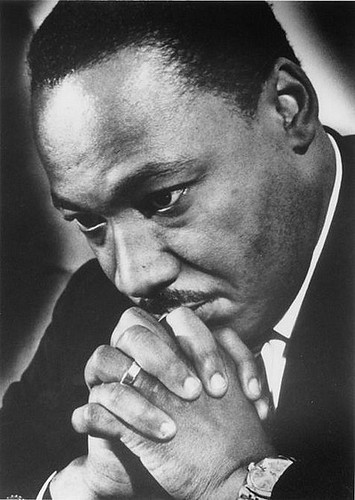
Martin Luther King, Jr. on the Role of the Church in Pursuing Justice

Photo Credit: caboindex
Taken from "Letter from a Birmingham Jail":
"In deep disappointment I have wept over the laxity of the church. But be assured that my tears have been tears of love. There can be no deep disappointment where there is not deep love. Yes, I love the church. How could I do otherwise? I am in the rather unique position of being the son, the grandson and the great grandson of preachers. Yes, I see the church as the body of Christ. But, oh! How we have blemished and scarred that body through social neglect and through fear of being nonconformists. 
There was a time when the church was very powerful--in the time when the early Christians rejoiced at being deemed worthy to suffer for what they believed. In those days the church was not merely a thermometer that recorded the ideas and principles of popular opinion; it was a thermostat that transformed the mores of society. Whenever the early Christians entered a town, the people in power became disturbed and immediately sought to convict the Christians for being "disturbers of the peace" and "outside agitators."' 
But the Christians pressed on, in the conviction that they were "a colony of heaven," called to obey God rather than man. Small in number, they were big in commitment. They were too God-intoxicated to be "astronomically intimidated." By their effort and example they brought an end to such ancient evils as infanticide and gladiatorial contests. 
Things are different now. So often the contemporary church is a weak, ineffectual voice with an uncertain sound. So often it is an archdefender of the status quo. Far from being disturbed by the presence of the church, the power structure of the average community is consoled by the church's silent--and often even vocal--sanction of things as they are. 
But the judgment of God is upon the church as never before. If today's church does not recapture the sacrificial spirit of the early church, it will lose its authenticity, forfeit the loyalty of millions, and be dismissed as an irrelevant social club with no meaning for the twentieth century. Every day I meet young people whose disappointment with the church has turned into outright disgust. 
Perhaps I have once again been too optimistic. Is organized religion too inextricably bound to the status quo to save our nation and the world? Perhaps I must turn my faith to the inner spiritual church, the church within the church, as the true ekklesia and the hope of the world. 
But again I am thankful to God that some noble souls from the ranks of organized religion have broken loose from the paralyzing chains of conformity and joined us as active partners in the struggle for freedom. They have left their secure congregations and walked the streets of Albany, Georgia, with us. They have gone down the highways of the South on tortuous rides for freedom. Yes, they have gone to jail with us. Some have been dismissed from their churches, have lost the support of their bishops and fellow ministers. But they have acted in the faith that right defeated is stronger than evil triumphant. Their witness has been the spiritual salt that has preserved the true meaning of the gospel in these troubled times. They have carved a tunnel of hope through the dark mountain of disappointment. I hope the church as a whole will meet the challenge of this decisive hour. 
But even if the church does not come to the aid of justice, I have no despair about the future. I have no fear about the outcome of our struggle in Birmingham, even if our motives are at present misunderstood. We will reach the goal of freedom in Birmingham and all over the nation, because the goal of America is freedom. Abused and scorned though we may be, our destiny is tied up with America's destiny. Before the pilgrims landed at Plymouth, we were here. Before the pen of Jefferson etched the majestic words of the Declaration of Independence across the pages of history, we were here. For more than two centuries our forebears labored in this country without wages; they made cotton king; they built the homes of their masters while suffering gross injustice and shameful humiliation -and yet out of a bottomless vitality they continued to thrive and develop. If the inexpressible cruelties of slavery could not stop us, the opposition we now face will surely fail. We will win our freedom because the sacred heritage of our nation and the eternal will of God are embodied in our echoing demands."
To read the complete letter, please click here.

Friday, January 16, 2015

Selma: A Movie Worth Seeing

Photo Credit: Sahil Khan
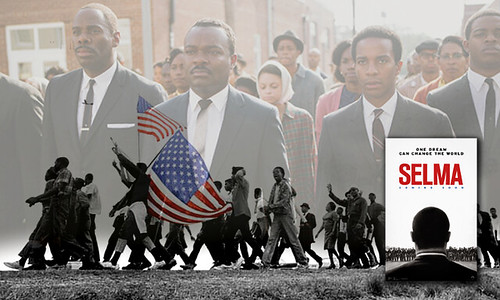
My wife and I saw Ava DuVernay's Selma last night. Focused on the voting rights efforts that took place in a small Alabama town in 1965, Selma provides a powerful glimpse into the leadership of Rev. Martin Luther King, Jr. and the Civil Rights movement that transformed our country.

One of the things that I appreciated most about the movie was that Dr. King was not presented as a perfect, Messiah-type of figure. DuVernay shows us King as the noble leader that he was but doesn't ignore some of the more unsavory aspects of his personal life of which many modern day Americans are unaware.

Similar to towering figures of the Bible such as King David or Simon Peter, Dr. King was an imperfect person that made himself available for God to do great things through him. Though obviously gifted as an orator and leader, Dr. King was just a man. But he was a man that was willing to sacrifice his personal comfort -- and eventually his life -- so that freedom and dignity could come to all women and men.

In focusing on King's humanity, Selma demonstrates the difference that fallen people can make in our world when submitted to God's service.

One of the scenes that I found most moving took place fairly early on in the film. King (played brilliantly by the talented David Oyelowo) finds himself alone late at night in the family kitchen. It is obvious that he is feeling the weight of his call while dealing with the stresses of family life in the midst of preparing to leave for yet another march. He slowly walks to the phone and places a call to the noted gospel singer, Mahalia Jackson. He asks her to sing for him over the phone. Though she had been in a deep sleep just seconds before, she breaks into a powerful chorus of "Precious Lord Take My Hand":
Precious Lord, take my hand
Lead me on, let me stand
I'm tired, I'm weak, I'm worn
Through the storm, through the night
Lead me on to the light
Take my hand precious Lord, lead me home
Just like us, Dr. King needed God's strength to do what God had called him to do. As we prepare to celebrate the MLK federal holiday this weekend, Selma provides a fitting reminder of how far our country has come...and how far we still have to go.

Jason Cook has provided a fuller review of the movie on The Gospel Coalition website. Here's a highlight:
"Selma does not cower away from the physical and emotional brutality of the struggle for African American voting rights in Selma, Alabama, during a three-month period in 1965. By concentrating on this historical vignette, Selma shines. 
Rather than approaching this biopic as a quest to compile the highlights of a venerated figure’s life, Selma director Ava DuVernay focuses on a tiny window of history that changed history. SCLC uniforms (black suits, white shirts, and thin black ties) and scarred stoic faces juxtaposed against the pressed and unkempt uniforms of police officers and state troopers as they clash throughout the film in raw and ugly dispute. 
Further, Selma does not cower from exposing the moral failings of Dr. Martin Luther King. While the impact of Dr. King’s leadership of the Civil Rights movement is magnanimous and will rightly reverberate into history, he suffered from the common condition of profound creaturliness. This fellowship with mere mortals is a surprising strength of the film. Dr. King appears, well, human. 
Throughout Selma he’s tired from long nights, distracted by threats to his family, fearful for the lives of the faithful, and doubtful concerning the ultimate end of the movement—a side of “Doc” we seldom see in grainy microfiche. The film tastefully addresses his smoking habit, his insatiable appetite for food, and his covert sexual promiscuity. Raw and honest, DuVernay portrays a terrestrial Dr. King who is pedestrian at worst and valiant at best—all the while honoring him as a towering historical figure worthy of remembrance."
To read the full review, please click here.

I highly encourage you to see this film. To find tickets for your local theater, please visit here. The dream lives on.

Tuesday, August 19, 2014

A Lesson From Ferguson: All Life is Valuable

It's been ten days since Michael Brown was killed in Ferguson, Missouri and we still don't know what exactly happened. Witnesses say one thing; the police say another. Whatever it was that transpired, the black residents of Ferguson, along with a number of their allies, have responded with protests as they demand that local police share the truth. Local and state government has answered with an increased show of force as they seek to restore order in their community.

For many of us that are not black, we may have a difficult time understanding the anger that is behind what happened in Ferguson. We ask, "Why is the death of Michael Brown drawing so much attention?"

[Timeline: For a timeline of the events in Ferguson please click here.]

It could be that one of the reasons that what happened in Ferguson has so gripped the attention of the African American community is because, for them, this is not an isolated incident. According to a Pew Research Center study, 80% of African Americans feel that this case raises important issues about race. Only 37% of white people feel the same. For many black people, this situation brings reminders of a troubled history within this country and an uneasy relationship with law enforcement.

In just the past few weeks, at least a handful of unarmed black men have been shot and killed by police. So the anger that the residents of Ferguson are expressing is not solely on the behalf of the death of Michael Brown, although that is a big part of it. It is on behalf of all the black men that have lost their lives unnecessarily at the hands of the powerful and privileged. It is on behalf of all the black men that live their lives knowing that they could be mistaken for a criminal at any moment. It is on behalf of all the black mothers and grandmothers that stay up at night in prayer that their children will make it home safely. It is on behalf of our own humanity.

As new revelations have come to light regarding the incident in the convenience store prior to the shooting, we may be tempted to think that the shooting of an unarmed man six times is undoubtedly justifiable. But in a television interview from the other night, actor Jesse Williams offers another perspective on how this tragedy can be viewed. Here's the clip:


For those of us that are white Americans, it could be easy to ignore the events of Ferguson. In reality, many of us are doing just that. We turn our attention to other matters and don't concern ourselves with these things that take place in our own country because, well, we don't have to. When we look at this dead young man and the crowds of protesters, we don't see ourselves. We see someone else.

And this is part of the problem of living in a sin-stained world where the human tendency to value the lives of those that look like us over those that don't has been seen throughout human history. For those of us that are Christians, this should give us pause to look deep within our own hearts to examine the ways that we view and treat others in ways that devalue them as people created in the image of God.

What is going on in Ferguson matters because it demonstrates that we as a country still have a ways to go to achieve liberty and justice for all. I really don't claim to have the answers but I think listening and learning and praying is at least a good place to start.

---------------------------------------------

There are a number of Christian writers that have weighed in on this developing story. Please consider reading these posts for additional perspectives:

Tuesday, December 10, 2013

Is The NFL Defining Black Masculinity For Society?

Photo Credit: Keith Allison
One of the most intriguing storylines from the current NFL season is that of the Miami Dolphins and the alleged bullying that took place by Richie Incognito towards teammate Jonathan Martin. After Martin unexpectedly left the team at the end of October, many wondered what prompted his departure.

In the days and weeks ahead, it was alleged that what caused Martin's abrupt leaving of the team was the severe bullying that he had endured, most notably by Incognito. The story ignited a national discussion on race, hazing and what is acceptable behavior in the locker room (and beyond).

In another angle on the story, ESPN The Mag writer Howard Bryant explores what it means to be considered a masculine African American man in today's society:
"Here was a case in which a white man used racial slurs to a Stanford-educated teammate who comes from a two-parent, Harvard-educated home. And more than anything else, the root issue was the eternal difficulty this country has in allowing black men to live in full dimension. Martin didn't look the part. He didn't conform to the accepted code of black masculinity, exposing the fault line that has always run underneath the American soil, transformative president or not. 
On the Dolphins, Martin wasn't seen as a real man. Uncomfortable with the strip clubs, he wasn't trusted as one of the boys. And because he represented the images of scholarship and manners, of dignity and higher education -- reputable qualities generally associated with white mainstream America -- he was inauthentic in the eyes of black players, but no more authentic in the eyes of whites. His teammates preyed on Martin's economic class and demeanor, viewing each as weakness, his education as a mimicry of whiteness. (It's telling that John Elway and Andrew Luck, also Stanford grads, have never been accused of being soft.) 
Meanwhile, Incognito became "honorary black" not for any great contribution to African-American history or society but by personifying the negative attributes that American culture usually assigns to black men: the thug, the sex-club swagger, the tough-guy bravado. The images shifted, twisted and flipped, and the person embodying the stereotypical N-word was actually the white man, to the point where Incognito's black teammates saw themselves in his behavior more than Martin's. 
Martin and his family may be what politicians and teachers say is the American ideal, but the actual rewards -- the acting jobs, the record deals, the social acceptance, the money -- largely go to the African-Americans who exemplify the N-word, who embrace the suffocating, limiting image of male blackness. The decision to perpetuate this image isn't made solely by the black community but by the white suits who decided long ago how the part is supposed to look and what black behavior they will compensate; think of that LeBron cover again. Corporations seem to doubt the authenticity and marketability of black men who live outside the primal construct. 
This represents the ultimate victory of racism: the belief that exists among both whites and blacks that being educated, being articulate, having manners, is the sole province of being white."
To read the rest of Bryant's article please click here.

Monday, November 04, 2013

How Do Blind People See Race?

Photo Credit: Jeremy Brooks
If I person is visually impaired, does that mean they are automatically colorblind? Not necessarily, says law professor Osagie Obasogie.

In an article on NPR.org, Kate Chow writes about what Obasogie discovered after interviewing over 100 individuals that have been blind since birth. His findings challenge some of our assumptions about race being only skin deep and that colorblindness might not be as easy to achieve as it seems.

Chow writes:
"It's easy to understand that the notion of how blind people see race could prompt all sorts of interesting questions about what race means. 
Consider Dave Chappelle's "Blind Supremacy" skit from 2003, in which the comic plays Clayton Bigsby, a blind white supremacist who doesn't know he's black. Bigsby indulges in all sorts of gratuitous hate speech, bashing Latinos, Asians and blacks. He even goes to a KKK meeting dressed in a white robe and hood. Bigsby clearly doesn't know he's black. The joke, of course, is that Bigsby is in fact a member of the very group he so viciously hates. 
"While I think most people find [the Chappelle skit] funny because it seems utterly absurd, there's actually a lot more to it than most people realize in terms of portraying how race can be a polarizing issue in the blind community," says Obasogie. "Blind people aren't any more or less racist than anyone else. Indeed, part of the point of this project is that vision has very little to do with it. What matters are the social practices that train us to see and experience race in certain ways, regardless of whether we are sighted or not." 
Obasogie emphasizes that blind people use a combination of cues to infer someone's race. Together, he believes these cues add up to a kind of visual description, a form of seeing. Put simply, when the color or someone's skin isn't easily detectable, some blind people rely on other cues that help create a visual; cues such as the texture of someone's hair. 
Bruce Sexton, who has been blind since birth, says it's natural for everybody — including the blind — to distinguish a person based on race. "I think that we do categorize and group based on the information that we have ... I come from a very diverse place and I still do group people based on their race, their ethnicity, their religion — anything, everything, really. Their education," Sexton says. "Maybe, as a disabled person, I think of it even more and I try to break free of the stereotypes that come with that grouping.
Obasogie emphasizes "blind people are not uniquely preoccupied with race. Rather, the findings simply draw attention to the fact that race affects everyone's lives and that blind people are not exempt simply because they cannot see. Seeing and experiencing race is a social rather than merely visual phenomenon."
To read the rest of Chow's article please click here.

Wednesday, August 28, 2013

Remembering The March On Washington 50 Years Later

It was fifty years ago today that one of the most pivotal events in the history of the United States took place. "The March on Washington for Jobs and Freedom" occurred on August 28, 1963 and gathered approximately 250,000 people together who believed in the inherent equality and dignity of all human beings. The reverberations from this event are still being felt today.

Although a number of speakers and musicians were present at the March on Washington, history has shown that the most memorable aspect was the "I Have a Dream" speech delivered by a 34-year-old Baptist preacher by the name of Martin Luther King, Jr.

Dr. King's speech paints a picture of what it might look like for Americans to live together no longer divided by racial hatred but to gather at the table of brotherhood. It is generally regarded as one of the greatest speeches in American history and it still sends chills down my spine whenever I hear it.

I've posted the entire "I Have a Dream" speech below for your viewing. Enjoy.


Tuesday, August 13, 2013

40% of White Americans, 25% of Ethnic Minorities Have No Cross-Racial Friendships

Photo Credit: Mike Baird
From Lindsay Dunsmuir of Reuters:
"About 40 percent of white Americans and about 25 percent of non-white Americans are surrounded exclusively by friends of their own race, according to an ongoing Reuters/Ipsos poll. 
The figures highlight how segregated the United States remains in the wake of a debate on race sparked by last month's acquittal of George Zimmerman in the shooting of unarmed black Florida teenager Trayvon Martin. President Barack Obama weighed in after the verdict, calling for Americans to do some "soul searching" on whether they harbor racial prejudice. 
There are regions and groups where mixing with people of other races is more common, especially in the Hispanic community where only a tenth do not have friends of a different race. About half of Hispanics who have a spouse or partner are in a relationship with non-Hispanics, compared to one tenth of whites and blacks in relationships. 
Looking at a broader circle of acquaintances to include coworkers as well as friends and relatives, 30 percent of Americans are not mixing with others of a different race, the poll showed. 
Respondent Kevin Shaw, 49, has experienced both integration and racial homogeny. He grew up in downtown Kansas City, Missouri, and attended a mixed high school where he was one of only two white teenagers on the mostly black football team. His wife, Bobbi, is Hispanic. They met in high school and have been married for 27 years. 
Eleven years ago, they moved to a predominantly white neighborhood in the suburb of Liberty. "Soon after we moved in, my mother-in-law came to visit and a neighbor asked if she was my maid. It was just a matter of ignorance," he said. In the time he has lived there the neighborhood has become less blinkered, helped by the arrival of younger families. He also puts prevailing attitudes down to environment. "A lot of it comes down to where you grow up," he said. 
As a group, Pacific states - including California, the most populous in the nation - are the most diverse when it comes to love and friendship. By contrast, the South has the lowest percentage of people with more than five acquaintances from races that don't reflect their own.
Some of this is down to precedent. "This country has a pretty long history of restriction on inter-racial contact and for whites and blacks, even though it's in the past, there are still echoes of this," said Ann Morning, an associate professor in the department of sociology at New York University. "Hispanics and Asian Americans have traditionally had less strict lines about integrating."
In his comments two weeks ago, President Obama expressed optimism about the future, saying his daughters' experiences show younger generations have fewer issues with race. "It doesn't mean we're in a post-racial society. It doesn't mean that racism is eliminated. But...they're better than we are, they're better than we were, on these issues," he said."
To see the rest of this report please click here.

Friday, August 02, 2013

Local Pastors Seek Healing In Wake Of Trayvon Martin Trial

Photo Credit: Werth Media
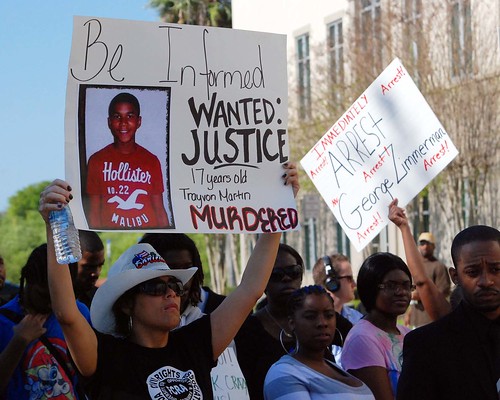
Less than a week after George Zimmerman was acquitted in the killing of Trayvon Martin, rallies were held throughout the United States calling for 'Justice for Trayvon.' Although a Sanford, Florida jury did not find Zimmerman guilty in Trayvon's death, millions of Americans feel that justice has not been realized in the case.

In the aftermath of the shooting of Trayvon and its subsequent trial, a number of issues connected to this tragedy have been the focus of intense media coverage. Although many consider the era in which we currently live to be "post racial", the death of Trayvon has re-ignited national discussions on gun control, racial profiling, homicide rates of young black men and the differing views of the criminal justice system which exist within the white and black communities.

If we have learned anything from the events surrounding the death of Trayvon Martin, it is that we do not all view the world the same way. Even within the Christian community, self-professed followers of Jesus Christ do not agree on who was at fault in Trayvon's death nor what justice looks like in the midst of the Zimmerman's acquittal.

However, a small group of Central Florida pastors, along with some other Christian leaders from other parts of the country, are seeking to listen to one another in order to help facilitate healing both in Sanford and in the rest of the country. Jeff Kunerth of The Orlando Sentinel provides insight:
"A group of black and white Sanford-area pastors united by the shooting death of Trayvon Martin reconvened Wednesday for a racial-reconciliation forum they hope will spread nationwide. They hope Sanford, which did not experience violence after the acquittal of George Zimmerman, will provide a model for other cities. 
"I contend that Sanford, Florida, will be the place people will point to and say, 'These people have learned how to do it,'" said Raleigh Washington, president of the Denver-based Promise Keepers. 
About 30 ministers — including pastors from Atlanta, Los Angeles and Washington — attended the forum at Charisma Media in Lake Mary with hopes of launching a national Reconciliation and Relationship Initiative. The group drafted The Sanford Declaration, which could be used for multiracial forums in other cities.

"Our real vision is to encourage this kind of dialogue all over the country," said Steve Strang, CEO of Charisma Media, who has scheduled a news conference today to announce the group's plans for the nationwide initiative. The press conference will be at 10:30 a.m. outside First Shiloh Missionary Baptist Church, 700 S. Elm Ave., Sanford.

Key to The Sanford Declaration is a commitment to form friendships, fellowships and relationships between pastors that transcend race and culture. Several of the pastors said that without the death of Trayvon Martin, they never would have become close friends with ministers of a different race. 
"A horrible tragedy has brought us together, has slapped us upright and said there's a history here," said Joel Hunter, senior pastor of Northland, A Church Distributed in Longwood. "The inertia of history can only be interrupted by relationships." 
However, the Rev. Harry Rucker, pastor of First Shiloh Missionary Baptist Church, argued that Sanford remains essentially unchanged despite the closer ties between black and white ministers. 
"We're united, we're together, but racism still exists," Rucker said."
In light of the many ways that black and white Christians can often misunderstand one another, dialogue and relationship building across racial lines are a great place to start the healing process. When we enter into the world of another with the intent to understand where they are coming from (and not simply to just let our opinions be heard), trust and reconciliation can begin to take place. Our distrust of one another often occurs because we simply don't know each other. Dr. Martin Luther King, Jr. said the following:
"We often hate each other because we fear each other; we fear each other because we don’t know each other; we don’t know each other because we can not communicate; we can not communicate because we are separated."
Christians of differing persuasions coming together for dialogue can help facilitate the healing in a racially divided community and nation. It doesn't mean we all have to act the same or think alike... or even agree with one another. But in order to be unified within the family of God, we need to be willing to step out of our comfort zone and listen to those different from us. I pray that this tragedy may become a catalyst for lasting unity among Christians in Central Florida...and beyond.

To read complete coverage from The Orlando Sentinel on Trayvon Martin and George Zimmerman, please click here.

Saturday, August 25, 2012

The Beatitudes, Gandhi & MLK

Photo Credit: Dean Ayres
Pointing to the lives of Mahatma Gandhi and Martin Luther King, Jr., author Philip Yancey offers a challenging perspective on what living out the instructions of Jesus from the Sermon on the Mount (Matthew 5-7) might look like:
"The movie Gandhi contains a fine scene in which Gandhi tries to explain his philosophy to the Presbyterian missionary Charlie Andrews. Walking together in a South African city, the two suddenly find their way blocked by young thugs. The Reverend Andrews takes one look at the menacing gangsters and decides to run for it. Gandhi stops him. "Doesn't the New Testament say if an enemy strikes you on the right cheek you should offer him the left?" Andrews mumbles that he thought the phrase was used metaphorically. "I'm not so sure," Gandhi replies. "I suspect he meant you must show courage—be willing to take a blow, several blows, to show you will not strike back nor will you be turned aside. And when you do that it calls on something in human nature, something that makes his hatred decrease and his respect increase. I think Christ grasped that and I have seen it work." 
Years later an American minister, Martin Luther King Jr., studied Gandhi's tactics and decided to put them into practice in the United States. Many blacks abandoned King over the issue of nonviolence and drifted toward "black power" rhetoric. After you've been hit on the head with a policeman's nightstick for the dozenth time and received yet another jolt from a jailer's cattle prod, you begin to question the effectiveness of nonviolence. But King himself never wavered. 
As riots broke out in places like Los Angeles, Chicago, and Harlem, King traveled from city to city trying to cool tempers, forcefully reminding demonstrators that moral change is not accomplished through immoral means. He had learned that principle from the Sermon on the Mount and from Gandhi, and almost all his speeches reiterated the message. "Christianity," he said, "has always insisted that the cross we bear precedes the crown we wear. To be a Christian one must take up his cross, with all its difficulties and agonizing and tension-packed content, and carry it until that very cross leaves its mark upon us and redeems us to that more excellent way which comes only through suffering." 
Martin Luther King Jr. had some weaknesses, but one thing he got right. Against all odds, against all instincts of self-preservation, he stayed true to the principle of peacemaking. He did not strike back. Where others called for revenge, he called for love. The civil rights marchers put their bodies on the line before sheriffs with nightsticks and fire hoses and snarling German shepherds. That, in fact, was what brought them the victory they had been seeking so long. Historians point to one event as the single moment in which the movement attained a critical mass of public support for its cause. It occurred on a bridge outside Selma, Alabama, when Sheriff Jim Clark turned his policemen loose on unarmed black demonstrators. The American public, horrified by the scene of violent injustice, at last gave assent to passage of a civil rights bill. 
I grew up in Atlanta, across town from Martin Luther King Jr., and I confess with some shame that while he was leading marches in places like Selma and Montgomery and Memphis, I was on the side of the white sheriffs with the nightsticks and German shepherds. I was quick to pounce on his moral flaws and slow to recognize my own blind sin. But because he stayed faithful, by offering his body as a tar-get but never as a weapon, he broke through my moral calluses. 
The real goal, King used to say, was not to defeat the white man, but "to awaken a sense of shame within the oppressor and challenge his false sense of superiority. . . . The end is reconciliation; the end is redemption; the end is the creation of the beloved community." And that is what Martin Luther King Jr. finally set into motion, even in racists like me."
(Excerpt taken from Yancey's 1995 book, The Jesus I Never Knew.)

Monday, April 09, 2012

The Hunger Games, Race & Disappointed Readers

Photo Credit: k-ideas
The Hunger Games, the young adult novel by Suzanne Collins, has not only taken bestseller lists by storm the past several years, but its film adaptation has been the leader at the box office the past few weeks. Released less than three weeks ago, it had the third highest grossing opening weekend in cinematic history and has already generated over $400 million worldwide.

In spite of the immense popularity of the film, some fans of the book have taken to social media to demonstrate their displeasure with what they witnessed on screen.

CNN.com tells the story:
"In "The Hunger Games," wealthy Capitol citizens of all races and ethnicities come together to watch the 74th annual bloodbath of the same name. It seems some present-day moviegoers, however, are a bit less "post-racial." 
Earlier this week, some "Hunger Games" fans tweeted their discontent because the characters of Cinna, Thresh and Rue are played by black actors in the big screen adaptation. This, despite the fact that both Thresh (Dayo Okeniyi) and Rue (Amandla Stenberg) are described as having "dark skin" in Suzanne Collins' novel, while Cinna (Lenny Kravitz) is simply described as having short brown hair. 
Whether fans' remarks -- such as, "Awkward moment when Rue is some black girl and not the little innocent blonde girl you picture" -- stem from poor reading comprehension or intolerance, they're indicative of a larger issue in Hollywood, said Harry M. Benshoff, an associate professor of radio, TV and film at the University of North Texas who co-wrote "America on Film: Representing Race, Class, Gender and Sexuality at the Movies." 
"Hollywood has never been on the forefront of the civil rights movement," said Benshoff, who hasn't read or watched "The Hunger Games." 
Despite certain character descriptions being spelled out in the book, Benshoff said, people typically project themselves onto a character in order to empathize with that person. 
"For a white person reading a book, they're very rarely going to go, 'I'm just assuming this is a black character' if he or she isn't marked as such," he said. "A nonwhite person might project their own identity onto the character."
Even when characters are described by the author as having "dark skin," some readers still assumed that the characters were white. This is just one demonstration of how our own racial prejudices and biases can cause us to not see what is quite apparent to others. All too often Hollywood has represented characters of color with white actors. In this case, Hollywood got it right... but some fans of The Hunger Games didn't.

One fan, whose Twitter handle is not included in order to protect the guilty, tweeted this:
"Call me racist but when I found out Rue was black her death wasn’t as sad.”
Sadly, there is probably more of this sentiment out there than we realize.

To read the complete CNN.com story please click here.

Friday, March 23, 2012

Why I Care About The Death of Trayvon Martin

Photo Credit: werthmedia
Trayvon Martin is dead and he should still be alive. He should be experiencing what other kids his age are going through now. Looking to finish high school. Getting prepared to go to college. Spending time with his friends and family.

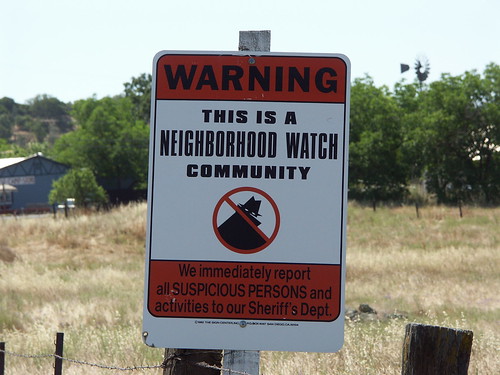
But he doesn't get to do any of those things because a self-appointed protector of his community felt that Trayvon was "suspicious" and caused an encounter that led to the death of this 17-year-old young man.

I first wrote about this story two weeks ago, days before it became a national headline. My home is about a half-hour from where Trayvon's death took place and this tragedy has hit close to home for me, both literally and figuratively.

I'm a Christian who is a white evangelical and those like me have been accused of not caring about the death of Trayvon. But I do care. I haven't remained quiet about this and I won't remain silent about it until Trayvon's killer is brought to justice. If our "Stand Your Ground" law says that a man can ignore the instructions of the police, kill an unarmed young man that was doing nothing wrong and not be arrested, then that law needs to be changed.

I care about the death of Trayvon because I've invested most of my adult life in young men just like Trayvon and I'm sick and tired of black men being targeted as criminals for no other apparent reason than they have brown skin.

I care about the death of Trayvon because I've heard too many horror stories from African American friends of having store employees confront them about stealing merchandise or squad cards surrounding them or guns pulled on them because they "fit the description."

I care about the death of Trayvon because I'm appalled of how black life is devalued in our culture and how the benefit of the doubt is given to the criminal rather than the victim.

I care about the death of Trayvon because I'm weary of my Christian brothers and sisters saying they care about injustice in other parts of the world while ignoring the injustices within our own communities.

I care about the death of Trayvon because of the way our society often assumes that black men are "up to no good" in ways that those that look like me aren't.

I care about the death of Trayvon because "flour bombing" a Reality TV starlet leads to an immediate arrest but killing a kid does not.

I care about the death of Trayvon because I have sons that like Skittles and wear hoodies and a man that killed someone not much older than them is somewhere on the loose in the area in which I live.

I care about the death of Trayvon because although I identify in many ways with the black community, I realize that the color of my skin affords me privileges that I have not earned nor deserve and I am spared from certain realities that I will never have to experience.

I care about the death of Trayvon because I realize that this case is about more than one lost life, as tragic as that is. It represents countless numbers of African Americans who were denied "life, liberty and the pursuit of happiness" in a country that supposedly treats everyone as equals.

I care about the death of Trayvon because those that I love care about the death of Trayvon.

I care about the death of Trayvon because I'm a follower of Jesus and my God cares deeply about injustice -- no matter who is experiencing it.

I care about the death of Trayvon Martin. Will you care, too?

If you want to let your voice be heard, join me and over 1.5 million who have signed the petition asking for justice for Trayvon. You can sign the petition here.

Friday, March 09, 2012

If This Young Man Was White, Would He Still Be Alive?

Photo Credit: hsivonen
In a central Florida community not far from where I live, a young African American man was killed apparently for WWB (Walking While Black). Trayvon Martin, who was in from south Florida visiting his father's fiancée and her family, was killed by a man who is head of the neighborhood watch group in the community in which Trayvon was visiting.

The Orlando Sentinel shares some of the story:
"At the news conference, the family's lawyers said Trayvon was simply walking back to the apartment he was visiting when Zimmerman, a man with no legal authority to detain him, confronted and killed him. 
[Family lawyer Benjamin] Crump called Zimmerman a "loose cannon" and accused him of shooting Martin in "cold blood." Zimmerman, who is white, had spotted Trayvon, who is black, in his gated community about 7:15 p.m. and called Sanford police on a non-emergency number, saying he'd just seen a suspicious person, both sides agreed. 
That call then ended and police dispatched an officer. Before the officer arrived, the department received several other 911 calls from people complaining about two men fighting and a gunshot. Both sides agree that Trayvon and Zimmerman scuffled before the shooting, and there is evidence to corroborate Zimmerman's self defense claims, the chief said. 
When police arrived, an officer overheard Zimmerman complain, "'I was yelling for someone to help me but no one would help me,'" according to an incident report released Thursday. It also noted that, the back of Zimmerman's shirt was wet and had grass clippings on it, as if he'd been on his back on the ground. On one recorded 911 call, the police chief said, "You can hear the struggle and the gunshot." 
At the news conference, the family's attorneys said there was nothing suspicious about Trayvon and no reason for Zimmerman to follow him. Martin was an invited guest, visiting his father's fiancée and her family for a few days, they said. He had visited before, and it was a community with black and minority residents."
As much progress as we've made in this country in regard to race relations, there are still reminders like the tragic loss of this young man that demonstrate that we have yet to arrive. We don't know yet exactly what happened in this situation but if initial indications prove true, then this may turn out to be yet another example of an innocent young man losing his life for no apparent reason.

To read more of the Sentinel's report on this developing story please click here.