Showing posts with label presidents. Show all posts

Saturday, January 21, 2017

Weekly Web Roundup (1/21/17)

Photo Credit: David_Bekaert
Here is a collection of items from around the web that caught my attention this past week:

Are You a Confirmation Bias Christian? by Jared C. Wilson (For The Church)
"There's really no new idolatry in our brave new world; we just find new ways with which to orient our worlds around ourselves. I think you and I see this every day in the world of social media, and it was ramped up especially so during the last election cycle. When it comes to political pontificating, my Facebook feed in particular appears to be one huge exercise in confirmation bias -- my liberal friends share and "amen" articles, videos, and memes that fit their pre-adopted left-leaning narratives and my conservative friends share and "amen" articles, videos, and memes that fit their pre-adopted right-leaning ones. I've been guilty of this myself. It is stunningly easy to fall into, this "confirmation bias" thing. If something sounds true -- meaning, it seems to fit what we already believe -- we believe it to be true without corroborating. It is the widespread epidemic of confirmation bias that has given us the relatively new phenomenon known as "fake news."
6 Types of “Dangerous Charisma” by Eric Geiger
"Charisma is often defined as “compelling attractiveness or charm that can inspire devotion in others." But that type of charisma can be dangerous. We have seen leaders known for their charisma lead people in horrific directions or crumble because their own inner health was woefully inconsistent with their external persona."
U.S. Abortion Rate Falls To Lowest Level Since Roe v. Wade (NPR)
"The abortion rate in the United States fell to its lowest level since the historic Roe v. Wade Supreme Court decision legalized abortion nationwide, a new report finds. The report by the Guttmacher Institute, a research group that supports legalized abortion, puts the rate at 14.6 abortions per 1,000 women of childbearing age (ages 15-44) in 2014. That's the lowest recorded rate since the Roe decision in 1973. The abortion rate has been declining for decades — down from a peak of 29.3 in 1980 and 1981. The report also finds that in 2013, the total number of abortions nationwide fell below 1 million for the first time since the mid-1970s. In 2014 — the most recent year with data available — the number fell a bit more, to 926,200. The overall number had peaked at more than 1.6 million abortions in 1990, according to Guttmacher. Perhaps not surprisingly, given the longstanding controversy around abortion policy, the meaning of the report is somewhat in dispute."
Dustbin of History: The Green Book (Today I Found Out)
"But for African Americans living in many parts of the United States in the early and mid-20th century, the automobile was little more than a symbol—that of a freedom that, for them, remained out of reach. In those years, a trip by automobile for African Americans was an experience all its own, quite unlike car trips taken by white Americans. A black family preparing for a long trip had to pack enough food to get them all the way to where they were going, in case the restaurants along the route refused to serve them—a form of discrimination that was perfectly legal at the time. They had to pack pillows and blankets so that they could sleep in their car if the hotels they stopped at refused to provide them with lodging. They had to put extra cans of gas in the trunk—enough to get them through towns where none of the service stations would sell them gas. And they had to leave enough room in the trunk for a bucket that they could use as a toilet in places where restrooms were reserved for whites only."
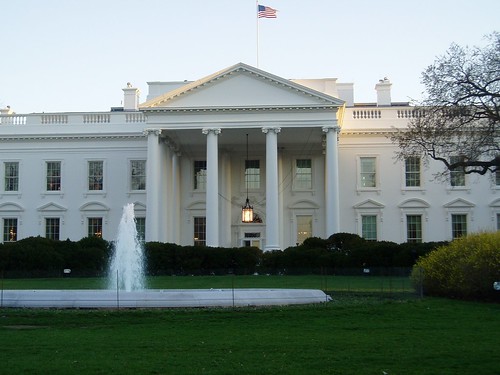
The 5 craziest hours in the White House by Bonnie Berkowitz (The Washington Post)

On the day that a new U.S. President is sworn in as commander-in-chief, there is a group of White House staff that has to busily move out the belongings of the current president and prepare for the new. This account explains all that takes place at the White House on inauguration day.

Here's a short video explaining this process:


Monday, November 14, 2016

Post-Election Web Roundup

Photo Credit: ThatMattWade
I may share my thoughts on the election at some point in the days ahead but, for now, here's a collection of interesting articles that I have read over this past week:

12 Questions to Ask Yourself Before Posting Something Online by Mark Dever (The Gospel Coalition)
"The privacy of a personal conversation limits misunderstanding. Some public posts will sound one way to those who know us and another to those who don’t. Negative assessments are often best shared privately, or not at all. How many of us have learned at our workplace that e-mail is a terrible way to share negative comments? When it comes to public postings, ask yourself: Are there reasons I may not be a good person to speak on certain matters?"
Legacy of Bloody Election Day Lingers in Florida Town by Andrew Maraniss (The Undefeated)
"As voters nationwide prepare to head to the polls Nov. 8, that terrible Election Day in 1920 can seem both near and far. There have been steps forward and backward here, the gains coming not so much because the people, attitudes and institutions of the old Ocoee have disappeared, but because the demographics surrounding them are shifting. And in that regard, this spot of central Florida has much to say about America itself."
To the 80% - My Fellow Brothers and Sisters in Christ by Kimberly Gillespie (Things I Thought I'd Never)
"Hopefully you can see and understand some of the struggle. It’s not that we don’t want unity. We do. I do. We want to honor God. We can see Satan’s hand in this whole mess. But it takes both sides. Not just us “not talking”, but our sisters and brothers listening, understanding, asking helpful questions, not justifying, rebuking and telling us “not to be anxious”, but committing to stand with us if stuff hits the fan. To stand with those in our churches who may face deportation and whose families could be devastated because siblings, or parents or grandparents could be separated. To use your resources, your influences, your connections. To be family."
The Evangelical Reckoning Over Donald Trump by Emma Green (The Atlantic)
"The Republican candidate’s victory may seem like an affirmation of the old, long-standing coalition between evangelicals and the Republican party, and in many ways, it is. But vote counts conceal deep, painful fractures among the huge, diverse group of Americans who identify as evangelical Christians. Nothing makes this clearer than the unprecedented in-fighting among Christian leaders in the lead-up to the election. Many people in big, important positions staked their credibility on supporting or opposing Donald Trump; old allies turned against one another, and new upstarts gained fame."
Ernie Johnson's Incredible Perspective on the 2016 Election

In the wake of an election that caused so much division within our country, Ernie Johnson, studio host of "NBA on TNT", offered a remarkable perspective on how he has viewed this election and how he intends to try to bring healing.


Sunday, February 19, 2012

Does Character Matter For Presidential Candidates?

Photo Credit: U.S. Embassy New Delhi
"Of all the properties which belong to honorable men, not one is so highly prized as that of character." ~ Henry Clay

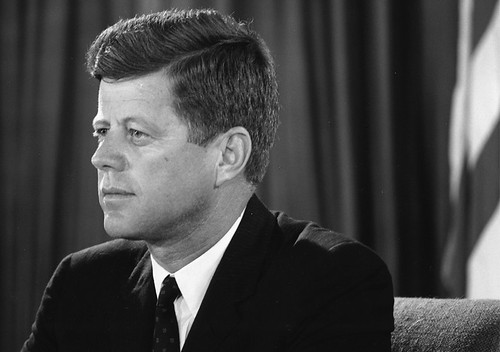
In the midst of a highly contested U.S. presidential primary season, a new book uncovers aspects of the personal life of President John F. Kennedy. The book, written by a former White House aide who claims she had an affair with President Kennedy, once again raises the question of personal character as it pertains to qualifications for the nation's highest office.

The suggestion of indiscretions on behalf of President Kennedy is not news to presidential historians. This has been commonly known for some time. What is intriguing to consider is whether Kennedy would have ever gotten elected in the first place had he lived in our TMZ-driven culture. Several current individuals aspiring to the presidency have had to face allegations of their own marital infidelities and this has been fatal for some (see Herman Cain) and could be for others (see Newt Gingrich).

What this tells us that character, who we are at our moral core, still appears to matter to the American public. Robert Dallek writes in The Daily Beast why character does matter for presidents:
"Presidents are not only the country’s principal policy chief, shaping the nation’s domestic and foreign agendas, but also the most visible example of our values. As a country that prides itself on being the world’s exemplar of human rights, the rule of law, and moral standards, it is embarrassing to have men seeking and/or serving in the presidency who fall short of our highest ideals. True, most Americans give lip service to the proposition that even the most exalted among us have their flaws, but we are eager to believe that presidents manage to rise above the limitations that beset the rest of us. 
We have been constantly disappointed in the many ways presidents and lesser public officials have fallen short of what we expected of them—Harding’s Teapot Dome scandal; Harry Truman’s influence-peddling associates; John Kennedy’s hidden medical history and compulsive womanizing; Ted Kennedy’s Chappaquiddick; Lyndon Johnson’s vulgarity that many complained undermined the dignity of the presidency; Richard Nixon’s resignation for abuse of power; Ronald Reagan’s Iran-contra scandal; Bill Clinton’s Monica; and George W. Bush’s Valerie Plame expose are among the most memorable of our recent public embarrassments. 
...Whether we like it or not, president’s private lives are no longer hidden from public view. And it is not without benefit to have this information. Presidential character matters and not just for the symbolic reasons I mentioned. Wouldn’t the country have been better served taking account of Harding’s moral failings? Certainly, voters acted recklessly in ignoring complaints that Nixon, despite assertions that we were dealing with the “new” Nixon, deserved the epithet, “tricky Dick.” We were certainly forewarned about Clinton’s womanizing, which undermined his presidency. James Monroe’s assertion that “national honor is the national property of the highest value” remains an enduring ideal. 
Should politicians’ character flaws, then, bar them from office, especially the oval office? Or does this set an impossibly high standard? Probably. Presidential aspirants reach for the highest office to satisfy some yearning for greatness or even immortality. The historian Richard Hofstadter said that politics for a majority of office holders, and particularly those obsessed with getting to the White House, is a form of vocational therapy. Grandiosity or convictions about standing apart from ordinary men seems to be a central component of the country’s most ambitious politicians. Ambition, of course, is not without its virtues. But when politicians, and especially presidents, let their need to win eclipse the larger good, as has so often been the case, it makes presidential striving a national problem."
Whether a man (or woman) has been faithful to their spouse should not be the only factor in deciding who we vote for. For it is true that just because a woman or man has remained true to their marital vows does not mean they will necessarily make a good president. But I also know this: If a person hasn't been true to the one person they've vowed before God to remain faithful, it would be naive to believe that they'd be true to the common American citizen.

Yes, character still matters.

To read the complete Dallek article please click here.

Wednesday, January 11, 2012

A Primer For Politicians: The Facts About Poverty & Race

Photo Credit: tizzie
"Stereotype: A fixed, commonly held notion or image of a person or group, based on an oversimplification of some observed or imagined trait of behavior or appearance." (From Media Awareness Network)

Those of us in the U.S. are in the midst of another presidential election and the issue of race is figuring prominently into the national conversation once again. When discussing the issue of race, there are a number of misconceptions that politicians often contribute to by reinforcing stereotypes that are based in perception...but not reality.

For example, take recent comments made by Republican presidential candidates Rick Santorum and Newt Gingrich. When commenting about the state of the welfare system in the United States, Santorum is quoted as saying this:
"I don’t want to make black people’s lives better by giving them somebody else’s money. I want to give them the opportunity to go out and earn the money."
Newt Gingrich, when commenting on the realities of poverty in America's inner cities, says this:
"Look,” Gingrich said, “at a time when you have up to 43% black teenage unemployment, you have entire communities that are devastated, you have neighborhoods where nobody has worked and nobody has any habit of work, I’d be delighted to — that’s why I want to challenge Obama to 7 three hour debates — I’d be delighted to have a conversation about our current approach to children. 
“Young children who are poor ought to learn how to go to work,” he continued. “What I’ve said is, for example, it would be great if inner city schools and poor neighborhood schools actually hired the children to do things. Some of the things they could do is work in the library, work in the front office. Some of them frankly, could be janitorial."
It can be agreed that poverty is a problem that needs tangible and long-term solutions. But one of the misconceptions that politicians like those quoted above have, along with many of us, is that poverty is a black issue. For many people, when the topic of conversation turns to poor people or the subject of welfare, there is a stereotype in many peoples' minds that poor=black. It is simply not true.

Here are the facts: According to The Root.com, the numbers from the 2010 census tell us that 31 million of the 46 million people living in poverty are white. Although the stereotype that many of us may assume to be true is that the bulk of those who are living in poverty are black, just a little over two out of every ten Americans living in poverty are African American. And poor white people don't just live in rural areas -- nearly half of the urban poor are those that look like me.

Furthermore, many people of all races who fall below the poverty line are employed or actively seeking work in this troubled economy. These individuals, considered the "working poor", comprise nearly 60% of all those who are considered poor. So any person who says that everyone who grows up below the poverty line doesn't know what an honest day's work looks like simply does not know the realities on this matter. In fact, some of those who we define as poor are some of the hardest working people that any of us will ever meet.

My concerns here in raising this issue are not that there are politicians who desire to see those in poverty elevate themselves into a higher economic class. Nor do my hesitations come from a place of not wanting economically disadvantaged individuals to earn a living for themselves. I think it is good and right that those in poverty seek employment, if at all possible. My trouble is with the condescending tone that accompanies these pronouncements, as well as the perpetuation of the stereotype that poor=black.

From personal experience, I know that this myth that all (or at least most) black people come from poverty or grew up in the inner-city is well-ingrained in the psyche of many of us. For example, I've spent much of my adult life ministering to African American college students. Although some of the students I've worked with have come from less than ideal family situations and grew up in economically distressed neighborhoods, many of them grew up in stable, two-parent homes in nice communities.

But time and time again I've had people assume that my ministry focus is in "the hood" after they've learned I work with African Americans. I say I minister to African American college students...and their mind immediately shifts to an "urban community" with "disadvantaged youth." Yes, I've spent some time ministering in poor communities in urban areas but most of my work with students has been spent on college campuses in college towns.

My desire is that the leaders at the highest level of our country would at least know the facts when it comes to addressing complicated challenges like systemic poverty in distressed communities across our country. People from all ethnic groups face economic challenges. It is not just a black problem. It is an issue for all of us. If political leaders are sincere in wanting to solve problems like cyclical poverty, my suggestions is that they spend some time in disadvantaged communities -- whether that's in the barrios of Los Angeles, the streets of Harlem or the hills of Appalachia.

Sunday, February 27, 2011

Theodore Roosevelt on Critics

Photo Credit: Wesley Fryer
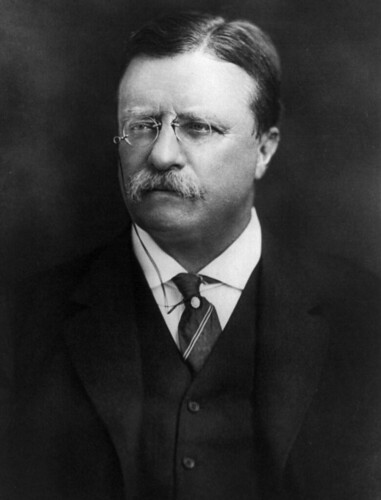
How to respond to critics, from President Theodore Roosevelt:
"It is not the critic who counts: not the man who points out how the strong man stumbles or where the doer of deeds could have done better. The credit belongs to the man who is actually in the arena, whose face is marred by dust and sweat and blood, who strives valiantly, who errs and comes up short again and again, because there is no effort without error or shortcoming, but who knows the great enthusiasms, the great devotions, who spends himself for a worthy cause; who, at the best, knows, in the end, the triumph of high achievement, and who, at the worst, if he fails, at least he fails while daring greatly, so that his place shall never be with those cold and timid souls who knew neither victory nor defeat."

Friday, February 18, 2011

Gerald Ford, Racism and the Importance of Friendship

Photo Credit: National Institutes of Health Library
Gerald Ford is most well-known as the 38th President of the United States but few people probably realize that back in his college days he was an outstanding football player at the University of Michigan.

Ford, who could have played professional football had he chosen to, instead went to law school, joined the Navy during World War II and eventually entered politics.  President Ford holds the unique distinction of having been the only U.S. President to never have been popularly elected into the office of Vice President or President.  (As a member of the U.S. House of Representatives during the Watergate scandal, Ford was selected to fill the role of Vice President when Spiro Agnew stepped down and eventually became President when Richard Nixon resigned.)

But the character that President Ford demonstrated in leading the country during the aftermath of Watergate was demonstrated years earlier during his time as a Wolverine football player.  Detroit News writer John Niyo tells the story of the time in 1934 when Michigan was preparing to play Georgia Tech, a southern school who demanded that Michigan not play Willis Ward, U of M's only African American player.

Sadly, Michigan complied and coach Fielding Yost benched Ward for the game. Ford, who threatened to quit the team because of the unfair treatment of his friend and teammate, was talked into participating in the game but let his play on the field do his talking. This situation had a profound influence on the future president and it was an experience that neither he nor Ward ever forgot:
"On Monday morning, (Ford) and Bill Borgmann told me that they'd done something during the game for me and … I'll never forget it," Ward said. "It seems as though as the game got started, a fellow on the other side of the line made a remark about him loving people like me. And his adjectives, they were 'bleep' adjectives, so I won't use it. Whereupon Jerry and Bill put a block on him that ended that fellow's participation in the game. So they came back that Monday and told me that they dedicated that block to me."

Long after his presidency, Ford, who'd remained friends with Ward through the years, noted that 1934 incident "had a significant impact" on his views on race relations.

"I admired him because of his character and intelligence," Ford wrote in 1995, more than a decade after Ward, who served as a state court judge and chairman of the Michigan Public Service Commission (1969-73), passed away in 1983. "I deeply resented those who did not treat him as an equal because he was black."

And that played a role in Ford's decision to take another stand at the age of 86, when he publicly backed the affirmative action policies that were under fire at his alma mater and other universities. Ford submitted an Op-Ed piece to the New York Times and quietly encouraged others to fight the legal battle that ultimately led to a landmark 2003 Supreme Court ruling that upheld the Michigan Law School's policy.

"Do we really want to risk turning back the clock to an era when the Willis Wards were isolated and penalized for the color of their skin, their economic standing or national ancestry?" Ford wrote in the Times, nearly 70 years after that Georgia Tech game."
Both Ford and Ward went on to lead lives of prominence and their friendship remained strong until their dying days. And while President Ford should be admired for the stance that he took during a time of accepted racial animosity toward African Americans, the real hero of the story is Willis Ward.  Here is a man that faced consistent discrimination (the Georgia Tech game is just one example) yet went onto to get a degree from one of the most prestigious universities in the country and later became a state court judge.  His determination and fortitude are to be commended. 

Their story, as well as a number of others, will be told in a series of films highlighting the history of University of Michigan football entitled, "Victors." To view the trailer for the film featuring the story of Willis Ward and Gerald Ford, please watch the video below. If the video player doesn't show up please click here.


Monday, February 16, 2009

The Best & Worst U.S Presidents

In honor of President's Day, C-SPAN has released a survey that ranks the best and worst U.S. Presidents in history. I generally agree with their rankings although I think John F. Kennedy is a bit overrated and some time needs to pass in order to accurately judge George W. Bush's legacy.

According to C-SPAN, here are the top U.S. Presidents:

1. Abraham Lincoln
2. George Washington
3. Franklin D. Roosevelt
4. Theodore Roosevelt
5. Harry S Truman
6. John F. Kennedy
7. Thomas Jefferson
8. Dwight D. Eisenhower
9. Woodrow Wilson
10. Ronald Reagan.

And the worst (from bottom up) :

42. James Buchanan
41. Andrew Johnson
40. Franklin Pierce
39. William Henry Harrison
38. Warren G. Harding
37. Millard Fillmore
36. George W. Bush
35. John Tyler
34. Herbert Hoover
33. Rutherford B. Hayes

Remember, although Barack Obama has assumed the 44th presidency, only 42 men served as president before him. Grover Cleveland served two non-consecutive terms and is, therefore, considered to have had two presidencies. You can view the complete rankings of all U.S. Presidents here.

Tuesday, December 16, 2008

President Bush and the Shoe Thrower

In case you haven't heard, an Iraqi journalist decided to show his displeasure towards our Commander-in-Chief by hurling both of his shoes at him in the middle of a press conference during a surprise visit to Iraq the other day. To most of us in the West this seems to be bit of an odd way to express oneself. We're used to people throwing pies or fruit & vegetables, but shoes?!

Within Middle Eastern cultures, shoes hold greater significance than in the West and represent something much more than just what we put on our feet. In fact, even showing the sole of one's foot is considered unacceptable in polite society. So when this Iraqi sought to demonstrate his contempt for the U.S. president, he did so with that which he thought would be most offensive -- his shoes.

Apparently President Bush didn't get the memo because he didn't seem that offended by it. He was as cool as a cucumber as he stood at the podium and dodged the first shoe and then like Keanu Reeves in the Matrix, slid out of the way of the second. In commenting after the incident, the President didn't seem shaken or troubled by what had happened. He actually seemed more bothered by the attention that was being given to it. I guess after eight years of being in office he has developed some pretty thick skin.

It is no secret that I don't agree with some of our country's policies in the Middle East in recent years. However, President Bush's comments were spot on when he indicated the very fact that this incident had happened was an indication of progress in the country. Open dissent is a sign of freedom and democracy. Had Saddam still been in power and this journalist disagreed with him, do we think he'd even still be alive after a stunt like that? In any case here's the video and some of President Bush's comments afterwards. (Please click here if the video player doesn't show up.)

Wednesday, August 27, 2008

How Well Do You Know Your Presidents?

Did you know that 42 men have served as President of the United States of America? You may have known that, but how many of them do you think you can name? Well, now here's your chance.

MentalFloss.com has this quiz in which you have eight minutes to see how many of the U.S. Presidents you know by name.

I'm a bit of a U.S. history and presidential buff , so I was actually able to name 39 of the 42. Why don't you take a few minutes to take the quiz and let me know how well you did. Good luck!

After you have taken the quiz you can learn about the answers to the statements below at Presidental Fun Facts:
  • 9 Presidents never went to college and Harvard has the most alum, 5, to serve in office.
  • The most common religious affiliation is Episcopalian.
  • The ethnic background of all Presidents is limited to the following heritages: Dutch, English, Irish, Scottish, Welsh, Swiss or German.
  • Only one President was never married and only one was divorced.
  • Eight Presidents died while in office and another six had assassination attempts on their lives.
  • Fourteen Presidents served as Vice-Presidents prior to becoming top dog.