Showing posts with label pastors. Show all posts

Saturday, March 11, 2017

Weekly Web Roundup (3/11/17)

Photo Credit: LaMenta3
Here is a collection of items from around the web that caught my attention the past couple of weeks:

Five Reasons Why Pastors Are Getting Fired Because Of Their Social Media Posts by Thom Rainer
"By the way, churches will not always tell the pastor the specific reason for the firing. But, once we begin to infuriate our church members with our posts, many will find a myriad of reasons to give us the boot. I recently recommended a pastor to another church. I think very highly of him. Indeed, the search committee chairman seemed genuinely enthused when I recommended him. He contacted me a couple of weeks later with this comment: “We can’t consider him. He’s just too snarky and sarcastic on social media.” Of course, this pastor was not fired. But he never had a chance to be considered by another church."
Bonhoeffer’s Black Jesus: A Reflection on This Last Day of Black History Month by David Fitch (Missio Alliance)
"As he spent time there with African American people, working alongside them in their struggles, he was able to see a new Jesus, a Jesus not entombed by German nationalism, and, he went back to Germany a different man. He resisted the sinister forces of the Deutschen Christen movement who had amalgamated their Christianity with the German nationalist Aryan agenda of Hitler. Bonhoeffer became a singular force in resisting the powers of evil and injustice of the Nazism infested culture. Anytime I read about Bonhoeffer’s life I am immensely challenged. But this book, gives us insight into how to decontextualize ourselves from our own culture-bound Christianity, being with people of another culture (even those within our own country), and how that becomes the means of transforming our own church. This singular truth is why I am so committed to the study of contextual theology."
Conversations With College Students on a Politically Divided Campus by Emily Deruy (The Atlantic)
"On Tuesdays, the group arranges a few desks in an unlocked classroom in a circle, sits down, and talks. It can get tense, but no one yells, no one storms out, and everyone has a chance to explain why they feel the way they do. Afterward, they sometimes go for drinks and late-night snacks at the Applebee’s nearby [the Central Michigan University campus]. The society is one example of how, at a time when Washington and much of the rest of the country is gripped by political polarization that can make substantive conversations about policy differences difficult, college students on politically divided campuses, who are part of a generation many older Americans expect to be apathetic, have found a way to have those conversations in a productive way."
Leading Someone Who Dislikes You by Dan Reiland
"I’m confident you love the people you lead, but that doesn’t mean you show it and they know it. You may show you love them, but not in a way they receive it. The pace of ministry leadership is often fast. That reality combined with the pressure to get things done can squeeze out the foundation of all good relationships, which is love. And for leaders, loving means giving more than you take. If you are not careful, the pressure to produce will cause you to take more than you give. When you are yourself, and give more than you take, people will trust you. If they trust you, they will follow you. I can almost guarantee that the individual who doesn’t like you, doesn’t feel loved by you. And if that is the case, they will never let you lead them."
A UPenn psychologist says there's one trait more important to success than IQ or talent by Shana Lebowitz (Business Insider)
"For instance, she [Angela Duckworth] conducted a study that found "grittier" kids — those who studied more and competed in more spelling bees — were more likely to perform well in the Scripps National Spelling Bee. To be sure, verbal intelligence also mattered, but verbally talented spellers didn't necessarily study or practice more. Similarly, Duckworth found that West Point cadets who scored higher on the grit scale were more likely to stick it out through "Beast Barracks," an intensive seven-week training program. (The grit scale includes items like "I don't give up easily" and "I have overcome setbacks to conquer an important challenge.") Grit was a better predictor of who would stay through Beast than things like athletic ability or SAT scores. As Duckworth writes: "Our potential is one thing. What we do with it is quite another."
Christian singer Steven Curtis Chapman: ‘Trust God’ through tragedy by Adelle M. Banks (Religion News Service)

Here's a nice profile on my favorite musical artist -- Steven Curtis Chapman -- and the story behind his new book, Between Heaven and the Real World.

Stewarding a Multiethnic Campus by Sarah Eekhoff Zylstra (The Gospel Coalition)
"Campus Outreach was started by the predominately white Briarwood Presbyterian Church on the campus of Samford University, a Baptist affiliate that resisted integration until the American Bar Association pressured Samford’s Cumberland School of Law to admit the university’s first black student in 1967. The rest of the university followed; however, in a city nearly three-quarters African American, the school is still more than 80 percent white. So it’s no wonder that in the beginning, Campus Outreach ministered primarily to white students. 
But within the last decade, the ministry has undergone a remarkable change. The Campus Outreach franchise in the Dallas/Fort Worth area is about half black. So is ministry at the University of Memphis. And across the 87 American campuses, the share of black students has reached 13 percent, which matches the overall percentage of black students at schools where Campus Outreach is working. Moving to a multiethnic Campus Outreach hasn’t been an easy process; to those working at Campus Outreach, it also seems frustratingly slow. But what they’re doing—shifting gears mentally to steward students of every shade—is proving enormously effective."
Why ‘This Is Us’ Makes Us Cry by John Jurgensen (The Wall Street Journal)

Here's a piece explaining why NBC's new hit show, This is Us, has connected on an emotional level with so many viewers.

BBC Expert's Kids Interrupt Important Live Interview

This is simply too funny not to share. I'm sure anyone with young children that attempts to work from home can relate.



Saturday, February 04, 2017

Weekly Web Roundup (2/4/17)

Photo Credit: yorgak
Here is a collection of items -- including several that address politics and social media -- that caught my attention this past week:

7 Questions to Ask Before Posting about Politics on Social Media by Scott Slayton (One Degree To Another)
"Let’s pretend that what you want to say about politics on social media should be said. Now you need to consider if you are the right person to say it. Do you have an insight into this issue that you haven’t seen somewhere else, or are you merely repeating an argument you read in another place? Do you have a role or responsibility where people are looking to you for guidance? Why should you be the person to say what you are about to say?"
2017: A Year of Digital Detox by David Murray (HeadHeartHand)
"I’m utterly convinced that vast numbers of Christians are dangerously addicted to digital technology. It has way too big a place in our lives and it’s not just damaging us; it’s destroying us. Those who can get this under control are going to be uniquely placed to excel — relationally, vocationally, educationally, and financially. There is no surer way to a massive “competitive advantage.” But control (or lack of it) of our devices is also the biggest determinant of our spiritual health, growth, and usefulness. If we want to grow in grace and in the knowledge of Jesus Christ, we must grow in digital self-discipline."
How To Avoid Being Psychologically Destroyed By Your Newsfeed by Ann Douglas
"Connect with other caring citizens who share your concern about what's happening in our country and our world. Talk to other people you know who may be going through an especially difficult time right now -- especially members of vulnerable or marginalized communities. Let them know that you will be there to support them and that you care. Smile at strangers. (Assume their good intentions unless proven otherwise.) Look for opportunities to build bridges, not walls. Finally, reach out for other types of support if you feel like you're really struggling. Self-care isn't selfish; it's self-preservation. You need to take extra good care of yourself right now."
On Signalling Versus Displaying Virtue in a Trumpian Age by Derek Rishmawy
"I know that in many instances, especially after a tragedy or an outrage, there’s a pressure to tweet or post about it to make sure everybody knows that I too care. I too am saddened, or grieved. I fear that at times when I remain silent, or have found out about something late, I’ll be thought callous for having not said anything. Of course, with any fancy new word or concept, it can be used cynically. In which case, for those with a more jaded eye, or on the other side of a particular issue, all of the protests, tweets, and so forth are basically just virtue-signalling. This critique tends especially to be leveled by conservatives against progressives whose tribal identification seems to encourage that. And since Newton’s Third Law generally applies to these sorts of things, I have now seen various progressives complain about the very notion of critiquing public displays of virtue. Why would virtue be anything to critique? Seems worth emulating and encouraging. Indeed, we ought to be cynical about the cynicism and see nothing but self-protection in this."
Campus Ministries Race to Keep Up with Record Number of International Students by Sarah Eekhoff Zylstra (The Gospel Coalition)
"The foreign students flooding into U.S. universities are, in some ways, the ideal ministry field. Many are bright and affluent, able to afford some of the world’s top schools. That means they’re also likely future leaders, one day returning home to take influential positions. And generally comfortable with and curious about religion, they’re not hampered by the apathy or antagonism some American students feel toward Christianity. Their influence can be far-reaching."
Terrorism and Immigration: A Risk Analysis by Alex Nowrasteh (Cato Institute)
"Including those murdered in the terrorist attacks of September 11, 2001 (9/11), the chance of an American perishing in a terrorist attack on U.S. soil that was committed by a foreigner over the 41-year period studied here is 1 in 3.6 million per year. The hazard posed by foreigners who entered on different visa categories varies considerably. For instance, the chance of an American being murdered in a terrorist attack caused by a refugee is 1 in 3.64 billion per year while the chance of being murdered in an attack committed by an illegal immigrant is an astronomical 1 in 10.9 billion per year. By contrast, the chance of being murdered by a tourist on a B visa, the most common tourist visa, is 1 in 3.9 million per year."
The Bishop Eddie Long I Knew by John Blake (CNN)
"Who am I to say how anyone should face a terrifying illness? Sometimes hope is all people have; let them believe what they want if it helps them get through the night. But there was something undeniably sad about Long not being able to level with those at New Birth who'd stuck by him when everyone else had fled. I suspect some of that inability comes from the prosperity theology he preached, which is pervasive in contemporary churches. I've heard scholars call it a heretical belief that distorted the life of Jesus. I think it fails on another level: It doesn't equip people to deal with loss. If you preach that wealth and health are a sign of God's favor, what do you do when you begin to lose both, as Long did?"
Teacher Has Personalized Handshakes With Every Single One of His Students (Good Morning America)

Why do I think this is an unbelievably cool thing? Because this young teacher demonstrates to each of his students that they have value in his eyes, that they are unique and that they are known.


Saturday, January 14, 2017

Weekly Web Roundup (1/14/17)

Photo Credit: misha maslennikov
Here is a collection of items from around the web that caught my attention this past week:

The 5 (Unwritten) Rules of Honor-Shame Cultures  (HonorShame.com)
"In collectivistic societies, identity is defined by the group you belong to. When two people meet, one of the first items of conversation is figuring out which family, clan, or village the other person is from. Since honor is a shared commodity, what one person does brings honor (or shame) upon the entire community. Children are taught from an early age how to bring honor to the family, and people are expected to be loyal to their community, even at personal cost. In Western cultures, family is much more of a voluntary association. At the age of 18 or so, young adults are encouraged to venture out from the home to “find themselves” or “establish their own lives.”"
How to Destroy Your Child Through Sports by Ed Uszynski (Athletes in Action)
"In spite of mini-movements of outcry regarding poor parent and coach behavior at youth events and the intense pressure being put on kids to perform, many of us seem committed to staying on a course that ruins our children’s ability to enjoy games. Instead of sports being experienced as something good, a category called “play” that God created for our good and His glory, too often we use our kids’ playground to exorcise our own demons. 
In more than 25 years of listening to athletes from youth to professional levels process their experience of sports, I’ve learned that these parental behaviors can be counted on not only to ruin their experience of play, but also to create multi-layered psychological and spiritual maladies that stick throughout life."
9 Steps to More Ethical Fundraising (A Life Overseas: The Mission Conversation)
"We were doing all the things we were taught to do—pray, write newsletters, make calls, send letters, schedule meetings—but after two years, we felt stuck. We were at about 50% of our goal and couldn’t seem to make any traction. One day, I just felt I needed to do something to make a statement to our potential supporters that we were as serious about this as we possibly could be and that we held them and their potential donations in the highest esteem. So I decided to write down the ways in which we were committing to respect them and their sacrifice. 
I called this our “Fundraising Code of Ethics.” To me, it was a public covenant we were making to hold ourselves to a standard of maturity, transparency, and responsibility. By making it public, we were welcoming our supporters to hold us to this standard, but we also warned them we would never have a perfect record and asked them to be gracious with us. Like every healthy relationship, trust is absolutely crucial. We are all aware if donors trust you they are more likely to support you. What we learned is that we also need to have enough faith in our supporters to be transparent with them."
Racial Divides in Spiritual Practice (The Barna Group)
"Black communities tend toward communal rhythms of spiritual development while white communities prefer a more individualistic setting. It is unsurprising therefore that white Christians are more likely to view their spiritual life as “entirely private” (42% compared to 32%). Black Christians, on the other hand, are much more likely to believe their personal spiritual life has an impact on others—whether they are relatives, friends, community or society at large. For instance, black Christians are much more likely to believe that their personal spiritual lives have an impact on broader society (46% compared to 27%). 
This was a strong belief of Martin Luther King, and it appears to have had great staying power. He fundamentally believed that one’s personal spiritual life had implications for societal justice, and he called Christians—on both sides of the debate—to bring their faith to bear on the struggle for civil rights, to which he dedicated his life. This impact is also tied to the approach to evangelism: half of black Christians (50% compared to 34%) believe it is their responsibility to tell others about their religious beliefs, further reinforcing the public / private contrast between both groups."
The Longstanding Crisis Facing Tribal Schools by Alia Wong (The Atlantic)
"Children who are disciplined in school are far more likely to end up in prison as adults; it goes without saying that being disciplined as a child via formal law enforcement has similarly deleterious, if not worse, effects. The alleged practices at Havasupai Elementary are, the suit contends, characteristic of those at tribal schools across the country. Indeed, a March 2014 U.S. Department of Education report found that Native Americans across the country are disciplined at disproportionate rates. Unsurprisingly, they’re also incarcerated at a rate 38 percent higher than the national average."
Repealing Obamacare without a Replacement: How It May Hurt Small Church Pastors and Church Planters Near You by Ed Stetzer (Christianity Today)
"I’m not defending Obamacare, it’s success, and certainly not its implementation. And, furthermore, this is not just about pastors—it impacts a whole lot of people in your church (and not in your church). But, I’ve talked to a lot of pastors about this topic, so I’ve made that my focus here. In short, the point here is that big policies aren’t simply big policies. And when they appear (or actually are) broken, there isn’t a simple answer. Big policies impact real people. A plan approved by Congress impacts millions of everyday, hard-working people. And I’ve only focused on one group here, small church pastors and church planters, since I have often heard about this from church planters. Actually, I have spoken in conferences on this very topic: how the ACA has opened the door for many church planters to get insurance."
Twin Sisters Separated at Birth Reunite on Good Morning America

Two sisters, each adopted from China by different American families, meet in person for the first time on ABC's "Good Morning America." Here is their touching story.


Monday, June 08, 2015

R.C. Sproul on the Minister & the Need of God's Holiness

Photo Credit: Keith Cuddeback
From chapter two of R.C. Sproul's The Holiness of God:
"Ministers are noteworthy of their calling. All preachers are vulnerable to the charge of hypocrisy. In fact, the more faithful preachers are to the Word of God in their preaching, the more liable they are to the charge of hypocrisy. Why? Because the more faithful people are to the Word of God, the higher the message is that they will preach. The higher the message, the further they will be from obeying it themselves. 
I cringe inside when I speak in churches about the holiness of God. I can anticipate the responses of the people. They leave the sanctuary convinced that they have just been in the presence of a holy man. Because they hear me preach about holiness, they assume I must be as holy as the message I preach. That's when I want to cry, "Woe is me." 
It's dangerous to assume that because a person is drawn to holiness in his study that he is thereby a holy man. There is irony here. I am sure that the reason I have a deep hunger to learn of the holiness of God is precisely because I am not holy. I am a profane man - a man who spends more time out of the temple than in it. But I have had just enough of a taste of the majesty of God to want more. I know what it means to be a forgiven man and what it means to be sent on a mission. My soul cries for more. My soul needs more."

Monday, January 19, 2015

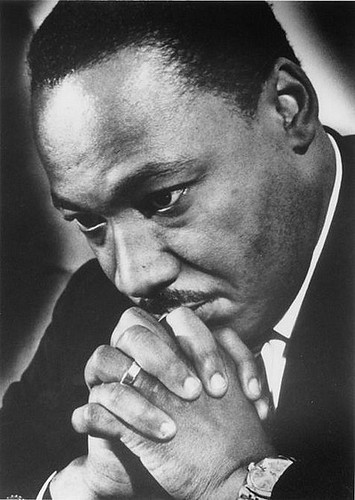
Martin Luther King, Jr. on the Role of the Church in Pursuing Justice

Photo Credit: caboindex
Taken from "Letter from a Birmingham Jail":
"In deep disappointment I have wept over the laxity of the church. But be assured that my tears have been tears of love. There can be no deep disappointment where there is not deep love. Yes, I love the church. How could I do otherwise? I am in the rather unique position of being the son, the grandson and the great grandson of preachers. Yes, I see the church as the body of Christ. But, oh! How we have blemished and scarred that body through social neglect and through fear of being nonconformists. 
There was a time when the church was very powerful--in the time when the early Christians rejoiced at being deemed worthy to suffer for what they believed. In those days the church was not merely a thermometer that recorded the ideas and principles of popular opinion; it was a thermostat that transformed the mores of society. Whenever the early Christians entered a town, the people in power became disturbed and immediately sought to convict the Christians for being "disturbers of the peace" and "outside agitators."' 
But the Christians pressed on, in the conviction that they were "a colony of heaven," called to obey God rather than man. Small in number, they were big in commitment. They were too God-intoxicated to be "astronomically intimidated." By their effort and example they brought an end to such ancient evils as infanticide and gladiatorial contests. 
Things are different now. So often the contemporary church is a weak, ineffectual voice with an uncertain sound. So often it is an archdefender of the status quo. Far from being disturbed by the presence of the church, the power structure of the average community is consoled by the church's silent--and often even vocal--sanction of things as they are. 
But the judgment of God is upon the church as never before. If today's church does not recapture the sacrificial spirit of the early church, it will lose its authenticity, forfeit the loyalty of millions, and be dismissed as an irrelevant social club with no meaning for the twentieth century. Every day I meet young people whose disappointment with the church has turned into outright disgust. 
Perhaps I have once again been too optimistic. Is organized religion too inextricably bound to the status quo to save our nation and the world? Perhaps I must turn my faith to the inner spiritual church, the church within the church, as the true ekklesia and the hope of the world. 
But again I am thankful to God that some noble souls from the ranks of organized religion have broken loose from the paralyzing chains of conformity and joined us as active partners in the struggle for freedom. They have left their secure congregations and walked the streets of Albany, Georgia, with us. They have gone down the highways of the South on tortuous rides for freedom. Yes, they have gone to jail with us. Some have been dismissed from their churches, have lost the support of their bishops and fellow ministers. But they have acted in the faith that right defeated is stronger than evil triumphant. Their witness has been the spiritual salt that has preserved the true meaning of the gospel in these troubled times. They have carved a tunnel of hope through the dark mountain of disappointment. I hope the church as a whole will meet the challenge of this decisive hour. 
But even if the church does not come to the aid of justice, I have no despair about the future. I have no fear about the outcome of our struggle in Birmingham, even if our motives are at present misunderstood. We will reach the goal of freedom in Birmingham and all over the nation, because the goal of America is freedom. Abused and scorned though we may be, our destiny is tied up with America's destiny. Before the pilgrims landed at Plymouth, we were here. Before the pen of Jefferson etched the majestic words of the Declaration of Independence across the pages of history, we were here. For more than two centuries our forebears labored in this country without wages; they made cotton king; they built the homes of their masters while suffering gross injustice and shameful humiliation -and yet out of a bottomless vitality they continued to thrive and develop. If the inexpressible cruelties of slavery could not stop us, the opposition we now face will surely fail. We will win our freedom because the sacred heritage of our nation and the eternal will of God are embodied in our echoing demands."
To read the complete letter, please click here.

Tuesday, September 24, 2013

How A Chinese-American Church Became Multi-Ethnic

Photo Credit: Enoch Lai
Vox Veniae, a church in East Austin, Texas whose name means "voice of forgiveness" in Latin, has taken a unique approach in becoming a multi-ethnic congregation. Mark Oppenheimer of The New York Times comments:
"But what’s really unexpected about Vox, to anyone who knows American Protestantism, is that what began as a church for Chinese-Americans quickly became multiracial. Last Sunday morning, whites were in the majority, and in addition to Asian-Americans, there were Latinos and African-Americans in the pews — or, rather, the metal folding chairs around the small stage where a six-piece band played before the pastor, the Rev. Gideon Tsang, delivered his sermon. 
In a country that is growing more racially diverse, and in an evangelical movement that is becoming more politically diverse, Vox Veniae, which is Latin for “voice of forgiveness,” may be, as Jesus said, a sign of the times. 
Racially diverse churches are often led by white pastors who recruit in minority communities, usually by hiring nonwhite assistant pastors. It is less common to see an ethnic church attract whites. It may be that white people avoid churches where at first they will be outnumbered. Or perhaps the ethnic churches’ worship styles feel alien (especially if prayers and sermons are in a foreign language). Whatever the reason, white churches sometimes succeed in drawing minority worshipers, but minority churches rarely attract white people. 
Mr. Tsang sports arm tattoos and the modish, buzzed-on-the-sides, long-on-top haircut that many young men who request it call “the Hitler Youth.” He was raised in Toronto, the son of a Chinese-Canadian pastor of an ethnic church. In 2006, he started Vox Veniae as an independent planting of the Austin Chinese Church, a larger church that wanted a mission to young people, especially University of Texas students. In 2007, the church opened Space 12, and in 2009, it moved its worship services there. Along the way, it began to draw older people. And whiter people. 
“The average age when we started was 22,” Mr. Tsang said. “Today, the average age is 27, 28.” Last Sunday, I sat behind a woman who must have been in her 60s. When she had trouble reading the passage from I Corinthians on the monitor above, her neighbor, about 40 years younger, whispered the words in her ear."
To read the complete article please click here.

(HT: DJ Chuang for the link.)

Friday, August 02, 2013

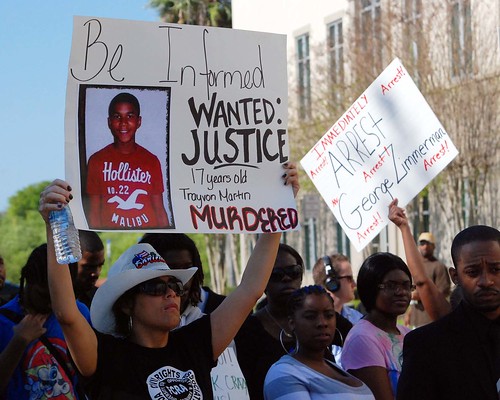
Local Pastors Seek Healing In Wake Of Trayvon Martin Trial

Photo Credit: Werth Media
Less than a week after George Zimmerman was acquitted in the killing of Trayvon Martin, rallies were held throughout the United States calling for 'Justice for Trayvon.' Although a Sanford, Florida jury did not find Zimmerman guilty in Trayvon's death, millions of Americans feel that justice has not been realized in the case.

In the aftermath of the shooting of Trayvon and its subsequent trial, a number of issues connected to this tragedy have been the focus of intense media coverage. Although many consider the era in which we currently live to be "post racial", the death of Trayvon has re-ignited national discussions on gun control, racial profiling, homicide rates of young black men and the differing views of the criminal justice system which exist within the white and black communities.

If we have learned anything from the events surrounding the death of Trayvon Martin, it is that we do not all view the world the same way. Even within the Christian community, self-professed followers of Jesus Christ do not agree on who was at fault in Trayvon's death nor what justice looks like in the midst of the Zimmerman's acquittal.

However, a small group of Central Florida pastors, along with some other Christian leaders from other parts of the country, are seeking to listen to one another in order to help facilitate healing both in Sanford and in the rest of the country. Jeff Kunerth of The Orlando Sentinel provides insight:
"A group of black and white Sanford-area pastors united by the shooting death of Trayvon Martin reconvened Wednesday for a racial-reconciliation forum they hope will spread nationwide. They hope Sanford, which did not experience violence after the acquittal of George Zimmerman, will provide a model for other cities. 
"I contend that Sanford, Florida, will be the place people will point to and say, 'These people have learned how to do it,'" said Raleigh Washington, president of the Denver-based Promise Keepers. 
About 30 ministers — including pastors from Atlanta, Los Angeles and Washington — attended the forum at Charisma Media in Lake Mary with hopes of launching a national Reconciliation and Relationship Initiative. The group drafted The Sanford Declaration, which could be used for multiracial forums in other cities.

"Our real vision is to encourage this kind of dialogue all over the country," said Steve Strang, CEO of Charisma Media, who has scheduled a news conference today to announce the group's plans for the nationwide initiative. The press conference will be at 10:30 a.m. outside First Shiloh Missionary Baptist Church, 700 S. Elm Ave., Sanford.

Key to The Sanford Declaration is a commitment to form friendships, fellowships and relationships between pastors that transcend race and culture. Several of the pastors said that without the death of Trayvon Martin, they never would have become close friends with ministers of a different race. 
"A horrible tragedy has brought us together, has slapped us upright and said there's a history here," said Joel Hunter, senior pastor of Northland, A Church Distributed in Longwood. "The inertia of history can only be interrupted by relationships." 
However, the Rev. Harry Rucker, pastor of First Shiloh Missionary Baptist Church, argued that Sanford remains essentially unchanged despite the closer ties between black and white ministers. 
"We're united, we're together, but racism still exists," Rucker said."
In light of the many ways that black and white Christians can often misunderstand one another, dialogue and relationship building across racial lines are a great place to start the healing process. When we enter into the world of another with the intent to understand where they are coming from (and not simply to just let our opinions be heard), trust and reconciliation can begin to take place. Our distrust of one another often occurs because we simply don't know each other. Dr. Martin Luther King, Jr. said the following:
"We often hate each other because we fear each other; we fear each other because we don’t know each other; we don’t know each other because we can not communicate; we can not communicate because we are separated."
Christians of differing persuasions coming together for dialogue can help facilitate the healing in a racially divided community and nation. It doesn't mean we all have to act the same or think alike... or even agree with one another. But in order to be unified within the family of God, we need to be willing to step out of our comfort zone and listen to those different from us. I pray that this tragedy may become a catalyst for lasting unity among Christians in Central Florida...and beyond.

To read complete coverage from The Orlando Sentinel on Trayvon Martin and George Zimmerman, please click here.

Monday, July 30, 2012

What Are The 10 Happiest Jobs?

Photo Credit: hubertk
From Forbes.com:
"Todd May writing in the New York Times argues that “A meaningful life must, in some sense then, feel worthwhile.  The person living the life must be engaged by it.  A life of commitment to causes that are generally defined as worthy — like feeding and clothing the poor or ministering to the ill — but that do not move the person participating in them will lack meaningfulness in this sense. However, for a life to be meaningful, it must also be worthwhile. Engagement in a life of tiddlywinks does not rise to the level of a meaningful life, no matter how gripped one might be by the game.” 
This is what underlies the difference between the happiest jobs and the most hated jobs. One set of jobs feels worthwhile, while in the other jobs, people can’t see the point. The problems in the most hated jobs can’t be solved by job redesign or clearer career paths. Instead the organizations must undertake fundamental change to manage themselves in a radically different way with a focus on delighting the customer through continuous innovation and all the consequent changes that are needed to accomplish that. The result of doing this in firms like Amazon, Apple and Salesforce.com is happy customers, soaring profits and workers who can see meaning in their work."
So what did the General Social Survey by the National Organization for Research at the University of Chicago find as the ten most meaningful jobs? Here they are:

1. Clergy:  The least worldly are reported to be the happiest of all. 
2. Firefighters: Eighty percent of firefighters are “very satisfied” with their jobs, which involve helping people. 
3. Physical therapists: Social interaction and helping people apparently make this job one of the happiest. 
4. Authors: For most authors, the pay is ridiculously low or non-existent, but the autonomy of writing down the contents of your own mind apparently leads to happiness. 
5.  Special education teachers: If you don’t care about money, a job as special education teacher might be a happy profession. The annual salary averages just under $50,000. 
6. Teachers: Teachers in general report being happy with their jobs, despite the current issues with education funding and classroom conditions. The profession continues to attract young idealists, although fifty percent of new teachers are gone within five years. 
7. Artists: Sculptors and painters report high job satisfaction, despite the great difficulty in making a living from it. 
8. Psychologists: Psychologists may or may not be able to solve other people’s problems, but it seems that they have managed to solve their own. 
9. Financial services sales agents: Sixty-five percent of financial services sales agents are reported to be happy with their jobs. That could be because some of them are clearing more than $90,000 dollars a year on average for a 40-hour work week in a comfortable office environment. 
10. Operating engineers: Playing with giant toys like bulldozers, front-end loaders, backhoes, scrapers, motor graders, shovels, derricks, large pumps, and air compressors can be fun.  With more jobs for operating engineers than qualified applicants, operating engineers report being happy.
The results of this survey may be surprising but it does demonstrate that fulfillment in one's vocation is not simply found in one's salary. Investing in the lives of people and making a lasting difference in the world, even through a job with relatively low pay, brings greater satisfaction than merely bringing home a paycheck from a job you dread.

(h/t to Ed Stetzer for the link.)

Saturday, August 13, 2011

Why You Don't Want To Be Primarily Known For What You're Against

Photo Credit: 4lfie
It is a sobering reality that in many segments of our society Christians are known more for what we are against than for what we are for. Our public demonstrations against various sins and groups that we believe to be enemies of God have left many with the impression that we Christians are simply a bunch of angry zealots with nothing better to do than to demonize others.

In a convicting and telling post, Byron Yawn outlines the reasons why we probably don't want to be known as the "angry prophet." Yawn says this:
"Of the many things I’ve learned about pastoral ministry over these years one stands out among the most helpful: There is a real danger in consistently defining yourself and your ministry by what you are against."
He then goes on to list ten dangers of defining yourself by what you're against. Though primarily directed at pastors, his admonitions could apply to any of us. Here they are:
1. You’ll forget to talk about what’s good… especially about Jesus.

2. You’ll begin to take yourself too seriously.

3. You’ll begin to preach the same sermon from every passage.

4. You’ll foster mean people.

5. You’ll eventually assemble an audience of self-congratulatory clones.

6. You’ll take all correction personally and as an unpardonable offense against “God’s man.”

7. You’ll make a terrible shepherd.

8. You’ll become the type of person you warn others about.

9. You’ll thrive on controversy.

10. People will stop listening.
Jesus instructed us that we would be primarily known as followers of Him by the love we show to one another. That doesn't mean we never seek to speak truth but it does mean that the truth we speak is motivated by love and not condemnation.

You can read Yawn's complete post here.

(h/t to Tim Challies for the link)

Thursday, February 10, 2011

John MacArthur on Family and Ministry

Photo Credit: Leonard John Matthews
In an interview with Tim Challies, Pastor John MacArthur shares his thoughts on the priority of family in the life of a man who is a spiritual leader:
"It is critically important that the pastor give priority to his family. As Paul told Timothy regarding the qualification of an elder, “He must be one who manages his own household well, keeping his children under control with all dignity (but if a man does not know how to manage his own household, how will he take care of the church of God?” So, this is a priority that comes to us directly from the Scriptures.

The most important things a Christian father can do for his children are to love their mother in a Christ-like way (Ephesians 5) and to train them up in the nurture and admonition of the Lord (Ephesians 6). And the most important thing he can do for his wife is to pursue Christ, and then to love and lead her out of the overflow of his devotion for the Savior. Thus, the fundamental key for being both a good husband and father is to be a godly man—one who fervently loves the Lord and is shepherding his own heart and mind with the Word of God. And that is intensely practical. To be an effective parent and a model husband, you must be faithful in your walk with Christ. Everything else in life flows out of that. Then your leadership in the home will be marked by an attitude of humble sacrifice and selfless service. As the Spirit uses His Word to sanctify your heart, you will be able to shepherd and care for your family.

There are other important things that fathers must do, of course—such as praying for their children, correcting them with patience and gentleness, instilling within them a love for the church, spending time with them, encouraging them, befriending them, and helping them make wise friendships of their own. But the heart of Christian parenting is being a faithful Christian."
To read the rest of the interview please click here.

Wednesday, January 26, 2011

The Perfect Pastor

Photo Credit: ben110
The job of the pastor is a rewarding, yet difficult assignment. Not only are pastors expected to faithfully teach their congregation the Word of God and play a nurturing role in the spiritual lives of others but they are also saddled with a number of expectations that can, at times, require extraordinary powers to fulfill.

Here is a bit of a humorous look at "The Perfect Pastor":
"The perfect pastor preaches exactly 10 minutes. He condemns sin roundly but never hurts anyone’s feelings. He works from 8 AM until midnight and is also the church janitor. The perfect pastor makes $40 a week, wears good clothes, drives a good car, buys good books, and donates $30 a week to the church. He is 29 years old and has 40 years experience. He never forgets a name and spends most of his time praying to God. Above all, he is handsome.

He also knows when somebody is sick and needs visitation even without anyone telling him about it. He loves to spend time with his family and the perfect pastor has no problem with you dropping in unexpectedly. And he also spends most of his time in preparation to speak God’s Word. He remembers everyone’s birthdate and of course, their anniversary dates as well. Before and after services, he never fails to speak to each person present and will also take the time to listen to you for 15 minutes and pray for each person no less than 10 minutes after listening to them.

The perfect pastor always smiles and tells you what you want to hear. He also goes out to eat after church with each individual family, spreading his time evenly between all, and he also pays for all their meals. The perfect pastor eats nutritiously, gets his rest, exercises daily, and is always there to listen to you night or day. The perfect pastor has a burning desire to work with teenagers, and he spends most of his time with the senior citizens. He smiles all the time with a straight face because he has a sense of humor that keeps him seriously dedicated to his church. He makes 15 home visits a day and is always in his office to be handy when needed.

The perfect pastor always has time for church council and all of its committees. He never misses the meeting of any church organization and is always busy evangelizing the unchurched. He meets with the all the other pastors in town because they all have so much time on their hands. He also stays focused on the vision of the house. And he attends all the town meetings for PR’s sake. He takes family vacations and attends all the latest church and ministers conferences and listens to your favorite TV preachers and is completely up to date on each prominent TV preacher’s messages. He spends all day each Saturday preparing the Sunday sermon, and he focuses on his family too. He also doesn’t overburden the church finances, so he holds down a full time secular job as well. He never spends your tithes on his children’s Baskin Robins Ice Cream cones." (Author unknown)
Why don't you take a moment today to thank your pastor for the role they play in your life and let them know that you are thankful for them. I'm sure they'll appreciate it.

(h/t Bill Reichart via Buzzard Blog)

Thursday, September 23, 2010

Eddie Long & How to Respond When Pastors Fail

Photo Credit: bruckerrlb
The allegations directed towards Bishop Eddie Long, pastor of Georgia's New Birth Missionary Baptist Church, have sent shock waves through the Christian community and raised all sorts of questions about the things he's been accused of doing.  As the pastor of one of the nation's largest churches, Bishop Long is a prominent figure in evangelical Christian circles and is one of the most recognized African American preachers around.

The things that he has been accused of are certainly troubling but I am not going to speculate on what has or hasn't happened.  Ultimately, God knows what happened and the truth will eventually be brought into the light.  Whatever ends up happening, it is apparent that the name of Christ has once again been soiled.  Whether it has been tarnished by young men that are lying or by an unrighteous preacher, the stereotype of hypocritical Christian ministers that are out for financial gain and sexual conquests is played out again before a watching public.

For those that are not of the faith, it is very easy to believe that all pastors are insincere and only out for personal gain.  Sadly, there is a small segment of clergy where this is absolutely true but my hope is that Eddie Long does not fall into this category.  But what of the untold number of pastors leading small congregations who faithfully and humbly serve their members and their community year after year, often unnoticed and under appreciated? 

There are countless men and women of God who entered into the ministry because they loved God and what to see their lives be used by God to make a difference in the lives of others.  I would like to think I am one of them.  We don't lead mega-churches, we don't drive very nice cars and don't live in opulent homes.  But we do faithfully serve God and live lives of integrity.

Very simply, pastors are human.  We like to think of our spiritual leaders as being a cut above the rest of us and that they don't have the same kinds of struggles as the average man or woman.  The reality is that not only do clergy deal with the same kinds of temptations as everyone else, but often they have no one to turn to when dealing with the internal conflicts of the heart.

Spiritual leaders are commonly placed on a platform in the eyes of their followers and viewed as being capable of doing no wrong.  When taken to the extreme, I believe the reverence and awe that is demonstrated towards some pastors is akin to idol worship where the spiritually immature have replaced their worship of God with the man or woman that teaches them the Word on Sunday mornings. 

When we have an improper view of our spiritual leaders, we are only setting ourselves up for disappointment when we learn that they are imperfect.  At times, we experience this when they don't meet certain expectations we have of them; at other times it comes when we learn that they have been living a secret lifestyle.  I say none of this to excuse unrighteous, sinful and, in certain cases, unlawful behavior.  When clergy sin they should be disciplined by their church and when they break the law, they should be prosecuted (whether they feel like God has forgiven them or not) and make appropriate restitution to their victims.

Spiritual leadership is a privilege.  It is not a right.  Through sin and disobedience, we can become disqualified from leading spiritually.  Just because someone we may possess certain oratorical skills or leadership gifts does not mean that character doesn't count.  It does.  When a person in a trusted position of spiritual leadership betrays that trust and does untold damage to others, it is not to be taken lightly. Over time, restoration can take place but it doesn't happen over night nor should the same level of ministry responsibilities in the future just be assumed.

A sincere man or woman of God will point people to Jesus and not to themselves.  They will walk in humility and extend the same type of grace to others that they have received from God.  They will lead with the gifts God has given them but will also admit when they are wrong.  They will not be in the ministry for themselves but for God and others.  

There are a lot of really great ministers out there.  Please don't let the public failings of a few (or allegations based in falsehoods) cause you to walk away from God.  Our eternal hope should be in Christ and not in man.  The gospel is for sinners and, yes, even clergy need the gospel every day.  I pray that in some way God will be glorified and more people will be drawn to him through this very unfortunate and unsettling situation.  

Wednesday, February 03, 2010

Who Are the Most Influential Preachers in the U.S.?

In a recent survey performed by LifeWay Research, Rev. Billy Graham was named as the nation's most influential preacher. The final poll results, which included responses from over a thousand pastors from Protestant denominations, reveals some potential problems with the sample from which LifeWay collected its data.

First, let me list the top ten responses:

1. Billy Graham
2. Chuck Swindoll
3. Charles Stanley
4. Rick Warren
5. John MacArthur
6. Barbara Brown Taylor
7. David Jeremiah
8. Max Lucado
9. John Piper
10. Andy Stanley

What I find interesting about this list is not that I don't think these individuals are influential (clearly they are), but I wonder about the relative homogeneity of the list. All of the preachers listed here are white and all but one is a man. Seven of the ten are from either Georgia or California. That seems a bit odd to me.

In addition, pastors of several of the largest churches in the country are not listed here, most notably Joel Osteen, Bill Hybels and T.D. Jakes. In the case of Osteen, we can say what we will about his theology and teaching methods but hardly a person in America (Christian or not) has not heard of him as a result of his television program and best-selling books.

The director of the company that did the study said this:
"The lack of diversity -- the top picks were nearly all white male Southern pastors -- however, surprised Ed Stetzer, director of LifeWay Research, which is affiliated with the Southern Baptist Convention.

"Considering our sample includes liberal and conservative, all races and ethnicities, mainline and evangelical, we were surprised that the list looked like mainstream Christian radio and publishing and was not more representative," Stetzer said.
Perhaps the reason the study came out the way it did was because those that were questioned are those that listen to mainstream Christian radio and are exposed to mainstream Christian publishing. Other groups like Pentecostals, African Americans and Hispanics, to name a few, are simply not represented in this sample. I wonder if a company that was unaffiliated with a particular denomination were to conduct a similar survey if they would get the same results. It would be interesting to find out.

Sunday, October 11, 2009

Chuck Swindoll on Leadership

On the Out of Ur blog Drew Dyck lists some points that Chuck Swindoll, well-known author, Bible teacher and former president of Dallas Theological Seminary, shared in a message last week at the Catalyst '09 conference. Dr. Swindoll's talk was entitled "Ten Things I Have Learned During Nearly 50 Years of Leadership" and here is a summary of what he shared:

1. Leadership is lonely.

2. Success is dangerous.

3. It's hardest to lead at home.

4. Being real is essential.

5. Obedience is painful.

6. Brokenness and failure are necessary.

7. Attitude is more important than actions.

8. Integrity eclipses image.

9. God's way is better than my way.

10. Christ-likeness begins and ends with humility.

It's always good to hear from those that have served faithfully and have a lifetime of experiences to share with those of us that are still young in our ministry careers. To read more of Drew Dyck's thoughts on Swindoll's points, click here.

Sunday, September 27, 2009

Dealing With Church Conflict

Because churches are made up of fallen people, there will inevitably be conflict, disagreements and varying perspectives on how church should be done. In most cases these differences can be worked out amicably without much harm. In other cases, it doesn't always turn out as one would hope.

Coral Ridge Presbyterian Church, a well-known church founded by the late D. James Kennedy and located in Fort Lauderdale, Florida, has been going through a bit of a rough stretch as its members adjust to having only their second senior pastor in the church's nearly half-century of existence. Just this past March Coral Ridge installed Tullian Tchividjian as senior pastor.

Shortly after Rev. Tchividjian's hiring some rifts began to form as some members of Coral Ridge had trouble with Tchividjian's style and approach to ministry. Tchividjian, who happens to be the grandson of evangelist Billy Graham, is significantly younger than Kennedy and ruffled the feathers of some long-time members of the church. Among the things that were mentioned were his lack of focus on political issues in his sermons and his refusal to wear a robe.

As is the case with many church disputes, the disagreements in this instance seem to revolve around things that don't necessarily have their basis in Scripture. For example, there are no biblical requirements for pastors to wear robes or for them to march in-step with a certain political party. Fortunately, the members of Coral Ridge voted to retain Tchividjian as their pastor after a congregational vote recently.

Pastor Tchividjian offered a brief interview with Christianity Today last week which you can read here. I appreciate the maturity with which he has handled this situation publicly and indicated desire to represent Christ well, even in the midst of disagreement with other Christians. When asked how to discuss the situation publicly without worsening it, Tchividjian said this:
"My commitment is to speak about those who opposed me in a forgiving manner, in a Christ-like manner. I will, by God's grace, do my best to take the high road, to not disparage anybody, to operate in a posture of understanding. Some of these people had only had one pastor ever. So that's going to be hard for some people.

So I am very much working hard to treat those who have opposed me the way God and Christ treated me."
As I said, conflict in the church is inevitable because we are each sinful people. How we choose to respond to that conflict is what a watching world is most interested in.

Wednesday, September 16, 2009

How One Church is Using Technology

Joel Hunter has become well-known over the past year as one of President Obama's spiritual advisers but few outside of central Florida may realize that he is a pastor of a large church that uses innovative ways to extend its reach. Northland, a Church Distributed is a mega-church located outside of Orlando that has taken a multi-site approach (hence the "Church Distributed" moniker) and uses the Internet in creative ways to minister to current and seeking members.

Christianity Today recently profiled Pastor Hunter and focuses on how Northland embraces modern technology to broadcast its services online. Although there are a number of detractors who think ministry can't be done online, Hunter feels differently:
"Our experience has been that people feel safer being able to talk from their own home than they are when they go on someone else's turf," Hunter says. "We have seen an increase in transparency when you add that safety layer."
Based on my own experiences, I would have to agree. Through sites like EveryStudent.com and NotYourMamasReligion.com, we provide safe places for students to explore issues of faith in a non-threatening environment. I do agree that face-to-face interaction is generally preferred over communication that is taking place online, it is not always possible. But in order to reach those that spend the bulk of their time online, churches and other ministries need to have an active presence there in order to minister to those that may not be reached through traditional methods.

Wednesday, June 10, 2009

Christians & The Cult of Personality

The digital age in which we now reside has caused the profile of a growing number of Christian leaders to grow among Christians and non-believers alike. In the past a relatively small number of Christian pastors were well-known by the general population, often because of their prominence in a certain field. Billy Graham (evangelism), Martin Luther King, Jr. (civil rights), and Jerry Falwell (politics) are a few that come to mind.

Nowadays, there are several pastors that are well-recognized among Christians and non-church goers, as well. Rick Warren, Joel Osteen and T.D. Jakes are a few of the more prominent examples. With thousands flocking to hear their sermons each weekend, these pastors are also able to spread their message through their books, television broadcasts, the Internet and other forms of modern media.

Because of this accessibility, many of these figures are treated as celebrities. In fact, even those that aren't well-known carry themselves as such. For example, there is a church near my home that is not that well-known. I've met a lot of people who attend church in Orlando and I can't recall ever meeting anyone that attends this particular congregation. Right at a major intersection near my house towers a huge billboard with the pastor's picture and name advertised for all to see. The billboard almost shouts out, "Hey, don't you want to go to a cool church led by this cool guy?"

The ad seems to market the pastor as the reason to attend this church. And, to be honest, I doubt few outside of his congregation really know who he is. But even if he was a best-selling author and the church had a popular television program, should the pastor be the selling point about why someone should check out the church?

John Piper, a well-known pastor himself, comments on this phenomenon in an article entitled, "Hero Worship and Holy Emulation." Pastor Piper addresses this issue of celebrity pastors from a perspective that few of us can equal. Namely, because he is one. His wisdom is telling:
"What is the meaning of the attention given to well-known pastors? What does the desire for autographs and photographs mean? The negative meaning would be something akin to name-dropping. Our egos are massaged if we can say we know someone famous. You see this on blogs with words like “my friend Barack” and the like. And I presume that, for some, an autograph or a photo has the same ego-boost.

However, I don’t assume the worst of people. There are other possible motives. We will see this below. But it is good to emphasize that all of this is more dangerous to our souls than bullets and bombs. Pride is more fatal than death.

When I say “our souls” I mean all of us—the signature-seeker, the signer, and the cynic who condemns it all (on his very public blog). There is no escaping this new world. The question is, How do we navigate it for the glory of Christ, the crucifixion of self, the spread of truth, the deepening of faith, and the empowering of sacrificial love?"
Piper goes on to share the difference between worship and appropriate admiration in a balanced and convincing manner. While it is fitting to look up to and admire those that are godly leaders, our worship should always be reserved for the Lord Jesus Himself. You can read the whole article here.

Wednesday, November 19, 2008

Advocating a Holistic Gospel

Leadership magazine conducted a survey this summer and asked several hundred evangelical Christian pastors about their view of the gospel, mission and how verbal proclamation of the good news and the expression of good deeds work together. Among the findings was that there has definitely been a shift in thinking to this regard, even from just a decade ago. The survey uncovered the following from those interviewed:

- Pastors are focusing more on the Gospels than on the Epistles.
- More pastors believe the gospel is advanced by demonstration and not simply proclamation.
- More pastors say the goal of evangelism is to grow "the" church rather than to grow "my" church.
- More pastors believe partnering with other local churches is essential to accomplishing their mission.

It hasn't just been Leadership magazine that has acknowledged this trend. Even the Wall Street Journal picked up on this development. Writer Dale Buss noted the following:
"This shift constitutes a mega development in the world of megachurches. For over 30 years, Willow Creek [the megachuch located outside of Chicago] grew explosively thanks to its obliqueness toward Sabbath-day orthodoxy and quickly became the standard-bearer of a powerful new movement in evangelical Christianity. Thousands of churches sprang up in its wake and grew the same way. But recent market research showed Willow Creek's leadership that some great weaknesses lay beneath the surface even while average weekend attendance had grown to 23,000 people. Too many of their flock, Mr. Hybels and his staff discovered, considered themselves spiritually 'stalled' or 'dissatisfied' with the role of the church in their spiritual growth, and huge portions of these groups were considering leaving Willow Creek because of it" (Wall Street Journal, July 27, 2008).
With more evangelicals advocating issues of social justice, creation care and aid to the poor, there is a concern among many of us committed to the cause of evangelism that a drift away from the need to verbally share the gospel is taking place. Although we do need to continue to ensure that we as followers of Christ stay committed to simple presentations of the gospel through our words, the Bible does not make the separation between verbal proclamation and lifestyle witness that we often do. In fact, Jesus consistently affirmed that our actions do matter greatly. Look at what He said in Matthew 25:

"When the Son of Man comes in his glory, and all the angels with him, he will sit on his throne in heavenly glory. All the nations will be gathered before him, and he will separate the people one from another as a shepherd separates the sheep from the goats. He will put the sheep on his right and the goats on his left. "Then the King will say to those on his right, 'Come, you who are blessed by my Father; take your inheritance, the kingdom prepared for you since the creation of the world. For I was hungry and you gave me something to eat, I was thirsty and you gave me something to drink, I was a stranger and you invited me in, I needed clothes and you clothed me, I was sick and you looked after me, I was in prison and you came to visit me.'

"Then the righteous will answer him, 'Lord, when did we see you hungry and feed you, or thirsty and give you something to drink? When did we see you a stranger and invite you in, or needing clothes and clothe you? When did we see you sick or in prison and go to visit you?' "The King will reply, 'I tell you the truth, whatever you did for one of the least of these brothers of mine, you did for me.' "Then he will say to those on his left, 'Depart from me, you who are cursed, into the eternal fire prepared for the devil and his angels. For I was hungry and you gave me nothing to eat, I was thirsty and you gave me nothing to drink, I was a stranger and you did not invite me in, I needed clothes and you did not clothe me, I was sick and in prison and you did not look after me.'

"They also will answer, 'Lord, when did we see you hungry or thirsty or a stranger or needing clothes or sick or in prison, and did not help you?' "He will reply, 'I tell you the truth, whatever you did not do for one of the least of these, you did not do for me.' "Then they will go away to eternal punishment, but the righteous to eternal life."

In addition, James affirms this sentiment when he said:

"What good is it, my brothers, if a man claims to have faith but has no deeds? Can such faith save him? Suppose a brother or sister is without clothes and daily food. If one of you says to him, "Go, I wish you well; keep warm and well fed," but does nothing about his physical needs, what good is it? In the same way, faith by itself, if it is not accompanied by action, is dead."
For those that advocate only good works, we need to remember that good deeds are not enough. A social gospel that never explains Jesus as the motivation is really no gospel at all. There are many that feed the poor and care for the sick that are not Christians. Our deeds matter, but the importance of our words cannot be minimized either. When Jesus gave his instructions in Mark 16 to "go into all the world and proclaim the gospel" or told his disciples in Acts 1 that they would be His "witnesses", he was speaking of declaring verbally the good news. The call of Jesus is to show His love by both caring for the needs of other and by sharing with others how they can have a relationship with Him.

Wednesday, October 15, 2008

How American Christians are Perceived Around the World

There were some interesting findings at a recent gathering of pastors from throughout the world. Here is a press release on the event:
"DALLAS, Oct. 1, 2008 – Christian leaders from around the country heard a wake-up call this week on how they are perceived by believers in the Global South. Speakers came from Africa, Asia, Eastern Europe and Latin America – the parts of the world experiencing the most growth in Christianity.

One hundred twenty-five pastors from a broad spectrum of American churches gathered for the North American Pastors’ Consultation on “The Changing Role of the American Church in World Evangelization,” held at Park Cities Presbyterian Church in Dallas, Sept. 22-23. Similar meetings will be held around the world, leading up to The Third Lausanne Congress on World Evangelization, to be held in Cape Town, South Africa, Oct. 16-25, 2010.

“The purpose of this consultation was to discuss the changing role of the American Church in world evangelization,” said the Rev. Doug Birdsall, executive chair of the Lausanne Committee for World Evangelization. “In recent years, many international church leaders have been asking, ‘Is the American Church still with us? Does the American Church have the humility to learn from us, to work together in authentic partnership?’ We answered several of those questions during the week.”

While American missions have done a lot of good in spreading the Gospel throughout the globe in the last 100 years, several speakers said that the time has come for a change. Theological educator and evangelist Dr. Peter Kuzmic of Croatia said that U.S. Christians must stop acting as if “salvation is in the hands of Americans.” He said that Western Christians have, along with the good, also done damage to the image of Christ around the world. He recalled the era following the fall of the Berlin Wall, when Eastern Europe was first open to Christianity. So many different branches of Christianity came in to share the Gospel, Dr. Kuzmic said, that people were confused. “How many Jesuses are there in the West?” they asked, after being introduced to the Baptist Jesus, the Presbyterian Jesus, the Pentecostal Jesus, etc.
Africa was represented by the Rev. Reuben Ezemadu of Nigeria, continental director of the Movement of African National Initiatives. He said African Christians have appreciated the historic leadership of the United States in mission efforts, but in the last 15-20 years, it has seemed as if U.S. Christians were imposing their structures on the Global South, and they just did not work in that context. American participation in support roles is still needed, but Africans themselves can more appropriately take leadership roles. They ask that Americans recognize the maturity and intelligence of other cultures.

David Ruiz of Guatemala, associate director of the World Evangelical Alliance Mission Commission, presented the Hispanic perspective. He said Latin American Christians have felt ignored or overlooked, and want to see more humility from Western Christians about Latin America’s potential for reshaping Christianity worldwide. “Will North American Christians listen to their brothers and sisters from the South?” he asked.

Dr. Patrick Fung, a physician and theologian from China and general director of OMF International (formerly the Overseas Missionary Fellowship), addressed Asian perceptions of American missions. He recalled the story of missions in China in the years following 1949, when all missionaries had to withdraw. Despite no missionary presence, the church grew and thrived. Now the Chinese Church globally is the largest church in the world.

Dr. Fung said that America is still perceived as a Christian nation, so when America acts “un-Christianly,” it reflects poorly on the Gospel, as has happened on the homosexual agenda. Asian Christians want to work shoulder to shoulder with U.S. Christians and to feel that they have been given an equal listening ear. A highly significant role Western believers can play is in reaching out to millions of Asian students studying in American and European universities, he said.

Following each presentation, the pastors discussed in roundtables what their “take away” should be. The group consensus was that the role of Western Christians in the increasingly "glocal" (simultaneously global and local) world is changing dramatically. Partnership will be key to establishing stronger, mutually supportive links.

A high point for many of the attendees was Tim Keller’s discussion on Christianity in America today, and the tension between evangelism and social justice issues. He suggested that Christians can neither try to change culture through social activism, withdraw from the culture, nor try to accommodate themselves to culture as cultural relevants to the extent that their own values are compromised. He said evangelism must remain the priority, and that only hearts that are truly changed will lead to cultural transformation. The solution, he said, is “gracious, truthful presence in culture.”

One purpose of the conference was to encourage pastors to think about the role they and their church will play in the upcoming Cape Town 2010 congress. It will include 4,000 participants from around the world, of which 400 of these will be from the United States. Churches will be invited to participate via the Internet and to host local gatherings, making it a truly global event and the first of its kind. Program Chairman Ramez Atallah reminded those present that the whole world participated in the Olympics, from their own living rooms. He has the same hope for Cape Town 2010.

The original Lausanne Congress was held in 1974, bringing Christians from around the globe to focus on world evangelization. A second congress followed in 1989. The fast pace of change in every sphere – from technology to communication and transportation – calls for a new Lausanne Congress to equip the Church for the next decade. It is sponsored by the Lausanne Committee for World Evangelization in collaboration with the World Evangelical Alliance.

The Lausanne Movement seeks to serve leaders worldwide by providing a place for theological discussion and the development of practical strategies for world evangelization. Lausanne seeks to encourage and stimulate the involvement of churches, denominations, ministries, networks and individuals."

Thursday, October 04, 2007

Asian American Pastors

This is a great article that the LA Times published that touches on the challenges that face Asian American pastors. My friends Tommy Dyo and Steve Hong are among those interviewed. Among the thought-provoking comments:

"Consider the situation of a second-generation Chinese or Korean American who works as an associate pastor for a largely immigrant congregation. Such a U.S.-born pastor would be accustomed to expressing personal views, so it can be trying to show marked deference to senior first-generation pastors who, steeped in hierarchal Confucian tradition, are used to assistants who don't express contrary opinions."

American culture is much more open about sharing differences," said the Rev. Louis Lee, a second-generation Chinese American pastor who founded Ministries to English-Speaking Asians. U.S.-born pastors "don't care about titles or doctorates," he said, but not using an appropriate title to address a superior can convey disrespect to a first-generation person. And expressing disagreement could be construed as a personal attack, said Lee, who is known as a "pastor" to Asian American pastors."

For Christian leaders in America coming from an Asian background, the clash of cultures is a daily reality. You can read the full article here.

Technorati Tags: