Showing posts with label native americans. Show all posts

Sunday, May 21, 2017

Weekly Web Roundup (5/20/17)

Photo Credit: sheldon0531
Here is a collection of items from around the web that caught my attention this past week:

A conversation with Andy Crouch about family and technology from Russell Moore

In this episode of the Signposts podcast, Dr. Moore offers an enlightening conversation with author Andy Crouch. They discuss how parents can create healthy boundaries with their children regarding technology use.

Standing Rock changed how I see America by W. Kamau Bell (CNN)
"I can't imagine what it must be like to be one of the indigenous people of the United States of America. I can't imagine watching the news every day -- as people debate whose country this is and who should be in charge of it and how to make it great again -- and hardly ever see your people brought into the discussion. As a black person in this country, I am always frustrated by the lack of attention my people's issues get. But at least the news and politicians are talking about not talking about our issues. Native issues are basically ignored."
Jesus, the Frybread of Life by Deborah Pardo-Kaplan (Christianity Today)

Here's a great profile of the work of InterVarsity Christian Fellowship (IV) as it pertains to Native American college students. Cru's Native ministry -- Nations -- partners closely with IV and is mentioned in the article.

My Family’s Slave by Alex Tizon (The Atlantic)
"She was 18 years old when my grandfather gave her to my mother as a gift, and when my family moved to the United States, we brought her with us. No other word but slave encompassed the life she lived. Her days began before everyone else woke and ended after we went to bed. She prepared three meals a day, cleaned the house, waited on my parents, and took care of my four siblings and me. My parents never paid her, and they scolded her constantly. She wasn’t kept in leg irons, but she might as well have been. So many nights, on my way to the bathroom, I’d spot her sleeping in a corner, slumped against a mound of laundry, her fingers clutching a garment she was in the middle of folding."
Why People Fight Online (The Barna Group)
"“Our most fraught conversations seem to have moved from the dinner table to the screen,” says Roxanne Stone, editor in chief at Barna Group. “However there are very few rules of etiquette in place for the internet yet. Where once family members could put a stop to an argument with a cry of ‘no religion or politics at the table!’ the digital world does everything to encourage such debates. And, of course, it’s a lot easier to be an anonymous jerk to a stranger than it is to yell at your mom. “Yet, there is a real person on the other end of that comment and online bullying has proven to be a truly destructive force,” says Stone. “The number of teen suicides attributed to it is but one extreme and horrifying example of its potency. Our level of civility and straight-up kindness should not be dependent on whether we are physically with a person or whether we know them. It’s easy to disembody the messages we read online and imagine our own posts are simply going out into an indifferent void. But real people are really hurt by the things said about and against them online."
The Blessing of Conflict by Chanequa Walker-Barnes (Collegeville Institute)
"The therapeutic definition of conflict is simple: a difference of opinion between two or more people. In this sense, conflict was not inherently bad; in fact, it was evidence of the family’s capacity to allow and cope with self-differentiation among its members. In a healthy family system, members have both a strong sense of group cohesion as well as clearly developed individual identities. The way in which families managed the dinner exercise told us something about that. On this task, a healthy family was one in which people offered different ideas about what they wanted, and then they worked through it to agree upon a menu that accommodated some, although not necessarily all, of those differences."
This Is All of Us - Mandy, Milo, Sterling and Chrissy Surprise Fans

NBC's "This is Us" became one of my favorite shows this past year. This video shows the stars of the show unexpectedly surprising fans of the show.


Wednesday, March 29, 2017

13 Books to Help You Live in Multi-Ethnic Community

It has been over twenty years since God started me on a journey of learning as I began a lifestyle of crossing cultures within my ministry and daily life. Initially much of this was directly related to my role as a campus missionary with Cru. But, over time, my appreciation for those from different cultural backgrounds has grown to the degree where I have a high value of regularly interacting with those whose cultural values are different than my own.  

Part of this journey has also involved learning about what it means to be part of multi-cultural teams and to live in multi-ethnic community. I have had the privilege of being on multi-ethnic teams where I have been both in the minority and in the majority. I have also enjoyed the opportunity to be led -- both spiritually and vocationally -- by those that are of a different ethnic background than me.

In addition to the many ways I've benefited personally and learned from friends and colleagues over these past two decades, I have also found a number of books that have helped put words to the feelings I have experienced. These authors have assisted me in the process of learning more about myself and others and helped in answering questions that had me perplexed.

Here are 13 books that I recommend to guide you in learning what it means to live in multi-ethnic, Christian community. I've read each of these books, except for a few. In those cases, I trust the authors and the content enough to recommend them to you. Here they are (in no particular order):

1. Many Colors: Cultural Intelligence for a Changing Church by Soong-Chan Rah
"Soong-Chan Rah's book is intended to equip evangelicals for ministry and outreach in our changing nation. Borrowing from the business concept of "cultural intelligence," he explores how God's people can become more multiculturally adept. From discussions about cultural and racial histories, to reviews of case-study churches and Christian groups that are succeeding in bridging ethnic divides, Rah provides a practical and hopeful guidebook for Christians wanting to minister more effectively in diverse settings."

2. The Wolf Shall Dwell with the Lamb: A Spirtuality for Leadership in a Multi-Cultural Community by Eric Law
"This groundbreaking work explores how certain cultures consciously and unconsciously dominate in multicultural situations and what can be done about it."


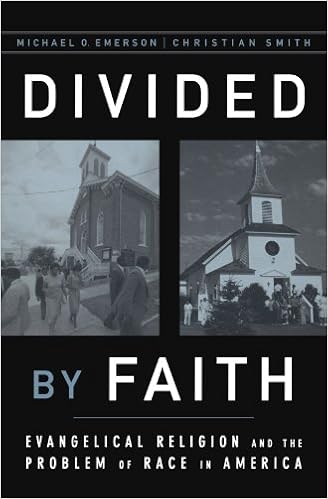
3. Divided by Faith: Evangelical Religion and the Problem of Race in America by Michael O. Emerson & Christian Smith
"Through a nationwide telephone survey of 2,000 people and an additional 200 face-to-face interviews, Michael O. Emerson and Christian Smith probed the grassroots of white evangelical America. They found that despite recent efforts by the movement's leaders to address the problem of racial discrimination, evangelicals themselves seem to be preserving America's racial chasm. In fact, most white evangelicals see no systematic discrimination against blacks. But the authors contend that it is not active racism that prevents evangelicals from recognizing ongoing problems in American society. Instead, it is the evangelical movement's emphasis on individualism, free will, and personal relationships that makes invisible the pervasive injustice that perpetuates racial inequality."

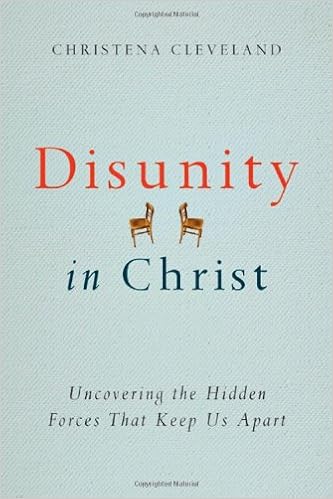
4. Disunity in Christ: Uncovering the Hidden Forces that Keep Us Apart by Christena Cleveland
"Despite Jesus' prayer that all Christians "be one," divisions have been epidemic in the body of Christ from the beginning to the present. We cluster in theological groups, gender groups, age groups, ethnic groups, educational and economic groups. We criticize freely those who disagree with us, don't look like us, don't act like us and don't even like what we like. Though we may think we know why this happens, we probably don't. In this eye-opening book, learn the hidden reasons behind conflict and divisions."

5. Living in Color: Embracing God's Passion for Ethnic Diversity by Randy Woodley
"Though our Christian experience is often blandly monochromatic, God intends for us to live in dynamic, multihued communities that embody his vibrant creativity. Randy Woodley, a Keetowah Cherokee, casts a biblical, multiethnic vision for people of every nation, tribe and tongue. He carefully unpacks how Christians should think about racial and cultural identity, demonstrating that ethnically diverse communities have always been God's intent for his people. Woodley gives practical insights for how we can relate to one another with sensitivity, contextualize the gospel, combat the subtleties of racism, and honor one another's unique contributions to church and society."

6. Cross-Cultural Servanthood: Serving the World in Christlike Humility by Duane Elmer
"Duane Elmer asked people around the world how they felt about Western missionaries. The response? "Missionaries could be more effective if they did not think they were better than us." The last thing we want to do in cross-cultural ministry is to offend people in other cultures. Unfortunately, all too often and even though we don't mean it, our actions communicate superiority, paternalism, imperialism and arrogance. Our best intentions become unintentional insults. How can we minister in ways that are received as true Christlike service? Cross-cultural specialist Duane Elmer gives Christians practical advice for serving other cultures with sensitivity and humility."

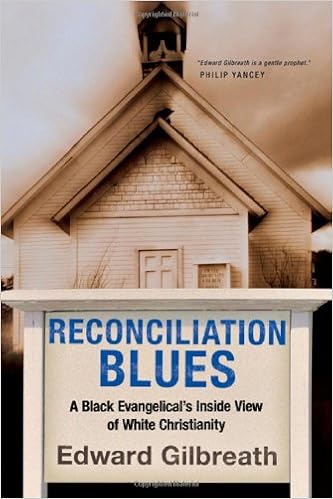
7. Reconciliation Blues: A Black Evangelical's Inside View of White Christianity by Edward Gilbreath
"What is the state of racial reconciliation in evangelical churches today? Are we truly united? In Reconciliation Blues journalist Edward Gilbreath gives an insightful, honest picture of both the history and the present state of racial reconciliation in evangelical churches. In his thoughtful overview he looks at a wide range of figures, such as Howard O. Jones, Tom Skinner, Dr. Martin Luther King Jr., Jesse Jackson and John Perkins. Charting progress as well as setbacks, his words offer encouragement for black evangelicals feeling alone, clarity for white evangelicals who want to understand more deeply, and fresh vision for all who want to move forward toward Christ's prayer "that all of them may be one.""

8. Right Color, Wrong Culture: The Type of Leader Your Organization Needs to Become Multiethnic by Bryan Loritts
"Increasingly, leaders recognize the benefit of multi-ethnic organizations and are compelled to hire diverse individuals who will help them reflect a new America. [Loritts] brings a challenge to leaders in this fable of self-discovery and change, as he explores the central, critical problem leaders often encounter when transitioning their church, business, or organization to reflect a multi-ethnic reality: finding a leader who is willing to immerse themselves in the environments and lives of people who are different from them."

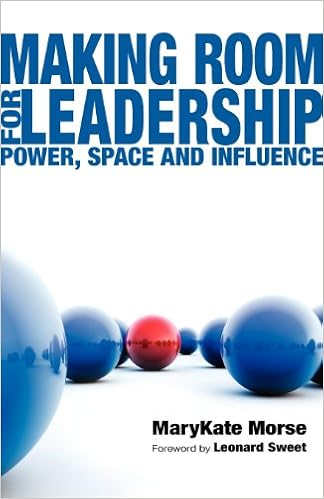
9. Making Room for Leadership: Power, Space and Influence by MaryKate Morse
"You don't just lead with your voice and your decisions. You lead with your body. The way you take up space in a room, the way you use or don't use your body in group settings, influences others. And all of us hold power to lead in our bodies. Yet, pastor and spiritual director MaryKate Morse contends, most of us are unaware of the ways we do or can use our bodies to influence others. Some of us cower in the corner, trying to hide. Others try to speak but are never heard. Still others are the focal point as soon as they walk in a room. What makes the difference? And how can we learn to lead in our own individual way with confidence?"

10. Bridging the Diversity Gap: Leading Toward God's Multi-Ethnic Kingdom by Alvin Sanders
"In a diverse, divided world, pastors and church leaders are faced with the question of how to lead across ethnic lines to bring healing and unity to the body of Christ. How can the church more accurately reflect the vision of God's kingdom, gathering together every tribe and nation? It all begins with leaders whose minds and hearts have been transformed by the gospel. Author Alvin Sanders believes the church is facing a chairos moment—the right time—to address the issue of ethnic division and tension within the church. Through this book, he offers a how-to resource for Christian leaders to lead their organizations in a majority-minority, multi-ethnic America."

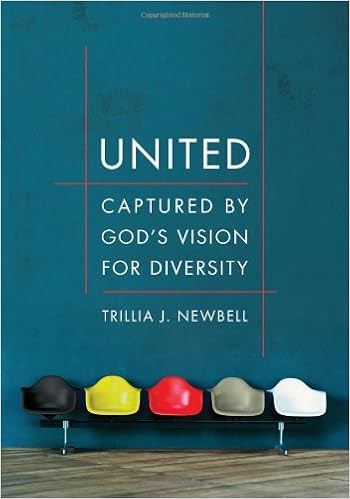
11. United: Captured by God's Vision for Diversity by Trillia J. Newbell
"On the Last Day every tongue and tribe will be represented in the glorious chorus praising God with one voice. Yet today our churches remain segregated. Can we reflect the beauty of the last day this day? United will inspire, challenge, and encourage readers to pursue the joys of diversity through stories of the author's own journey and a theology of diversity lived out. It’s time to capture a glimpse of God’s magnificent creativity. In the pages of United, Trillia Newbell reveals the deeply moving, transforming power of knowing—really knowing—someone who is equal yet unique. As we learn to identify in Christ rather than in our commonalities, we begin to experience the depth and power of gospel unity."

12. Breaking Down Walls: A Model for Reconciliation in an Age of Racial Strife by Raleigh Washington & Glen Kehrein
This is a classic resource for Christians from different cultural backgrounds that are seeking to understand one another. Breaking Down Walls suggest several principles on how we can be reconciled with one another for God's glory. This was one of the first books that I ever read on this subject.


13. Red, Brown, Yellow, Black, White—Who's More Precious In God's Sight?: A call for diversity in Christian missions and ministry by Leroy Barber & Velma Maia Thomas
"[This book] highlights the historic patterns that have created racial discrepancies within missions. With a no-blame attitude, powerful personal narratives from a dozen other black, Hispanic, Asian, Native American and white Christians, interactive histories of missions, and the writings of MLK and Howard Thurman (the entire "Letter From Birmingham Jail" and Howard Thurman's motivational speech "Sound of the Genuine"), Barber addresses this tough issue in a way that will inspire and motivate readers of all races toward change."

I hope you find these books helpful for you in your own journey toward multi-ethnic community and I'd love to hear from you any suggestions about other books you have found beneficial as well.

Saturday, January 14, 2017

Weekly Web Roundup (1/14/17)

Photo Credit: misha maslennikov
Here is a collection of items from around the web that caught my attention this past week:

The 5 (Unwritten) Rules of Honor-Shame Cultures  (HonorShame.com)
"In collectivistic societies, identity is defined by the group you belong to. When two people meet, one of the first items of conversation is figuring out which family, clan, or village the other person is from. Since honor is a shared commodity, what one person does brings honor (or shame) upon the entire community. Children are taught from an early age how to bring honor to the family, and people are expected to be loyal to their community, even at personal cost. In Western cultures, family is much more of a voluntary association. At the age of 18 or so, young adults are encouraged to venture out from the home to “find themselves” or “establish their own lives.”"
How to Destroy Your Child Through Sports by Ed Uszynski (Athletes in Action)
"In spite of mini-movements of outcry regarding poor parent and coach behavior at youth events and the intense pressure being put on kids to perform, many of us seem committed to staying on a course that ruins our children’s ability to enjoy games. Instead of sports being experienced as something good, a category called “play” that God created for our good and His glory, too often we use our kids’ playground to exorcise our own demons. 
In more than 25 years of listening to athletes from youth to professional levels process their experience of sports, I’ve learned that these parental behaviors can be counted on not only to ruin their experience of play, but also to create multi-layered psychological and spiritual maladies that stick throughout life."
9 Steps to More Ethical Fundraising (A Life Overseas: The Mission Conversation)
"We were doing all the things we were taught to do—pray, write newsletters, make calls, send letters, schedule meetings—but after two years, we felt stuck. We were at about 50% of our goal and couldn’t seem to make any traction. One day, I just felt I needed to do something to make a statement to our potential supporters that we were as serious about this as we possibly could be and that we held them and their potential donations in the highest esteem. So I decided to write down the ways in which we were committing to respect them and their sacrifice. 
I called this our “Fundraising Code of Ethics.” To me, it was a public covenant we were making to hold ourselves to a standard of maturity, transparency, and responsibility. By making it public, we were welcoming our supporters to hold us to this standard, but we also warned them we would never have a perfect record and asked them to be gracious with us. Like every healthy relationship, trust is absolutely crucial. We are all aware if donors trust you they are more likely to support you. What we learned is that we also need to have enough faith in our supporters to be transparent with them."
Racial Divides in Spiritual Practice (The Barna Group)
"Black communities tend toward communal rhythms of spiritual development while white communities prefer a more individualistic setting. It is unsurprising therefore that white Christians are more likely to view their spiritual life as “entirely private” (42% compared to 32%). Black Christians, on the other hand, are much more likely to believe their personal spiritual life has an impact on others—whether they are relatives, friends, community or society at large. For instance, black Christians are much more likely to believe that their personal spiritual lives have an impact on broader society (46% compared to 27%). 
This was a strong belief of Martin Luther King, and it appears to have had great staying power. He fundamentally believed that one’s personal spiritual life had implications for societal justice, and he called Christians—on both sides of the debate—to bring their faith to bear on the struggle for civil rights, to which he dedicated his life. This impact is also tied to the approach to evangelism: half of black Christians (50% compared to 34%) believe it is their responsibility to tell others about their religious beliefs, further reinforcing the public / private contrast between both groups."
The Longstanding Crisis Facing Tribal Schools by Alia Wong (The Atlantic)
"Children who are disciplined in school are far more likely to end up in prison as adults; it goes without saying that being disciplined as a child via formal law enforcement has similarly deleterious, if not worse, effects. The alleged practices at Havasupai Elementary are, the suit contends, characteristic of those at tribal schools across the country. Indeed, a March 2014 U.S. Department of Education report found that Native Americans across the country are disciplined at disproportionate rates. Unsurprisingly, they’re also incarcerated at a rate 38 percent higher than the national average."
Repealing Obamacare without a Replacement: How It May Hurt Small Church Pastors and Church Planters Near You by Ed Stetzer (Christianity Today)
"I’m not defending Obamacare, it’s success, and certainly not its implementation. And, furthermore, this is not just about pastors—it impacts a whole lot of people in your church (and not in your church). But, I’ve talked to a lot of pastors about this topic, so I’ve made that my focus here. In short, the point here is that big policies aren’t simply big policies. And when they appear (or actually are) broken, there isn’t a simple answer. Big policies impact real people. A plan approved by Congress impacts millions of everyday, hard-working people. And I’ve only focused on one group here, small church pastors and church planters, since I have often heard about this from church planters. Actually, I have spoken in conferences on this very topic: how the ACA has opened the door for many church planters to get insurance."
Twin Sisters Separated at Birth Reunite on Good Morning America

Two sisters, each adopted from China by different American families, meet in person for the first time on ABC's "Good Morning America." Here is their touching story.


Saturday, December 10, 2016

Weekly Web Roundup (12/10/16)

Photo Credit: Thomas Hawk
Here are some interesting items that I saw across the web over this past week:

Reimagining Racial Bridge Building in the Age of Social Media by Judy Wu Dominick
"I had indeed allowed my social media feed to become an interloper and provocateur in our marriage.  It makes me wonder about the extent to which the health and stability of all our face-to-face interactions, especially with people who are different from us, are being threatened by the endless electronic stream of quips, memes, rants, demands, news (both real and fake, trivial and earth-shattering), entertainment, propaganda, and sensationalism.  If the best-selling book EAT THIS, NOT THAT! helps people make healthier food choices that benefit their bodies, we need a similar guide for healthier internet consumption that benefits our souls, psyches, and bridge-building work.  A good start would be to choose the meaty over the bitty, the considered over the cutting, and reason over emotionalism."
Dakota Access Pipeline to be Rerouted by Caroline Kenny, Gregory Krieg, Sara Sidner and Max Blau (CNN)
"Celebrations, tears of joy, chanting and drumming rang out among thousands of protesters at the Standing Rock site after the Army Corp of Engineers announced it will look for an alternate route for the Dakota Access Pipeline to cross under Lake Oahe in North Dakota. For months, members of the Sioux tribe and their supporters have camped out, fighting the pipeline they say could be hazardous and damage the water supply of their reservation nearby. "People have said that this is a make it or a break it, and I guess we made it," Chief Arvol Looking Horse, Keeper of the White Buffalo Calf Pipe, announced to a cheering crowd of protesters."
Looking back at what really happened between Alabama and Rich Rodriguez 10 years ago by Paul Talty (AL.com)
"Ten years ago today, possibly the most important moment in Alabama football history took place in West Virginia. No, it wasn't the day Nick Saban, a West Virginia native, said yes to replacing Mike Shula. It was the day West Virginia coach Rich Rodriguez said no."
5 Powerful Ways Becoming A Morning Person Unlocks Your Leadership by Carey Nieuwhof
"Work patterns are a lot like traffic patterns: at 5 a.m. you have the road to yourself. At 8 a.m., it could take you three times as long to travel the same distance. These days I do everything I can to beat traffic, not just on the road, but in life. I do most of my shopping at off hours.  My wife and I have even begun to do off-season travel. Why? Because we end up having more time to do what matters most. Ditto with work."
6 Reasons to Get Better at Leading Meetings by Paul Axtell (Harvard Business Review)
"The ability to manage conversations so that they are productive, inclusive, and focused on getting work done is an organizational skill that transcends expertise. Being really good at a core discipline (say, marketing, business development, or social media) is important, but being an expert only gets you so far. If you can add to your repertoire of skills the ability to facilitate conversations, you’ll add more value to your organization, and be recognized for doing so."
Jimmy and Dwayne Johnson Surprise 'Tonight Show' Staffer with Military Homecoming

Tonight Show host Jimmy Fallon and Dwayne "The Rock" Johnson recently surprised one of Jimmy's staffers. Watch the video. You won't regret it.

Sunday, October 30, 2016

Weekly Web Roundup (10/30/16)

Photo Credit: Guitguit
Here are some interesting stories that I have noticed from around the web this past week:

6 Primary Life Patterns of a Mature Leader by Dan Reiland
"Maturity isn’t merely about age and experience. You can be young and mature, or older and immature. Maturity is an inner quality that resonates through all the components of a leader’s life. This doesn’t mean that a mature leader has “arrived.” We all have moments of immaturity, but it’s easy to identify the primary patterns of a mature leader."
Here's What the Average American Owes After College by Maurie Backman (The Motley Fool)
"So just how much does the average American owe post-college? Here are some key statistics on student debt, courtesy of Student Loan Hero: The average Class of 2016 graduate racked up just over $37,000 in student debt, up 6% from the previous year. The average 20- to 30-year old American's monthly student loan payment is $351. 43 million Americans collectively owe $1.3 trillion in student loans."
How Millions of Good People Can Vote Differently Than You Will by Conor Friedersdorf (The Atlantic)
"Imagine that you were conceived by different parents––that your very brain was shaped by different genes. Nine months later, you were born into a different household. Different people raised you, teaching you different values, both by word and example. They shared different religious beliefs with different intensity than your parents. And they instilled different loyalties, prejudices, and emotional ticks."
Where are all the White American NBA Players? by Marc J. Spears (The Undefeated)
"According to The Institute for Diversity and Ethics in Sport, the NBA was 74.3 percent black during the 2015-16 season and 81.7 percent were people of color. The study said that the NBA was 18.3 percent white last season, which was 5 percent less than the season before. The league was also a record 22.3 percent international last season."
Powerful Photos from the Dakota Access Pipeline Protest as Cops Prepare to Make Arrests by Inae Oh (Mother Jones)

Protests in North Dakota continue as hundreds of demonstrators voice their disagreement with the Dakota Access Pipeline. Here are a number of photos capturing the demonstrators.

Guy dresses up as dog's favorite toy

A man decided to dress up as Gumby, a lifesize version of his dog's favorite toy. Here was the result was his dog saw him for the first time dressed up in the costume.


Saturday, October 01, 2016

Weekly Web Roundup (10/1/16)

Photo Credit: Brook Ward
Here are some interesting stories from around the web that I've seen during this past week:

4 Principles for Political Witness in our American Babylon by Bruce Ashford (The Gospel Coalition)
"Similarly, evangelicals shouldn’t submit to the false political gods that flourish and abound in the United States of America. How do we identify the “false gods” in our own nation? We look for anything raised to a level of ultimacy that God alone occupies."
Is Columbus Day Going Extinct? by Lizzie Crocker (The Daily Beast)
"Businesses in the entire state of Alaska, however, will be closed for Indigenous Peoples Day, after Gov. Bill Walker renamed the holiday last year. The city of Cambridge, Massachusetts, will also celebrate its first Indigenous Peoples’ Day, after the City Council voted unanimously in June to change the name of a holiday whose namesake, they decided, was not worthy of celebrating."
Black Women Are Leaning In And Getting Nowhere by Emily Peck (The Huffington Post)
"Part of the problem is “invisibility,” Purdie-Vaughns writes. When the average person thinks of a “woman leader,” she argues, the image that comes to mind is a white woman ― like Sandberg. If you picture a black leader, you’re more likely to think of a black man than a black woman. “Because black women are not seen as typical of the categories ‘black’ or ‘woman,’ people’s brains fail to include them in both categories,” Purdie-Vaughns writes. “Black women suffer from a ‘now you see them now you don’t’ effect in the workplace.”"
Yes, You Should Say Something: Overcoming Awkwardness with Grieving People by Nancy Guthrie (The Gospel Coalition)
"It’s not up to you to say something that answers the significant questions they’re asking. Those take some time to work through, and if they sense your willingness to linger with them a bit in the midst of the questions rather than offer simplistic answers, they’re more likely to want to explore them with you down the road. It’s not up to you to recommend the book they need to read, the counselor they need to see, the drug they need to take. You don’t have to provide a framework for thinking and feeling their way through their loss. Really, you just have to show up and say little. What they need more than someone with a lot of words is someone with a willingness to listen without judgment, someone who seems to be entering into their hurting world for the long haul of grief."
How Should Universities Atone for Their Past Mistakes? by Alia Wong (The Atlantic)
"While black enrollment at colleges and universities has increased dramatically in the last two decades, the share of students at top-tier institutions who are African American has actually dropped. Fewer than 4 percent of students at the most competitive colleges in the United States come from the nation’s lowest socioeconomic quartile. Statues, seals, and buildings continue to honor people who embraced slavery and sought to keep these kinds of students out."
How Did Hitler Rise to Power? : New TED-ED Animation Provides a Case Study in How Fascists Get Democratically Elected (Open Culture)


Saturday, September 10, 2016

Weekly Web Roundup (9/10/16)

Photo Credit: leonyaakov
Here are some interesting stories from around the web that I've seen during this past week:

Is There Something Dangerous About Focusing On the Family? by Jared Kennedy (Gospel Centered Family)
"When we are strategizing ways to equip parents as the primary disciple-makers in their homes, we must also help them prioritize their own spiritual growth. We should think about slimming down our church programming in order to help families keep the Sabbath. We should think of ways to give burned-out mom's times to study the Bible together away from their children. We must take pains that family discipleship is not another burdensome duty but rather fruit that overflows from the hearts of parents who know and love Jesus."
The Main Thing You Need to Know About Fundraising by Phil Cooke
"Down through the years, as I have lived and taught this approach to major donor fundraising, some of my colleagues in ministry have recoiled. It’s too “pastoral,” they feel, not “systematic” enough. The fact is, I am a very systematic person. I like to make a plan, work the plan, evaluate the plan. But my plans and systems for extracting gifts from major donors did more to wear me down than to build up the work we were doing — and they certainly did nothing for the donors themselves.. But at the heart of this system is a truth that took me years to understand"
A Message from a Warrior About Protecting Our Sacred Lands: Why Standing Rock Matters by Liz Perez Halperin (Indian Country Today Media Network)
"A topic few are being encouraged to discuss is the issue that inspired hundreds of Native American tribes across the USA to unite and take a stand: the building of the Dakota Access Pipeline. This is the first time since the Native American movement of the 70s that tribes have come together for a cause."
White male leadership persists at evangelical ministries by Steve Rabey (Religion News Service)
"Only one of 33 major national organizations contacted for this article is led by a woman — Jane Overstreet at Development Associates International. And only three are led by nonwhite males. “Some groups are talking about greater gender diversity, while others talk about racial diversity,” says Amy Reynolds, an associate professor of sociology at Wheaton College in Illinois, a leading evangelical institution that recently appointed its first female provost in its 156-year history. “The question is, what are they willing to do to get there?”"
How to talk to black people in eight easy lessons by Leonard Pitts, Jr. (Miami Herald)
"The truth is, How to Talk to Black People isn’t all that difficult. The candidate who wants African-American support should pretend black folks are experts on our own issues and experiences — because we are. He should learn those issues, tap that experience, formulate some thoughtful ideas in response."
Companies would benefit from helping introverts to thrive (The Economist)
"And yet, if anything, the corporate approach to introverts has been getting worse. The biggest culprit is the fashion for open-plan offices and so-called “group work”. Companies rightly think that the elixir of growth in a world where computers can do much of the grunt work is innovation. But they wrongly conclude that the best way to encourage creativity is to knock down office walls and to hold incessant meetings. This is ill-judged for a number of reasons. It rests on a trite analogy between intellectual and physical barriers between people. It ignores the fact that noise and interruptions make it harder to concentrate. And companies too often forget that whereas extroverts gain energy from other people, introverts need time on their own to recharge."
Central Michigan vs. Oklahoma State - CMU Football Game Winning Hail Mary

The football team for my alma mater, Central Michigan, had one of the most amazing finishes we'll likely see in college football this season in a win over #22 ranked Oklahoma State. Here's the final play:

Thursday, September 08, 2016

2016 Demographics for U.S. College Students

Photo Credit:
US Department of Education
The nation's college students are growing in number and our campuses continue to become more diverse. Taken from the most recent edition of The Chronicle of Higher Education Almanac and the Open Doors Report, the following statistics from the 2014-2015 school year contain some interesting facts concerning the current make-up of college students in the United States:
  • There are more than 20 million college students studying within the United States.
  • Of those 20 million students, nearly 43% are American ethnic minorities and international students. 
  • Within the state of California alone, there are 2.7 million students. This is an amazing 13% of the country's total! Of these students, over 1.8 million are American ethnic minorities and international students. 
  • Texas has nearly 1.6 million students in the state, including half a million Hispanic students. 
  • Primarily due to the presence of New York City, 1.3 million students attend college in the state of New York and nearly half of those students are American ethnic minorities and international students.
  • The number of Native American students across the country is approaching 200,000. 
  • Students of Asian American/Pacific Islander heritage now number 1.2 million students. 
  • There are 2.6 million African Americans on our campuses, approaching 13% of all students.
  • Hispanics and Latinos are rapidly growing in number and influence and now comprise almost 15% of all students, totaling over 3 million students. 
  • The number of international students currently studying in the U.S. is now well over one million. 
  • In demonstration of the country's increasing cultural diversity, over half a million of America's college students define themselves as being multi-ethnic.
  • Another 1.1 million students do not self-identify as belonging to any particular ethnic group nor do they define themselves as being multi-ethnic.
  • Students of European descent are still in the overall majority with 10.6 million. If current trends hold true, however, there will be no ethnic majority within the next few years.
What does this all mean? The college campuses of the United States are becoming more diverse, the coasts are rapidly growing and our cities are home to many of the nation's students. In order to reach these students, campus ministries like the one that I work with, Cru, need to adopt new approaches that will effectively reach: 1) students of color; 2) those that speak a primary language other than English; and 3) those in our major cities. The world is here. How will we respond?

Saturday, August 27, 2016

Weekly Web Roundup (8/27/16)

Photo Credit: chefmaggio
Here are some interesting stories from around the web that I've seen during this past week:

Like Families and Soccer Teams: Church and Parachurch by Brian Strider (The Gospel Coalition)
"Working for a parachurch ministry, on the other hand, is more like playing for a soccer team. Team members are selected, and then they gather to play soccer. They don't gather to receive math tutoring, to brush their teeth, or to care for the elderly. They gather for one purpose and for a limited season: to play soccer. But a family is different. It's broader and deeper. Whether you're adopted or born into one, your family is responsible for your entire nurture, growth, and education. Your family is the group of people you live with and learn to love. The relationships are permanent and all-defining. Though you might be disappointed if your soccer league dissolved, you'd be devastated if your family disappeared."
Wind during river fest sends 1,500 floaters to Canada by Nicole Hayden (USA Today)

My hometown of Port Huron, Michigan made the national news this past week when a large number of people floating on the St. Clair River ended up on the Canadian side of the US/Canada border. Here's the story of what happened.

American Students Are Still Segregated by Income, Race by Kenrya Rankin (Colorlines)
"Fully half of American children live in high-poverty school districts—where more than 75 percent of students quality for free or reduced-price lunch—which leaves them more vulnerable to health crises, violence and subpar facilities. Frequently, these impoverished districts border affluent areas where students are bolstered by the funding that comes from higher property taxes. For “Fault Lines: America’s Most Segregating School District Borders,” researchers analyzed 33,500 individual school district boundaries to see just how economically segregated districts are."
The real history of Native American team names by Erik Brady (USA Today)
"Most damning, Native American children were often taken from their families and sent to boarding schools under an assimilation policy that amounted to cultural genocide. Its motto: “Kill the Indian and save the man.” Students were told not to speak their languages, even to each other. Their long hair was cut short. They were taught reading, writing, arithmetic and — in a form of state-sponsored religion — Christianity. “All of this was taking place outside the view of the average American,” Gover says. “At that time, someone living in Philadelphia — or, more tellingly, in Cleveland or Boston — might conclude there are no Indians anymore. They are gone. And, in fact, that was the objective of federal policy. … So there were a lot of very powerful forces at work to deny Native American people of agency over their own identities and their very lives. And that’s when the mascots emerged.”"
Orlando Health, Florida Hospital won't bill Pulse shooting victims by Kate Santich and Christal Hayes (Orlando Sentinel)

The city of Orlando experienced a horrific tragedy earlier this summer when 49 people were murdered by a gunman at the Pulse nightclub. Since then there have been countless examples of people that have cared for and reached out to the victims, as well their families. Now, millions of dollars in hospitals bills will be forgiven. Bravo to Orlando Health and Florida Hospital.

MTV Decoded Answers The Question ‘Are Hispanic People White?’

Many people are confused about who is considered to be Hispanic or Latino and why these terms are not necessarily interchangeable. In this video, Franchesca Ramsey and Kat Lazo of MTV News 'Decoded' series explain how to understand the racial and ethnic identity of Hispanics and Latinos.

Saturday, August 20, 2016

Weekly Web Roundup (8/20/16)

Photo Credit: afunkydamsel
Here are some interesting stories from around the web that I've seen during this past week:

4 Types of People Leaders Must Not Listen To by Eric Geiger
"Wise leaders listen to wise people. Because the people we listen to impact our decisions, our attitudes, and our perceptions, it is critical that we listen to the right people. A leader who listens to the wrong people is just as foolish as a leader who doesn’t listen at all."
Helping College-Bound Native Americans Beat The Odds by Claudio Sanchez
"A test score, the GPA, the ranking, are things that an admissions officer doesn't remember. l'm not just looking for a diamond in the rough or the hard-knock life. They're not always in crisis. They're doing beautiful, amazing things. And I want colleges to recognize that."
What the Pro-Choice and Pro-Life Miss About Simone Biles by Aarol Earls
"As Simone Biles was clinching yet another gold medal in Rio, people on both sides of the abortion debate were pointing to her achievements and background as a justification for their position. 
But both miss out on a very important fact: Simone Biles has value not because she is a young woman inspiring the world or because she is a world champion gymnast who was adopted as a child. Simone has value simply because she is Simone."
The Fine Line Between Safe Space and Segregation by Emily Deruy
"Where most universities were designed around the needs and lives of white students, she said, and most white students can—and do—still avoid having uncomfortable conversations about race, black students “are never at a shortage” for uncomfortable racial conversations. In other words, white students can often elect not to engage in such conversations, where black students cannot escape them."
When Glorifying God Means Coming in Last Place by Stacie Fletcher

One of the most compelling stories of the Rio 2016 is when U.S. 5000m runner Abbey D’Agostino stopped to help fellow runner Nikki Hamblin to her feet after they both fell during the race. Cru staff member and friend Stacie Fletcher writes about how Abbey's faith influenced her decision.

Toddler Imitates Rocky

Watch along as a baby in this video mimics the movements of Rocky Balboa during a well-known training sequence from Rocky II.

Monday, August 01, 2016

Weekly Web Roundup (8/1/16)

Photo Credit: Ian Sane
Here are some interesting stories from around the web during this past week:

A Call For Peace And Unity From America’s HBCU Community by Michael J. Sorrell

Here is a statement of heartfelt solidarity against the violence that our country is currently experiencing from the presidents of America's Historically Black Colleges and Universities (HBCUs).

Genetic Testing and Tribal Identity: Why many Native Americans have concerns about DNA kits like 23andme by Rose Eveleth
"In the past decade, questions of how a person's genetic material gets used have become more and more common. Researchers and ethicists are still figuring how how to balance scientific goals with the need to respect individual and cultural privacy. And for Native Americans, the question of how to do that, like nearly everything, is bound up in a long history of racism and colonialism."
Reflections on Black Lives by Carl F. Ellis

Dr. Ellis is a respected black Christian leader who I was privileged to have for a seminary class a couple of years ago. In this article, he makes a distinction between the belief that "black lives matter" and the Black Lives Matter movement. It's worth the read for those that have wondered how to affirm the value of black lives while not endorsing everything the BLM movement stands for.

The Danger of Partisan Christianity by Jesse Carey
"Thanks to the hyper-polarizing, super-competitive onslaught of political messages, most Americans have been brainwashed to view every issue through two lenses: liberal or conservative. This is what the parties want. Our system encourages clear idealogical battle lines. After all, at the ballot box, we (for the most part and especially at the federal level) aren’t voting on individual issues; we’re voting on candidates who represent a party. 
Followers of Christ shouldn’t view issues through the lens of liberal or conservative. We should only see them through the lens of the Gospel. But this tactic can trick us into believing that everything we read, watch or hear about a social issue is part of a hidden political agenda, attempting to sway our entire ideology. The Church, however, should approach things differently: Followers of Christ shouldn’t view issues through the lens of liberal or conservative. We should only see them through the lens of the Gospel."
Take an ASL Tour of the West Wing with the Deaf Receptionist Who Works There (from Mental Floss)

West Wing Receptionist Leah Katz-Hernandez narrates a tour of the White's House's West Wing in American Sign Language. Watch the video here.


Friday, April 15, 2016

26 Films To Help You Understand Race & Culture

Photo Credit: Wikipedia
Due to my experiences ministering in cross-cultural environments, I'm often asked about resources that can aid others in their own understanding of cultures different than their own. Several years ago, I provided a list of books that I've found particularly helpful in my own journey of learning about the experiences and background of different ethnic groups within the United States.

In a similar vein, I'd like to provide a list here of 26 films that I've personally watched or have had recommended to me that can assist us in entering into the stories of those from a variety of ethnic and cultural experiences.

These are not necessarily "Christian" movies so they may contain elements that some will find objectionable so I encourage you to check the "Parents Guide" on IMDB.com for each of these films before watching them.

One of the challenges of compiling a list like this is that one is bound to leave out a number of worthwhile selections. So instead of seeking to be exhaustive here, I've limited the number of movies. As well, I've attempted to avoid recommending films that are told from the vantage point of someone from majority culture or where the story of ethnic minorities is minimized and the "white savior" takes center stage.

I've listed movies to grow in your understanding of African Americans, Asian Americans, Latinos and Native Americans. In addition, I'm recommending several films I've seen that address the realities of marginalized groups in other parts of the world, as well as dealing with race in general.

African Americans/Blacks

  • The Color Purple (1985) - A black Southern woman struggles to find her identity after suffering years of abuse from her father and others over 40 years.
  • Fruitvale Station (2013) - The story of Oscar Grant III, a 22-year-old Bay Area resident killed by police, who crosses paths with friends, enemies, family, and strangers on the last day of 2008.
  • Hoop Dreams (1994) - A documentary following the lives of two inner-city Chicago teenagers who struggle to become college basketball players on the road to going professional.
  • Malcolm X (1992) - Biographical epic of the controversial and influential Black Nationalist leader, from his early life and career as a small-time gangster, to his ministry as a member of the Nation of Islam.
  • Selma (2014) - A chronicle of Martin Luther King's campaign to secure equal voting rights via an epic march from Selma to Montgomery, Alabama in 1965.

Asians/Asian Americans

  • Bend it Like Beckham (2002) - The daughter of orthodox Sikh rebels against her parents' traditionalism and joins a soccer team.
  • Better Luck Tomorrow (2002) - A group of over-achieving Asian-American high school seniors enjoy a power trip when they dip into extra-curricular criminal activities.
  • Gran Torino (2008) - Disgruntled Korean War veteran Walt Kowalski sets out to reform his neighbor, a Hmong teenager who tried to steal Kowalski's prized possession: a 1972 Gran Torino.
  • The Joy Luck Club (1993) - The life histories of four Asian women and their daughters reflect and guide each other.
  • The Namesake (2006) - American-born Gogol, the son of Indian immigrants, wants to fit in among his fellow New Yorkers, despite his family's unwillingness to let go of their traditional ways.

Hispanics/Latinos

  • Cesar Chavez (2014) - A biography of the civil-rights activist and labor organizer Cesar Chavez.
  • The Lost City (2005) - In Havana, Cuba in the late 1950s, a wealthy family is caught in the violent transition from the oppressive regime of Batista to the government of Fidel Castro.
  • My Family (1995) - This epic film traces over three generations of a Mexican American immigrant family's trials, tribulations, tragedies and triumphs.
  • Selena (1997) - The true story of Selena Quintanilla-Perez, a Texas-born Tejano singer who rose from cult status to performing at the Astrodome, as well as having chart topping albums on the Latin music charts.
  • Stand and Deliver (1988) - The story of Jaime Escalante, a high school teacher who successfully inspired his dropout prone students to learn calculus.

Native Americans/First Nations

  • Bury My Heart at Wounded Knee (2007) - A chronicle of how American Indians were displaced as the U.S. expanded west. Based on the book by Dee Brown.
  • On the Ice (2011) - In Barrow, Alaska, teenagers Qalli and Aivaaq find their bond tested when a seal-hunting trip goes wrong, resulting in the death of their friend.
  • Powwow Highway (1989) - A member of the Northern Cheyenne tribe of Lame Deer battles greedy developers as he tries to persuade the council to vote against a strip-mining contract.
  • Reel Injun (2009) - A documentary film that traces the history of the depiction of Native Americans in Hollywood films.
  • Smoke Signals (1998) - Two friends from the Coeur D'Alene Indian Reservation go on a road trip to retrieve the remains of a recently deceased family member.

Other

  • Crash (2004) - Los Angeles citizens with vastly separate lives collide in interweaving stories of race, loss and redemption.
  • Do the Right Thing (1989) - On the hottest day of the year on a street in the Bedford-Stuyvesant section of Brooklyn, everyone's hate and bigotry smolders and builds until it explodes into violence.
  • Invictus (2009) - Nelson Mandela, in his first term as the South African President, initiates a unique venture to unite the apartheid-torn land: enlist the national rugby team on a mission to win the 1995 Rugby World Cup.
  • The Kite Runner (2007) - After spending years in California, Amir returns to his homeland in Afghanistan to help his old friend Hassan, whose son is in trouble.
  • Rabbit-Proof Fence (2002) - In 1931, three aboriginal girls in Australia escape after being plucked from their homes to be trained as domestic staff and set off on a trek across the Outback.
  • Schindler’s List (1993) - In Poland during World War II, Oskar Schindler gradually becomes concerned for his Jewish workforce after witnessing their persecution by the Nazis.

I hope that you'll take the time to view a few of these movies as we grow in understanding, empathy and compassion towards one another. As always, personal friendships are the best way to learn about other cultures but watching films like those listed here can help us in the process.

Tuesday, September 22, 2015

2015 Demographics for U.S. College Students

Photo Credit: US Dept of Education
The nation's college students are growing in number and our campuses continue to become more diverse. Taken from the most recent edition of The Chronicle of Higher Education Almanac and the Open Doors Report, the following statistics from the 2013-2014 school year contain some interesting facts concerning the current make-up of college students in the United States:

  • There are approximately 21 million college students studying within the United States.
  • Of those 21 million students, more than 4 out of 10 are American ethnic minorities and international students. 
  • Within the state of California alone, there are nearly 2.7 million students. This is an amazing 13% of the country's total! Of these students, over 1.7 million are American ethnic minorities and international students. 
  • Texas has over 1.5 million students in the state, including half a million Hispanic students. 
  • Primarily due to the presence of New York City, 1.3 million students attend college in the state of New York and nearly half of those students are American ethnic minorities and international students.
  • The number of Native American students across the country is approaching 200,000. 
  • Students of Asian American/Pacific Islander heritage now number close to 1.2 million students. 
  • There are 2.7 million African Americans on our campuses, over 13% of all students.
  • Hispanics and Latinos are rapidly growing in number and influence and now comprise well over 14% of all students, totaling over 2.9 million students. 
  • The number of international students currently studying in the U.S. is now over one million. 
  • In demonstration of the country's increasing cultural diversity, half a million of America's college students define themselves as being multi-ethnic.
  • Another 1.2 million students do not self-identify as belonging to any particular ethnic group nor do they define themselves as being multi-ethnic.
  • Students of European descent are still in the overall majority with 10.9 million. If current trends hold true, however, there will be no ethnic majority within the next few years.

What does this all mean? The college campuses of the United States are becoming more diverse, the coasts are rapidly growing and our cities are home to many of the nation's students. In order to reach these students, campus ministries like the one that I work with, Cru, need to adopt new approaches that will effectively reach: 1) students of color; 2) those that speak a primary language other than English; and 3) those in our major cities. The world is here. How will we respond?

Wednesday, September 03, 2014

2014 Demographics for U.S. College Students

Photo Credit: www.audio-luci-store.it
The nation's college students are growing in number and our campuses continue to become more diverse. Taken from the most recent edition of The Chronicle of Higher Education Almanac and the Open Doors Report, the following statistics from the 2012-2013 school year contain some interesting facts concerning the current make-up of college students in the United States:
  • There are approximately 21 million college students studying within the United States.
  • Of those 21 million students, 4 out of 10 are American ethnic minorities and international students. 
  • Within the state of California alone, there are almost 2.7 million students. This is an amazing 13% of the country's total! Of these students, nearly 1.7 million are American ethnic minorities and international students. 
  • Texas has over 1.5 million students in the state, including nearly half a million Hispanic students. 
  • Primarily due to the presence of New York City, close to 1.3 million students attend college in the state of New York. Almost 600,000 of them are American ethnic minorities and international students.
  • The number of Native American students across the country is approaching 200,000. 
  • Asian American/Pacific Islander now number close to 1.2 million students. 
  • There are 2.8 million African Americans on our campuses, over 13% of all students. 
  • Hispanics and Latinos are rapidly growing in number and influence and now comprise well over 13% of all students, totaling over 2.8 million students. 
  • The number of international students currently studying in the U.S. is nearing one million. 
  • In demonstration of the country's increasing cultural diversity, almost half a million of America's college students define themselves as being multi-ethnic.
  • Another 1.3 million students do not self-identify as belonging to any particular ethnic group nor do they define themselves as being multi-ethnic.
  • Students of European descent are still in the overall majority with 11.2 million. If current trends hold true, however, there will be no ethnic majority within the next few years.
What does this all mean? The college campuses of the United States are becoming more diverse, the coasts are rapidly growing and our cities are home to many of the nation's students. In order to reach these students, campus ministries like those that I work with need to adopt new approaches that will effectively reach: 1) students of color; 2) those that speak a primary language other than English; and 3) those in our major cities. The world is here. How will we respond?

Thursday, June 05, 2014

Last Remaining Navajo Code Talker Passes Away

"The last of 29 Navajos who developed an unbreakable code that helped Allied forces win World War II died in New Mexico on Wednesday of kidney failure at age 93. Chester Nez was the last survivor of the group of Native Americans recruited by the Marine Corps to create a code based on their language that the Japanese could not crack. His son, Michael Nez, said his father died peacefully in his sleep at their home in Albuquerque. 
“He had been battling kidney disease, and it seems like the disease won,” Michael Nez told Reuters. “He’s the last of a great era, a great part of history.” About 400 Code Talkers would go on to use their unique battlefield cipher to encrypt messages sent from field telephones and radios throughout the Pacific theater during the war. 
It was regarded as secure from Japanese military code breakers because the language was spoken only in the American Southwest, was known by fewer than 30 non-Navajo people and had no written form. The Navajos’ skill, speed and accuracy under fire in ferocious battles from the Marshall Islands to Iwo Jima is credited with saving the lives of thousands of U.S. servicemen and helping shorten the war. Their work was celebrated in the 2002 movie “Windtalkers.” 
In his memoirs, Nez said he knew he made the right decision to join the fight. “I reminded myself that my Navajo people had always been warriors, protectors,” he said. “In that there was honor. I would concentrate on being a warrior, on protecting my homeland. Within hours, whether in harmony or not, I knew I would join my fellow Marines in the fight.” 
In 2001, when the surviving Navajo Code Talkers were invited to Washington to receive the Congressional Gold Medal for their service, Nez told Tribune Newspapers that their operations did not always run smoothly. were mistaken for Japanese,” he said. The death in 2011 of Lloyd Oliver made Nez the last surviving member of the unit. The president of the Navajo Nation, Ben Shelly, said he had ordered flags to be flown at half-staff in memory of Nez. 
“It saddens me to hear the last of the original Code Talkers has died,” Shelly said. “We are proud of these young men in defending the country they loved using their Navajo language.” Last November, the American Veterans Center honored Nez for bravery and valor above and beyond the call of duty, awarding him the Audie Murphy Award for distinguished service. 
“I was very proud to say that the Japanese did everything in their power to break that code, but they never did,” Nez said in an interview with the Stars and Stripes newspaper the day before receiving the award. Nez and his fellow recruits were called communications specialists by the Marines and were taught Morse code, semaphore and “blinker,” a system using lights to send messages between ships. 
The code they developed substituted Navajo words for military terms. CHAYDA-GAHI, which translates to “turtle,” came to mean a tank while a GINI, “chicken hawk” in English, became a dive bomber. America was NE-HEMAH, “our mother.” The Code Talkers served in all six Marine divisions, and 13 were killed in World War II. Nez also volunteered to serve two more years during the Korean War. He retired in 1974 after a 25-year career as a painter at the Veterans Administration hospital in Albuquerque. 
Shelly said the Navajo Nation was drafting a proclamation in honor of Nez that it plans to present, along with the Navajo Nation flag, to the Code Talker’s relatives. Nez is expected to be buried at the Santa Fe National Cemetery next week."

Wednesday, September 18, 2013

2013 Demographics for U.S. College Students

Photo Credit: CollegeDegrees360
The nation's college students are growing in number and our campuses continue to become more diverse. Taken from the most recent edition of The Chronicle of Higher Education Almanac and the Open Doors Report, the following statistics from the 2011-2012 school year contain some interesting facts concerning the current make-up of college students in the United States:
  • There are now nearly 22 million college students studying within the United States.
  • Of those 22 million students, 4 out of 10 are American ethnic minorities and international students studying in the U.S. 
  • Within the state of California alone, there are over 2.8 million students. This is an amazing 13% of the country's total! Of these students, over 1.7 million are American ethnic minorities and international students. 
  • Texas has over 1.6 million students in the state, including over half a million Hispanic students. 
  • Primarily due to the presence of New York City, close to 1.3 million students attend college in the state of New York. Over 500,000 of them are American ethnic minorities and international students. 
  • The number of Native American students across the country is close to 200,000. 
  • Asian Americans now number over 1.2 million students. 
  • There are nearly 3 million African Americans on our campuses, close to 14% of all students. 
  • Hispanics and Latinos are rapidly growing in number and influence and now comprise over 13% of all students, totaling over 2.8 million students. 
  • There are well over 800,000 international students currently studying in the U.S., many of whom will return to their country of origin. 
  • In demonstration of the country's increasing cultural diversity, over 400,000 of America's college students define themselves as being multi-ethnic.
  • Another 1.4 million students do not self-identify as belonging to any particular ethnic group nor do they define themselves as being multi-ethnic.
  • Students of European descent are still in the overall majority with 11.8 million. If current trends hold true, however, there will be no ethnic majority by the time we reach 2020.
    What does this all mean? The college campuses of the United States are becoming more diverse, the coasts are rapidly growing and our cities are home to many of the nation's students. In order to reach these students, campus ministries like those that I work with need to adopt new approaches that will effectively reach: 1) students of color; 2) those that speak a primary language other than English; and 3) those in our major cities. The world is here. How will we respond?