Showing posts with label race. Show all posts

Saturday, June 10, 2017

Weekly Web Roundup (6/10/17)

Photo Credit: pennstatenews
Here is a collection of items from around the web that caught my attention the past few weeks:

How "Race Tests" Maintain Evangelical Segregation by Joshua L. Lazard (Religion Dispatches)
"As the Bracey/Moore study alludes to, these evangelical churches are spaces that on paper claim that, to put it colloquially, “race doesn’t matter,” or “It doesn’t matter what color Jesus is.” But obviously it does. Reality shows that ecclesiastical segregation is a sociological trend that exists beyond just white evangelical churches. It also includes congregations and denominations that are decidedly liberal and stand at the opposite end of the theological spectrum. Studies have shown time and time again that this segregation has held true for a multiplicity of reasons. While these reasons range from the difference of praise and worship style and doctrinal differences, to residential segregation or the preference of non-whites creating affirming spaces of their own, white liberal churches aren’t excused from being a part of white institutional spaces as defined by this study."
Being Black, a Woman and an Evangelical by Natasha Sistrunk Robinson (Missio Alliance)
"For those black people who are conscious of this American history and still desire to remain true to the scriptural principles of evangelicalism, it costs us something to present ourselves as evangelical. For the most part, we are able to confidently make this claim because we have been trained in evangelical institutions, we love Jesus and the Good Book, and we believe in the gospel as the ministry of reconciliation. It also means that we often find ourselves leading and ministering in predominately white spaces, churches and institutions. It means that we are often one of a few ethnic minorities within white evangelicalism challenging the thoughts and actions surrounding diversity (or most often the lack thereof), racial reconciliation and biblical justice. We are often on tap to contribute to conversations but rarely on payroll to make decisions."
Considering (and Surviving) Unhealthy Christian Organizations, part 1 by Ed Stetzer (Christianity Today: The Exchange)
"Many times, the leader gets a pass for the fruit of his/her leadership because of some overwhelming characteristic: preaching ability, intelligence, ability to woo others, or more. Yet, the fruit remains below-- a culture toxic to all who swim downstream. The leader is often seen (from the outside) as a great leader, but those inside know him/her as someone who is, well, more concerned about outside appearance than godly leadership."
Sports Spectrum Podcast Interview with Ernie Johnson

The personal story of NBA on TNT studio host Ernie Johnson is powerful. As someone that became a Christian later in life, his family's journey of faith through cancer, adoption and other challenges related to their special needs child is challenging. This interview with Jason Romano is worth a listen.

Are You Married to Your Smartphone? by Dave Boehi (Family Life)
"Adjusting to new forms of technology is nothing new. Just think how telephones and automobiles changed our culture. Or air-conditioning. Radio, television, computers, and many other new inventions sparked significant changes in our culture and in the way we related to our family and friends. But the pace of change since 1995 has been breathtaking. We’ve seen the emergence of the internet and of mobile phones, and then the convergence of the two in 2006 with smartphones. We can now be plugged in wherever we are, 24/7. The technology is evolving so quickly that most of us are barely aware of how our behavior is changing and our relationships are affected. As one reader wrote after I wrote about this issue a few years ago, “These mobile devices can take over your life.” Another said, “I understand technology has its advantages, but we are being ruled by the technology rather than using it as a tool.”
How the Internet is Changing Friendship (The Atlantic)


Saturday, May 13, 2017

Weekly Web Roundup (5/13/17)

Photo Credit: aka Quique
Here is a collection of items from around the web that caught my attention the past couple of weeks:

How to Raise an American Adult by Ben Sasse (The Wall Street Journal)
"We all know the noun adult. But I was perplexed last year to hear the new verb to adult. In social media, especially on Twitter and Instagram, it birthed a new hashtag: #adulting. As in: “Just paid this month’s bills on time #adulting,” or “Decided I couldn’t watch Netflix 8 hours straight and went to the grocery store instead #adulting.” It even got a nomination from the American Dialect Society for the most creative word of 2015. “Adulting” is an ironic way to describe engaging in adult behaviors, like paying taxes or doing chores—the sort of mundane tasks that responsibility demands. To a growing number of Americans, acting like a grown-up seems like a kind of role-playing, a mode of behavior requiring humorous detachment. Let me be clear: This isn’t an old man’s harrumph about “kids these days.” I still remember Doc Anderson standing in the street in 1988, yelling at me to slow down as I drove through his neighborhood in our small Nebraska town. I was 16 and couldn’t stand that guy. Years later, when I had children of my own, I returned to thank him. Maturation."
Teams in Mission: Are They Worth It? by David Sedlacek (The Exchange: Christianity Today)
"Teamwork has been a popular concept in missions theory and practice for decades, but there is a persistent sense among missionaries that teams may be more work than they are worth. Working alongside others, especially those of different cultures, is no easy task. It takes time, effort, and energy to work in a team, and it doesn’t always produce the fruit we look for. We’ve all heard this comment: our younger generation values teamwork, but the older generation doesn’t get it. Twenty-five years ago, as a member of the new generation of missionaries, I nodded my head in agreement. I thought, Yes, we value teamwork and the older generation doesn’t get it. Today, I am a member of the “older” generation. When I hear the familiar refrain, I’m tempted to respond, “Yes, the younger generation values teamwork, and we don’t get it.”"
Don’t Let Facebook Make You Miserable by Seth Stephens-Davidowitz (The New York Times)
"Friends have always showed off to friends. People have always struggled to remind themselves that other people don’t have it as easy as they claim. Think of the aphorism quoted by members of Alcoholics Anonymous: “Don’t compare your insides to other people’s outsides.” Of course, this advice is difficult to follow. We never see other people’s insides. I have actually spent the past five years peeking into people’s insides. I have been studying aggregate Google search data. Alone with a screen and anonymous, people tend to tell Google things they don’t reveal to social media; they even tell Google things they don’t tell to anybody else. Google offers digital truth serum. The words we type there are more honest than the pictures we present on Facebook or Instagram."
Reflections on the Meaning of Home by Scott Sauls
"Recently, our oldest daughter graduated from high school. To commemorate her accomplishment, Patti and I wrote her long Letters from Mom and Dad. In those letters, we walked down memory lane reflecting upon and getting nostalgic about her eighteen years of life. As we reminisced, it dawned on both of us that, while we gave the girl opportunities, we never gave the girl roots…at least not with respect to place. To date, she has lived in seven different homes and attended eight different schools in five different cities. Contemplating the quasi-nomadic upbringing that we imposed on our daughter, Patti wrote in her Letter from Mom, “I am so so so sorry…and you’re welcome.” 
The “I’m sorry” part makes good sense. Moving of any kind is disorienting, especially in childhood. It uproots a child from friends, teachers, neighborhoods and familiar spaces. It digs a hole in the heart, uprooting and re-rooting like that. For better or for worse, our daughter’s story has become the same as mine. It’s a story with no lifelong friends or neighbors or houses from childhood. Instead, it’s the story of a traveler. What good could come from seven homes and eight schools and five cities in eighteen years? Why on earth would my wife feel compelled to say “You’re welcome” right after saying “I’m so so so sorry” to our daughter? I believe it’s because regret and hope don’t have to be mutually exclusive."
A Theology of Race

Here's a helpful video from Jemar Tisby on what the Bible means when it refers to race or, more appropriately, ethnicity.


Saturday, October 15, 2016

Weekly Web Roundup (10/15/16)

Photo Credit: bjmccray
Due to Hurricane Matthew storming through Florida last weekend, I did not write a "Weekly Web Roundup" post last Saturday. So here are some interesting stories from around the web that I've seen during the past couple of weeks:

Seeking Clarity in This Confusing Election Season: Ten Thoughts by Kevin DeYoung (The Gospel Coalition)

Many evangelical Christians find ourselves in a quandary as to whom should receive our vote for president this election, or even if we should vote at all. Pastor Kevin DeYoung offers some helpful things to consider.

It's Never Too Soon to Talk about Race in Your Church by Jemar Tisby (Christianity Today)
"I desire for churches that are predominantly white right now, but [are] looking to become more diverse, [to] do the groundwork first. You’ve got to pull the weeds. You’ve got to break up the soil. You’ve got to cultivate the land that would make it amenable to planting the seeds that would bear fruit of diversity. . . . The minority shouldn’t be the first one at your church to broach topics of race and diversity. That should’ve already been done by the leaders, and it should’ve been done in such a way that they’re shepherding the congregation through those issues."
When Compassion is Exhausting by Melanie Dale (The Mudroom)
"But for our passions, for the things burning deep in our souls keeping us up at night moving us to tears liquefying our insides, it’s going to take more. It’s going to take partnering with really smart local people who have big plans for their own communities. It’s going to take lawyers and therapists and social workers. It’s going to take a lot. Which is why you can’t care about everything because the thing you need to care about the most needs your attention over the long haul. So find a thing and dig deep."
InterVarsity Asks Staff to Choose a Stance on Sexuality by Kate Shellnutt (Christianity Today)

One of our partner ministries, InterVarsity Christian Fellowship, made the news this past week when the response to a 20-page paper on their theological beliefs on human sexuality was made known. A number of their staff members will be leaving IV as a result. Please be in prayer for both the leaders of InterVarsity and all the staff members affected.

What it Means to be Black in the American Educational System by Kevin O’Neal Cokley (The Huffington Post)
"The results of a recent survey by the Pew Research Center underscore this point. The survey found that black Americans with some college experience are more likely to say that they have experienced discrimination compared to blacks who did not report having any college experience. Additional survey results revealed several differences between blacks with college experience versus blacks without college experience. For example, in the past 12 months, 55 percent of people with some college experience reported people had acted suspicious of them, compared to 38 percent of those with no college experience. Similarly, 52 percent of people with some college experience reported people had acted as if they thought the individual wasn’t smart, compared to 37 percent of people with no college experience."
Maps Shows History of US Immigration

The topic of immigration has been of great interest during this election season. This animated map from Business Insider illustrates immigration patterns to the U.S., including which countries were allowed to send people to the U.S. and when they were allowed to do so.


Saturday, September 24, 2016

Weekly Web Roundup (9/24/16)

Photo Credit: Victor Björklund
Here are some interesting stories from around the web that I've seen during this past week:

Segregation Is Still Alive at These Christian Schools by Jonathan Merritt (The Daily Beast)
"While Catholic schools have existed throughout U.S. history, private Christian schools emerged en masse in the aftermath of the civil-rights movement. The Supreme Court declared public-school segregation unconstitutional in its unanimous Brown v. Board of Education decision in 1954. Many school systems, particularly across the South, resisted compliance while some families saw the handwriting on the wall and decided to act. Fearful at the thought of their children mingling with black students, many white Christian families founded private “segregation academies” to skirt the law. Many were “Christian” institutions, and fundamentalist evangelicals founded several of the most prominent ones. Non-Catholic Christian schools doubled their enrollments between 1961 and ’71."
I Used to Be a Human Being by Andrew Sullivan (Select/All)
"I tried reading books, but that skill now began to elude me. After a couple of pages, my fingers twitched for a keyboard. I tried meditation, but my mind bucked and bridled as I tried to still it. I got a steady workout routine, and it gave me the only relief I could measure for an hour or so a day. But over time in this pervasive virtual world, the online clamor grew louder and louder. Although I spent hours each day, alone and silent, attached to a laptop, it felt as if I were in a constant cacophonous crowd of words and images, sounds and ideas, emotions and tirades — a wind tunnel of deafening, deadening noise. So much of it was irresistible, as I fully understood. So much of the technology was irreversible, as I also knew. But I’d begun to fear that this new way of living was actually becoming a way of not-living."
How Apartheid Haunts a New Generation of South Africans by Kenichi Serino (The Atlantic)
"Over two decades after the end of apartheid, a vast gulf remains between the experiences of South Africa’s white students and black students, like Shikwambane, who’d managed to gain entry to Wits despite the poor facilities and shoddy resources at the public schools in the rural areas and townships where many of them grew up. Formerly all-white high schools, by contrast, are well-resourced and supplemented by contributions from parents and alumni. They also send students to South Africa’s best universities, and provide opportunities for black students from poor backgrounds. 
As a result, universities are now among the places that best represent the anger of the post-apartheid, or “born free” generation. This is a generation facing a grim irony: freer than their parents, but lacking the means and institutions to truly capitalize on that freedom. Many find themselves limited by what they’ve increasingly come to view as an incomplete social and political transformation, one that has simply entrenched the inequities of an age they’d been taught had long since passed."
The Origins of 25 Fall Traditions (Mental Floss)
"If your fall bucket list includes carving jack-o’-lanterns, sipping apple cider, and toasting s’mores over a bonfire, you’re in good company. But when you stop to think about it, many of our autumnal traditions—like scooping out pumpkin guts, asking strangers for sugar, and wandering aimlessly through cornfields—are pretty bizarre. Here are the reasons behind some of our favorite fall pastimes."
Today's Kids Don't Quite Know What to Make of the Atari 2600 (Mental Floss)
"Technology has changed a lot in the past four decades, which means that kids today sometimes don’t know what to make of the gadgets their parents grew up with. Video game fans might remember the Atari 2600 (originally called the Atari VCS), the retro home console that helped rec room gaming go mainstream after its initial release in 1977. At the time, the bulky Atari 2600 was the height of sophistication. Now, as YouTube channel Fine Brothers Entertainment captures in its latest “Kids React” video, it’s simply a puzzling relic from the past for Generation Z."

Saturday, September 17, 2016

Weekly Web Roundup (9/17/16)

Photo Credit: Bradley Weber
Here are some interesting stories from around the web that I've seen during this past week:

‘We’re the Only Plane in the Sky’ by Garrett M. Graff (Politico)

This past Sunday saw the commemoration of the 15th anniversary of the 9/11 terror attacks. This oral history explains the decisions that President George W. Bush made in the eight hours after the Sept. 11 attacks and the strange, harrowing journey of those aboard Air Force One that fateful day.

Did you know…? from Gilbert Kingsley

My friend and ministry colleague Gilbert recently asked a number of leaders, including myself, from The Campus Ministry of Cru to share interesting facts, information and resources about student ministry. Here is what he learned.

Taking the Easy Route in the Diversity Conversation by Natasha Sistrunk Robinson (A Sista's Journey)
"As a WOC (Woman of Color), I understand that whenever I enter a predominately white space, I am representing myself and I am representing other black women to an audience that might not have intimate relationships with black people. This is my responsibility. It is also my responsibility and privilege to use whatever access I have to create space and opportunities for others, especially those who are underrepresented, but needed, in a professional space. I understand that this is my responsibility to my fellow sistas on the journey, and it is also my commitment to the next generation of leaders."
The State of the Church 2016 (Barna Group)
"Even though a majority of Americans identify as Christian and say religious faith is very important in their life, these huge proportions belie the much smaller number of Americans who regularly practice their faith. When a variable like church attendance is added to the mix, a majority becomes the minority. When a self-identified Christian attends a religious service at least once a month and says their faith is very important in their life, Barna considers that person a “practicing Christian.” After applying this triangulation of affiliation, self-identification and practice, the numbers drop to around one in three U.S. adults (31%) who fall under this classification. Barna researchers argue this represents a more accurate picture of Christian faith in America, one that reflects the reality of a secularizing nation."
Spoken Word on the Life of Jesus

This video was created by the JESUS Film Project and features spoken word poet Shawn Welcome artistically explaining the life of Christ.

Saturday, August 27, 2016

Weekly Web Roundup (8/27/16)

Photo Credit: chefmaggio
Here are some interesting stories from around the web that I've seen during this past week:

Like Families and Soccer Teams: Church and Parachurch by Brian Strider (The Gospel Coalition)
"Working for a parachurch ministry, on the other hand, is more like playing for a soccer team. Team members are selected, and then they gather to play soccer. They don't gather to receive math tutoring, to brush their teeth, or to care for the elderly. They gather for one purpose and for a limited season: to play soccer. But a family is different. It's broader and deeper. Whether you're adopted or born into one, your family is responsible for your entire nurture, growth, and education. Your family is the group of people you live with and learn to love. The relationships are permanent and all-defining. Though you might be disappointed if your soccer league dissolved, you'd be devastated if your family disappeared."
Wind during river fest sends 1,500 floaters to Canada by Nicole Hayden (USA Today)

My hometown of Port Huron, Michigan made the national news this past week when a large number of people floating on the St. Clair River ended up on the Canadian side of the US/Canada border. Here's the story of what happened.

American Students Are Still Segregated by Income, Race by Kenrya Rankin (Colorlines)
"Fully half of American children live in high-poverty school districts—where more than 75 percent of students quality for free or reduced-price lunch—which leaves them more vulnerable to health crises, violence and subpar facilities. Frequently, these impoverished districts border affluent areas where students are bolstered by the funding that comes from higher property taxes. For “Fault Lines: America’s Most Segregating School District Borders,” researchers analyzed 33,500 individual school district boundaries to see just how economically segregated districts are."
The real history of Native American team names by Erik Brady (USA Today)
"Most damning, Native American children were often taken from their families and sent to boarding schools under an assimilation policy that amounted to cultural genocide. Its motto: “Kill the Indian and save the man.” Students were told not to speak their languages, even to each other. Their long hair was cut short. They were taught reading, writing, arithmetic and — in a form of state-sponsored religion — Christianity. “All of this was taking place outside the view of the average American,” Gover says. “At that time, someone living in Philadelphia — or, more tellingly, in Cleveland or Boston — might conclude there are no Indians anymore. They are gone. And, in fact, that was the objective of federal policy. … So there were a lot of very powerful forces at work to deny Native American people of agency over their own identities and their very lives. And that’s when the mascots emerged.”"
Orlando Health, Florida Hospital won't bill Pulse shooting victims by Kate Santich and Christal Hayes (Orlando Sentinel)

The city of Orlando experienced a horrific tragedy earlier this summer when 49 people were murdered by a gunman at the Pulse nightclub. Since then there have been countless examples of people that have cared for and reached out to the victims, as well their families. Now, millions of dollars in hospitals bills will be forgiven. Bravo to Orlando Health and Florida Hospital.

MTV Decoded Answers The Question ‘Are Hispanic People White?’

Many people are confused about who is considered to be Hispanic or Latino and why these terms are not necessarily interchangeable. In this video, Franchesca Ramsey and Kat Lazo of MTV News 'Decoded' series explain how to understand the racial and ethnic identity of Hispanics and Latinos.

Thursday, August 18, 2016

What Oprah & Ava DuVernay Get Right About Inclusion Vs. Diversity

Photo Credit: familymwr
In a recent joint interview with The Hollywood Reporter, Oprah Winfrey and film director Ava DuVernay touched on diversity within Hollywood and their success as black women in what has historically been a white man's world.

Interestingly, both DuVernay and Oprah mentioned their preference for the term of 'inclusion' instead of 'diversity.' Here is what they had to say:
DUVERNAY: We aren't sitting around talking about diversity, just like we aren't sitting around talking about being black or being women. We're just being that. 
WINFREY: I will say that I stand corrected. I used to use the word "diversity" all the time. "We want more diverse stories, more diverse characters …" Now I really eliminated it from my vocabulary because I've learned from her that the word that most articulates what we're looking for is what we want to be: included. It's to have a seat at the table where the decisions are being made. 
DUVERNAY: That was your take on it. 
WINFREY: When Sidney Poitier came to my school [in South Africa], he gave a gift of 550 movies to the girls. He thought if you watch these 550 movies, they'll be your education for life. He wrote to the girls that his dream for them was to be able to sit at the table of the future where the world's decisions would be made. I realize now that what he was saying is to be included, to be valued as a person who has something to contribute.
Diversity seems to be one of those buzzwords going around that many people use but few understand its meaning.

In its best sense, diversity is when people with all kinds of differences (e.g. race, ethnicity, class, socioeconomic status, gender, age, etc.) are able to join together in a common community and everyone is able to bring their whole selves without having to assimilate to the culture of another.

However, modern diversity often plays out with marginalized people having to leave their true selves at the door and assimilate into a dominant culture in order to have "a seat at the table." This kind of pseudo-community typically means that those within the dominant group don't have to yield any power nor sacrifice their comfort in any tangible way.

Because there are those that look different in the room, those in charge can feel good about themselves while not having to make any adjustments to how they've always done things.

But what true inclusion means is that not only is there a visible diversity of people in the room, but that diversity is represented in leadership styles, values and people being able to bring their full selves for the benefit of the group. It's beyond simply having a seat at the table. It means empowerment in making decisions, receiving and allocating funds, and having others having to adjust to the preferences of those different from them.

We can fool ourselves into thinking we're part of a diverse community when what it really may be is just a group with a few people present that are different than the dominate group. If those that are underrepresented don't hold significant roles of leadership, do not have a say in setting the priorities for the group and rarely see themselves represented among those platformed, then inclusion is not being realized.

Diversity can be a good thing but don't settle for that. Strive for an inclusive environment where the contributions of people from all ethnic groups and backgrounds are valued and appreciated.

Saturday, August 13, 2016

Weekly Web Roundup (8/13/16)

Photo Credit: danzden
Here are some interesting stories from around the web that I've seen during this past week:

Don't Let Anyone Tell You Adoptive Parents Aren't Parents by Carrie Goldman

American gold medal gymnast Simon Biles is one of the breakout stars of the 2016 Rio Olympics. But NBC commentator Al Trautwig's initial refusal to refer to Biles' adoptive parents as her parents caused quite a stir. This article addresses the importance of language choice when referring to adoptive families.

Racial History of American Swimming Pools from The Bryant Park Project

Americans everywhere rejoiced when Simon Manuel became the first African American swimmer to earn an individual swimming gold medal in the Olympics. For African Americans, the feat was of particularly significance due to the complicated history that the black community has had with America's swimming pools. This feature explains why.

A Letter From Young Asian-Americans To Their Families About Black Lives Matter by Shereen Marisol Meraji and Kat Chow

NPR offers some quality commentary on how many younger Asian Americans find themselves at odds with their parents over their views and engagement with social justices issues, particularly the Black Lives Matter Movement.

The “Dreaded Glenn”: A Response to Ms. Gaye Clark by Bryan Loritts

A post on The Gospel Coalition website earlier this week ignited a controversy when writer Gaye Clark wrote a piece entitled, "When God Sends Your White Daughter a Black Husband." The post has since been removed but the response from Pastor Loritts is worth the read as he explains why he, along with so many others, were troubled by the article.

When Love Fills Your Heart by Dayle Rogers

A friend and co-worker, Michelle Beckman, went home to be with the Lord this week after a courageous several year battle with cancer. Michelle committed the best years of her life to serving middle school and high school students so that they could know the Savior that she loved so dearly. Dayle Rogers writes of her friendship with Michelle and offers a touching tribute highlighting the influence that Michelle's life had on so many.

Thursday, August 11, 2016

Thinking You're Right...Even When You're Wrong

Photo Credit: cowboycoffee
We live in turbulent times. We see it everywhere we look...

We find ourselves in the throes of a contentious presidential election season.

Our nation's ugly legacy of racism has confronted us as a people yet once again.

We're experiencing profound challenges to long-held societal assumptions about religion and sexual identity.

As Bob Dylan once said, "The times they are a-changin."

So how do we respond when faced with differing opinions and listening to the perspectives of others that are different than our own?

Sadly, the stance that many of us take is to dig in our heels, shout down our opponents and ignore that which challenges what we think to be true. Many of us are not even willing to consider the reality that we could be wrong about things we are positive to be true. And when we encounter those that challenge our deeply cherished beliefs, we are more likely to enter a debate rather than a conversation.

Rather than demonstrating a humility that considers where someone else is coming from, we discount others without pause. This is not to suggest we live without convictions. But the more secure I am in my beliefs and opinions, the less threatened I should feel by those that see things differently.

As a Christian with strong convictions, I hope that my most deeply cherished beliefs are grounded in the character of God and based in the trustworthiness of the Holy Scriptures. Furthermore, those beliefs are shaped by my experiences, the perspectives of those I know to be trustworthy and that which seems to be true.

All too often those that claim to be followers of Christ express opinions about things like race and politics in a manner that has little to do with Jesus and everything to do with what their parents taught them and the cultural norms they inherited.

I am continually shocked when I see people I know to be otherwise kind and friendly turn into downright nasty when encountering those with whom they disagree. This is not wise. It does not honor God. And its not befitting for those who name the name of Christ. We must do better.

Unfortunately, when we think that we are right and that everyone else is wrong about a given issue, we're particularly susceptible to approach others in a dismissive and condescending manner. But I believe that it's possible to have strong certainty about something yet still interact with others in a humble and gracious way.

Perhaps Julia Galef has an appropriate suggestion for us.

In a recent TED Talk video, Galef illustrates the difference between soldiers -- those prone to defend their viewpoint at all costs -- and scouts -- those spurred by curiosity. You can watch the video here.


In her closing, Julia says this:
"If we want to really improve our judgments as individuals and as societies, what we need most is not more instruction in logic or rhetoric or probability or economics, even those things are quite valuable.  
What we most need to use those principles well is "scout mindset." We need to change the way we feel. We need to feel proud instead of ashamed when we notice we might have been wrong about something. We need to learn how to feel intrigued instead of defensive when we encounter information that contradicts our beliefs.  
Do you yearn to defend your own beliefs...or do you yearn to see the world as clearly as you possibly can?"
This is a good question for us to ask ourselves. Do we actually want to learn what is true or do we only desire to defend that which we already believe?

If what we already believe is the truth, then we have nothing to fear. We will become even more secure in that belief knowing it is on a solid foundation.

But if what we think to be true is false, then wouldn't any thinking person what to know this?

Knowing the truth and the exploration of the truth should not be feared. Jesus himself said, "You will know the truth, and the truth will set you free." (John 8:32) As someone that seeks to love God with my heart, soul, strength and mind, I can be secure in holding by beliefs while at the same time carrying myself in a charitable manner with those that believe differently.

Sunday, August 07, 2016

Weekly Web Roundup (8/7/16)

Photo Credit: vince2012
Here are some interesting stories from around the web that I've seen during this past week:

Christians Have to Care About Injustice in the World by Rasool Berry
"If we want to truly follow Jesus, we must be committed to justice, because He is. When we look at the Bible holistically, we see the mandate is for every citizen in the kingdom of God to eradicate injustice The command is there, hidden in plain sight like a plot twist in a movie that our eyes missed because they were looking for something else."
For Many Latinos, Racial Identity Is More Culture Than Color by Mireya Navarro
"Yet race matters. How Latinos identify themselves — and how the census counts them — affects the political clout of Latinos and other minority groups. Some studies have found that African-Latinos tend to be significantly more supportive of government-sponsored health care and much less supportive of the death penalty than Latinos who identify as white, a rift that is also found in the broader white and black populations."
Rio 2016: The diverse women’s gymnastics team is great. But it will not “calm race relations.” by Jenée Desmond-Harris
"There’s a more straightforward, emotional reaction to the diverse team, too. In the words of the social media celebrations of the many fans who’ve shared images of the five leotard-clad young women, "Representation matters!" What they’re saying is that for black and Latino people — especially little girls — to be able to turn on the TV and see people who look like them in this rare-until-now context is a big deal. Many white Americans who are simply pleased to see a team that includes more reflections of the ethnic makeup of the country we live in are equally enthused."
Racial Trauma is Real: The Impact of Police Shootings on African Americans from Psychology Benefits Society
"In addition to the mental health symptoms of individuals who have encounters with law enforcement, those who witness these events directly or indirectly may also be impacted negatively. In an attempt to capture how racism and discrimination negatively impacts the physical and mental health of people of color, many scholars have coined the term “racial trauma” or race-based traumatic stress. Racial trauma may result from racial harassment, witnessing racial violence, or experiencing institutional racism (Bryant-Davis, & Ocampo, 2006; Comas-Díaz, 2016). The trauma may result in experiencing symptoms of depression, anxiety, low self-esteem, feelings of humiliation, poor concentration, or irritability."
'Meet the Parents' Re-Cut as a Thriller

The popular comedy, Meet the Parents, was re-imagined as a thriller in the trailer seen here. Quite well done.


Monday, August 01, 2016

Weekly Web Roundup (8/1/16)

Photo Credit: Ian Sane
Here are some interesting stories from around the web during this past week:

A Call For Peace And Unity From America’s HBCU Community by Michael J. Sorrell

Here is a statement of heartfelt solidarity against the violence that our country is currently experiencing from the presidents of America's Historically Black Colleges and Universities (HBCUs).

Genetic Testing and Tribal Identity: Why many Native Americans have concerns about DNA kits like 23andme by Rose Eveleth
"In the past decade, questions of how a person's genetic material gets used have become more and more common. Researchers and ethicists are still figuring how how to balance scientific goals with the need to respect individual and cultural privacy. And for Native Americans, the question of how to do that, like nearly everything, is bound up in a long history of racism and colonialism."
Reflections on Black Lives by Carl F. Ellis

Dr. Ellis is a respected black Christian leader who I was privileged to have for a seminary class a couple of years ago. In this article, he makes a distinction between the belief that "black lives matter" and the Black Lives Matter movement. It's worth the read for those that have wondered how to affirm the value of black lives while not endorsing everything the BLM movement stands for.

The Danger of Partisan Christianity by Jesse Carey
"Thanks to the hyper-polarizing, super-competitive onslaught of political messages, most Americans have been brainwashed to view every issue through two lenses: liberal or conservative. This is what the parties want. Our system encourages clear idealogical battle lines. After all, at the ballot box, we (for the most part and especially at the federal level) aren’t voting on individual issues; we’re voting on candidates who represent a party. 
Followers of Christ shouldn’t view issues through the lens of liberal or conservative. We should only see them through the lens of the Gospel. But this tactic can trick us into believing that everything we read, watch or hear about a social issue is part of a hidden political agenda, attempting to sway our entire ideology. The Church, however, should approach things differently: Followers of Christ shouldn’t view issues through the lens of liberal or conservative. We should only see them through the lens of the Gospel."
Take an ASL Tour of the West Wing with the Deaf Receptionist Who Works There (from Mental Floss)

West Wing Receptionist Leah Katz-Hernandez narrates a tour of the White's House's West Wing in American Sign Language. Watch the video here.


Friday, April 15, 2016

26 Films To Help You Understand Race & Culture

Photo Credit: Wikipedia
Due to my experiences ministering in cross-cultural environments, I'm often asked about resources that can aid others in their own understanding of cultures different than their own. Several years ago, I provided a list of books that I've found particularly helpful in my own journey of learning about the experiences and background of different ethnic groups within the United States.

In a similar vein, I'd like to provide a list here of 26 films that I've personally watched or have had recommended to me that can assist us in entering into the stories of those from a variety of ethnic and cultural experiences.

These are not necessarily "Christian" movies so they may contain elements that some will find objectionable so I encourage you to check the "Parents Guide" on IMDB.com for each of these films before watching them.

One of the challenges of compiling a list like this is that one is bound to leave out a number of worthwhile selections. So instead of seeking to be exhaustive here, I've limited the number of movies. As well, I've attempted to avoid recommending films that are told from the vantage point of someone from majority culture or where the story of ethnic minorities is minimized and the "white savior" takes center stage.

I've listed movies to grow in your understanding of African Americans, Asian Americans, Latinos and Native Americans. In addition, I'm recommending several films I've seen that address the realities of marginalized groups in other parts of the world, as well as dealing with race in general.

African Americans/Blacks

  • The Color Purple (1985) - A black Southern woman struggles to find her identity after suffering years of abuse from her father and others over 40 years.
  • Fruitvale Station (2013) - The story of Oscar Grant III, a 22-year-old Bay Area resident killed by police, who crosses paths with friends, enemies, family, and strangers on the last day of 2008.
  • Hoop Dreams (1994) - A documentary following the lives of two inner-city Chicago teenagers who struggle to become college basketball players on the road to going professional.
  • Malcolm X (1992) - Biographical epic of the controversial and influential Black Nationalist leader, from his early life and career as a small-time gangster, to his ministry as a member of the Nation of Islam.
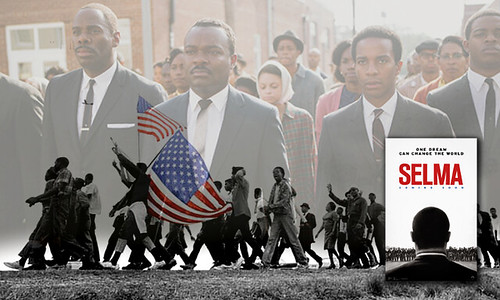
  • Selma (2014) - A chronicle of Martin Luther King's campaign to secure equal voting rights via an epic march from Selma to Montgomery, Alabama in 1965.

Asians/Asian Americans

  • Bend it Like Beckham (2002) - The daughter of orthodox Sikh rebels against her parents' traditionalism and joins a soccer team.
  • Better Luck Tomorrow (2002) - A group of over-achieving Asian-American high school seniors enjoy a power trip when they dip into extra-curricular criminal activities.
  • Gran Torino (2008) - Disgruntled Korean War veteran Walt Kowalski sets out to reform his neighbor, a Hmong teenager who tried to steal Kowalski's prized possession: a 1972 Gran Torino.
  • The Joy Luck Club (1993) - The life histories of four Asian women and their daughters reflect and guide each other.
  • The Namesake (2006) - American-born Gogol, the son of Indian immigrants, wants to fit in among his fellow New Yorkers, despite his family's unwillingness to let go of their traditional ways.

Hispanics/Latinos

  • Cesar Chavez (2014) - A biography of the civil-rights activist and labor organizer Cesar Chavez.
  • The Lost City (2005) - In Havana, Cuba in the late 1950s, a wealthy family is caught in the violent transition from the oppressive regime of Batista to the government of Fidel Castro.
  • My Family (1995) - This epic film traces over three generations of a Mexican American immigrant family's trials, tribulations, tragedies and triumphs.
  • Selena (1997) - The true story of Selena Quintanilla-Perez, a Texas-born Tejano singer who rose from cult status to performing at the Astrodome, as well as having chart topping albums on the Latin music charts.
  • Stand and Deliver (1988) - The story of Jaime Escalante, a high school teacher who successfully inspired his dropout prone students to learn calculus.

Native Americans/First Nations

  • Bury My Heart at Wounded Knee (2007) - A chronicle of how American Indians were displaced as the U.S. expanded west. Based on the book by Dee Brown.
  • On the Ice (2011) - In Barrow, Alaska, teenagers Qalli and Aivaaq find their bond tested when a seal-hunting trip goes wrong, resulting in the death of their friend.
  • Powwow Highway (1989) - A member of the Northern Cheyenne tribe of Lame Deer battles greedy developers as he tries to persuade the council to vote against a strip-mining contract.
  • Reel Injun (2009) - A documentary film that traces the history of the depiction of Native Americans in Hollywood films.
  • Smoke Signals (1998) - Two friends from the Coeur D'Alene Indian Reservation go on a road trip to retrieve the remains of a recently deceased family member.

Other

  • Crash (2004) - Los Angeles citizens with vastly separate lives collide in interweaving stories of race, loss and redemption.
  • Do the Right Thing (1989) - On the hottest day of the year on a street in the Bedford-Stuyvesant section of Brooklyn, everyone's hate and bigotry smolders and builds until it explodes into violence.
  • Invictus (2009) - Nelson Mandela, in his first term as the South African President, initiates a unique venture to unite the apartheid-torn land: enlist the national rugby team on a mission to win the 1995 Rugby World Cup.
  • The Kite Runner (2007) - After spending years in California, Amir returns to his homeland in Afghanistan to help his old friend Hassan, whose son is in trouble.
  • Rabbit-Proof Fence (2002) - In 1931, three aboriginal girls in Australia escape after being plucked from their homes to be trained as domestic staff and set off on a trek across the Outback.
  • Schindler’s List (1993) - In Poland during World War II, Oskar Schindler gradually becomes concerned for his Jewish workforce after witnessing their persecution by the Nazis.

I hope that you'll take the time to view a few of these movies as we grow in understanding, empathy and compassion towards one another. As always, personal friendships are the best way to learn about other cultures but watching films like those listed here can help us in the process.

Wednesday, February 10, 2016

Five Tips For Cross-Cultural Missionaries Within the U.S.

With some of my favorite people in 2010
When I first entered into vocational Christian ministry over twenty years ago, I had no idea of the personal growth path to which I was embarking and had no thought of the various ways that God would work in and through me in the ensuing years.

One of the most significant ways that I have seen God work in my life is in responding to His call to work cross-culturally within my own country and, more specifically, within the African American community through my time on the staff of The Impact Movement.

Although I'm unsure of the exact percentages, I know that there are a fairly small number of missionaries serving within the U.S. that are serving in a primarily cross-cultural context. For staff members in national campus ministries like the one with which I serve, Cru, most spend the bulk of their time ministering to those that are from a similar ethnic background.

As the Lord has taken me on this journey of ministering cross-culturally within the United States, there are several lessons I've learned along the way. Here are five tips for those who are ministering cross-culturally:

1. Be Yourself

Some of the best advice I received when I first began ministering among African American students was simply to "be myself." What others meant when offering this nugget of wisdom was that I didn't need to try to be someone I wasn't in order to impress or prove myself to black students. What was most important was that I needed to love those I was seeking to connect with and carry myself with humility and grace. I didn't need to try to "fit in" by adopting a hip hop style of dress, clumsily incorporating black slang into my conversation or pretending I had knowledge of black culture that I didn't yet possess. If I was perceived as being phony, then my credibility would go out the window.

While being aware of cultural values is important (see point #2 below), we missionaries can succumb to treading on cultural stereotypes, particularly when we initially begin to interact with a new culture. If we're basing our cultural assumptions only on what we've been taught as children or based on what media portrays to us, we run the risk of seriously offending and distancing ourselves from the very people we want to reach. So be yourself and demonstrate humility when you make mistakes. But be comfortable in your own skin.

2. Be a Learner

Along with authenticity, it's also important to be a learner. When entering into another culture, we will likely have to adjust to a myriad of cultural differences from what we're familiar with based on our own experiences. Some of these differences may be categorized as behavioral preferences like preferences for food, music or language, but some of them may be more "below the surface" such as time orientation, views on family or whether a culture is more individualistic or group oriented.

When ministering cross-culturally, we need to have a learning posture when interacting with the host culture. Learning directly through relationship is paramount and we can also learn about a culture through the books we read, movies we watch, news sources we pay attention to, churches we attend and a host of other ways.

When ministering within a culture where a language besides your own primary language is the norm, taking steps to learn the language is critical. Never consider yourself to have "arrived" and always pursue new learning opportunities.

3. Love the People & Their Culture

Quite simply, our ministry will lack fruit if we don't have a genuine and sincere love for the people that God has called us to influence. Jesus said that all people will know that we are his disciples by our love for others (John 13:35) and this is certainly the case for cross-cultural missionaries. It isn't our biblical proficiency, adeptness in apologetics or our ministry skills that will ultimately leave a lasting impact on people. Although these things are important for the missionary, it is God's love for them, demonstrated by the Holy Spirit working through us, that will have the most powerful impact on others.

Not only is it enough to simply love individuals, I think we need to also have a love for their culture. When I take the time to learn about someone's culture or when I make the effort to respect and honor that culture, it helps me eventually come to a place of genuinely loving that culture. This, in turn, opens the door for relationship with the people of that culture. If our normal posture is one of constant critique of the host culture while ignoring the negative aspects of our own, people will begin to tune out our message.

One of the highest compliments I ever received came from an African American colleague who said, "I know that you love me but I also know that you love my people. Because of that, I'll go into battle with you." When we love people and their culture, a powerful dynamic is unleashed within God's kingdom.

4. Find Mentors Who Are "Safe"

For those that serve in cross-culture ministry within our home country, I've found that most of us "hit a wall" after about 18-30 months. The honeymoon wears off, many of our idealistic notions of changing the world have evaporated and we might feel very alone. My story is no different. I found that some that I had once considered close friends now didn't seem to "get" my realities because we no longer had shared experiences. When confiding about my struggles or challenges in being a white man ministering among African Americans, I often received blank expressions when I hoped to received empathy.

As a tool of self-preservation, I learned that I had to be much more selective with who I was vulnerable with about my struggles and questions in ministry. I sought out and eventually found those of my own culture who had a similar ministry focus, as well as African American mentors that love me and believe the best of me. Over time I've become much more comfortable in knowing there are certain places and people where I can share about my experiences and there are some places where I simply don't go there.

In order to stay in cross-cultural ministry for the long haul, you need to find "safe" people who will walk along on this journey with you. When I refer to "safe" people I don't mean those that won't rebuke or exhort you when needed, but I do mean those that you know are for you and your good. It is those friends that can speak truth balanced with grace because of their love for you that will enable you to continue to press on.

5. Stay Spiritually Grounded & Focus on Jesus

You will make mistakes. You will fail. Things will not always turn out as you planned. But our personal relationship with God and remaining in spiritual community with others will help you remain in the game over time. Not to sound overly spiritual, but our personal prayer lives, walking in the Spirit, our commitment to daily reading of the Scriptures, journaling, personal and corporate worship, fasting, fellowship with other believers and the practice of other spiritual disciplines have helped me stay engaged during the highs and lows of cross-cultural ministry.

Although there have been challenges along the way, I'm learning that as one that is fully and completely loved by God, my value and worth is not dependent upon my acceptance by others or the perceived fruitfulness of my ministry. My desire is to keep my eyes on Jesus who endured the cross because of the joy that was set before Him (Hebrews 12:2).

Conclusion

God has not called us to be successful in the eyes of others but to be faithful to what He's asked us to do. Although cross-cultural ministry is extremely rewarding, it is also very hard. If God has called you to step out of your cultural comfort zone and to enter into the world of another for His sake, He has given you a holy calling. You may see much tangible spiritual fruit or you might not see the difference your life has made until the other side of eternity, but I encourage you to stay faithful to what God has commissioned you to do. It's worth it.

I recall going through a particularly difficult season of ministry a number of years ago. Our outreach was not progressing the way I had hoped and I was experiencing strained relationships with some others in our ministry. It was one of the many times that I've considered throwing in the towel and doing something else. I turned to the Bible and God led me to this well-known passage from the Old Testament:
"He has shown you, O mortal, what is good. And what does the LORD require of you? To act justly and to love mercy and to walk humbly with your God." (Micah 6:8, NIV)
When I feel overwhelmed or not sure what my next steps are, God often directs back to this verse. I take comfort in knowing that I need to: 1) Walk humbly with God, 2) To extend mercy to myself and others, and 3) To do what is right. This is what God requires of me. This is what God requires of you. Press on.

Tuesday, September 22, 2015

2015 Demographics for U.S. College Students

Photo Credit: US Dept of Education
The nation's college students are growing in number and our campuses continue to become more diverse. Taken from the most recent edition of The Chronicle of Higher Education Almanac and the Open Doors Report, the following statistics from the 2013-2014 school year contain some interesting facts concerning the current make-up of college students in the United States:

  • There are approximately 21 million college students studying within the United States.
  • Of those 21 million students, more than 4 out of 10 are American ethnic minorities and international students. 
  • Within the state of California alone, there are nearly 2.7 million students. This is an amazing 13% of the country's total! Of these students, over 1.7 million are American ethnic minorities and international students. 
  • Texas has over 1.5 million students in the state, including half a million Hispanic students. 
  • Primarily due to the presence of New York City, 1.3 million students attend college in the state of New York and nearly half of those students are American ethnic minorities and international students.
  • The number of Native American students across the country is approaching 200,000. 
  • Students of Asian American/Pacific Islander heritage now number close to 1.2 million students. 
  • There are 2.7 million African Americans on our campuses, over 13% of all students.
  • Hispanics and Latinos are rapidly growing in number and influence and now comprise well over 14% of all students, totaling over 2.9 million students. 
  • The number of international students currently studying in the U.S. is now over one million. 
  • In demonstration of the country's increasing cultural diversity, half a million of America's college students define themselves as being multi-ethnic.
  • Another 1.2 million students do not self-identify as belonging to any particular ethnic group nor do they define themselves as being multi-ethnic.
  • Students of European descent are still in the overall majority with 10.9 million. If current trends hold true, however, there will be no ethnic majority within the next few years.

What does this all mean? The college campuses of the United States are becoming more diverse, the coasts are rapidly growing and our cities are home to many of the nation's students. In order to reach these students, campus ministries like the one that I work with, Cru, need to adopt new approaches that will effectively reach: 1) students of color; 2) those that speak a primary language other than English; and 3) those in our major cities. The world is here. How will we respond?

Sunday, June 14, 2015

Embracing Our Ethnicity: A Lesson For Each Of Us

Photo Credit: YouTube
A bizarre story out of Washington state hit the news this weekend when it was revealed that the leader of the Spokane chapter of the NAACP, Rachel Dolezal, is actually white. While it's not odd that a leader within the NAACP would be white, what makes this story interesting is that Dolezal has been "passing" as an African American woman for at least most of the past decade.

Based on the reporting that has been done on her background, it appears that the 37-year-old Dolezal developed a strong connection to African Americans and black culture over the course of her life. Her parents had several adopted black siblings and she studied at Howard University, one of the premier historically black colleges within the United States. She went onto marry a black man and began darkening her skin, as well as wearing her hair in what most would consider more traditional African American styles.

What is Ethnic Identity?

So what is ethnic identity exactly? In its simplest sense, ethnicity refers to a group of people who identify with each other (and are identified by others) because of common factors like a shared history, physical appearance, cultural values, beliefs, customs, language, religion, national origin and other factors. In light of this, one's ethnic identity refers to the degree that one identifies with and belongs to a certain ethnic group or groups. When the Bible refers to ethnos -- a race or nation of people -- this is to which it is referring.

Because of our troubled history in the United States when it comes to ethnicity (e.g. the near genocide of Native Americans, the horrors of slavery, the internment of Japanese Americans during WWII, etc.), there are strong feelings when it comes to this issue.

In the example of Dolezal, at some point in her life, she chose to move from simply identifying WITH black people to identifying AS a black person. Her case raises serious questions about how we identify ourselves ethnically, how others identify us and why this is important.

Authenticity

The story of Rachel Dolezal is of particular interest to me because of some of the commonalities that I appear to have with her. I, too, developed a strong interest in black culture at a young age and have developed strong relationships with African Americans over the course of my life. Like Dolezal, I have held a leadership role in a predominately black organization, The Impact Movement, that serves the needs of the black community.

In my early years of ministry, I sensed that God was leading me into a ministry focus of black college students. Fortunately, I had several African American mentors that cautioned me to resist the temptation to try to become something that I was not in order to gain approval in black social circles. They shared with me how they knew of well-meaning white people that would attempt to prove how "down" they were with black folks by changing the way they dressed and or fumbling through feeble attempts at incorporating black slang into their conversation.

I'm grateful that this advice was afforded me early on in my journey of cross-cultural ministry. I learned long ago that no matter how much I loved my African American friends or how much I cared about issues that were important to the black community, I would never be black. God had made me a white man and if I was going to truly build relationships with those different than me, I needed to learn to become comfortable in my own skin.

Acceptance Within the Black Community

What I have learned over time is that being myself is all that anyone asks of me. If they're asking for more than that, it's not something I need to worry about. Granted, there have been challenges as a white man seeking to cross cultural lines where I've had to work hard to build trust and credibility. This, of course, is understandable. Because of the strained relations between the white and black communities throughout our country's history, there can be initial skepticism when I enter into predominately black environments.

But you know what I've found? I've learned that once most Africans Americans see that I care about them as individuals and about the issues that are important to them, then I've often experienced a high level of acceptance. I've learned that if I operate from a place of love and authenticity, then I'll be welcomed more times than not.

This is something that I wished Rachel Dolezal had learned earlier on in life. In reading about her story, it appears that she genuinely respects black culture and cares about black people. She's been a true advocate that has spent significant time in bringing attention to issues of concern to the black community. But she doesn't have to present herself with false claims about her ethnic heritage or upbringing in order to do so. According to my experiences, a white person that works tirelessly for African Americans will likely be embraced within that community.

God's Grace in Christ

Beyond the view that others may have of her, I hope that Rachel gains a greater understanding of God's love for her and His sovereign wisdom in choosing to make her a white woman. I believe that God has given each of us our ethnicity for His glory and to accomplish His purposes in the world. He can use who we truly are to make a true impact on the lives of others.

It appears that God has given Rachel Dolezal a genuine love for the African American community. This is a good thing. When we advocate for and identify with those that are ethnically different than us, the world is given an example of what it means to live out the gospel of God's grace. Just as Jesus left his heavenly home to identify with and live among us, we too can identify with others in a way that demonstrates our love for them.

However, we don't have to pretend we are something we are not. Even during His time on earth, Jesus never stopped being God. His divinity was not dependent upon his humanity. We, on the other hand, do need each other to grow in our humanness. And one of the most profound ways we can grow as people is to develop relationships with those different than us. I applaud Rachel Dolezal in her efforts to identify with African Americans, but I wish she would have not been deceptive in the process.

Author Brennan Manning refers to "the Imposter" as the false self that we make known to others for fear that our true self won't be accepted. We present an image that we think others will like rather than who we really are. I wonder if this is what happened with Rachel. I wonder if she thought that black people would never fully accept her if it was known that she was white. And that saddens me because I don't think it's based in reality.

But, even if it were true, there's a God that created her and fully embraces her within her ethnicity. Fortunately, I believe this applies to all of us. So whatever your God-given ethnicity might be, don't waste it. Embrace your ethnic identity as a gift from God to be used for His glory and your good. The world will be better for it.

Friday, January 16, 2015

Selma: A Movie Worth Seeing

Photo Credit: Sahil Khan
My wife and I saw Ava DuVernay's Selma last night. Focused on the voting rights efforts that took place in a small Alabama town in 1965, Selma provides a powerful glimpse into the leadership of Rev. Martin Luther King, Jr. and the Civil Rights movement that transformed our country.

One of the things that I appreciated most about the movie was that Dr. King was not presented as a perfect, Messiah-type of figure. DuVernay shows us King as the noble leader that he was but doesn't ignore some of the more unsavory aspects of his personal life of which many modern day Americans are unaware.

Similar to towering figures of the Bible such as King David or Simon Peter, Dr. King was an imperfect person that made himself available for God to do great things through him. Though obviously gifted as an orator and leader, Dr. King was just a man. But he was a man that was willing to sacrifice his personal comfort -- and eventually his life -- so that freedom and dignity could come to all women and men.

In focusing on King's humanity, Selma demonstrates the difference that fallen people can make in our world when submitted to God's service.

One of the scenes that I found most moving took place fairly early on in the film. King (played brilliantly by the talented David Oyelowo) finds himself alone late at night in the family kitchen. It is obvious that he is feeling the weight of his call while dealing with the stresses of family life in the midst of preparing to leave for yet another march. He slowly walks to the phone and places a call to the noted gospel singer, Mahalia Jackson. He asks her to sing for him over the phone. Though she had been in a deep sleep just seconds before, she breaks into a powerful chorus of "Precious Lord Take My Hand":
Precious Lord, take my hand
Lead me on, let me stand
I'm tired, I'm weak, I'm worn
Through the storm, through the night
Lead me on to the light
Take my hand precious Lord, lead me home
Just like us, Dr. King needed God's strength to do what God had called him to do. As we prepare to celebrate the MLK federal holiday this weekend, Selma provides a fitting reminder of how far our country has come...and how far we still have to go.

Jason Cook has provided a fuller review of the movie on The Gospel Coalition website. Here's a highlight:
"Selma does not cower away from the physical and emotional brutality of the struggle for African American voting rights in Selma, Alabama, during a three-month period in 1965. By concentrating on this historical vignette, Selma shines. 
Rather than approaching this biopic as a quest to compile the highlights of a venerated figure’s life, Selma director Ava DuVernay focuses on a tiny window of history that changed history. SCLC uniforms (black suits, white shirts, and thin black ties) and scarred stoic faces juxtaposed against the pressed and unkempt uniforms of police officers and state troopers as they clash throughout the film in raw and ugly dispute. 
Further, Selma does not cower from exposing the moral failings of Dr. Martin Luther King. While the impact of Dr. King’s leadership of the Civil Rights movement is magnanimous and will rightly reverberate into history, he suffered from the common condition of profound creaturliness. This fellowship with mere mortals is a surprising strength of the film. Dr. King appears, well, human. 
Throughout Selma he’s tired from long nights, distracted by threats to his family, fearful for the lives of the faithful, and doubtful concerning the ultimate end of the movement—a side of “Doc” we seldom see in grainy microfiche. The film tastefully addresses his smoking habit, his insatiable appetite for food, and his covert sexual promiscuity. Raw and honest, DuVernay portrays a terrestrial Dr. King who is pedestrian at worst and valiant at best—all the while honoring him as a towering historical figure worthy of remembrance."
To read the full review, please click here.

I highly encourage you to see this film. To find tickets for your local theater, please visit here. The dream lives on.

Wednesday, December 17, 2014

"A Time To Speak": Where Do We Go From Here?

Photo courtesy of Kainos Movement
A panel of black and white Christian leaders gathered at the National Civil Rights Museum in Memphis, Tennessee last night for a discussion about race and the Church that was carried live on the Internet. If you it, you can watch a recording of the panel discussion by visiting live.kainos.is.)

I joined with a diverse group of over 30 leaders from Cru at our Orlando headquarters to watch the two-hour livestream together and to participate in a 90 minute discussion afterward.

I won't attempt to comment on all that happened during the event (a couple of worthwhile summaries can be found at Reformed African American Network (RAAN) here and here) but, overall, I was pleased that this type of discussion was taking place. I would have preferred more woman on the panel and greater diversity in the ethnic and theological backgrounds of the panelists but those that participated did an admirable job.

In a country that has been historically divided along racial & ethnic lines, many of our churches have often trailed behind the broader culture in responding to racial injustice and actively moving towards unity across ethnic lines. I appreciated the emphasis that was placed on the importance of individual action and friendships in order for us to see healing in the Church. Although most panelists acknowledged the existence of systemic injustices, there was agreement that we each have a role to play.

In live-tweeting the event, there was a number of good comments that I captured. Here are a few that I felt were particularly poignant:
  • "Real change will happen around the dinner table. We have to do it where others may not necessarily see it." @trillianewbell
  • "Our immaturity as it pertains to the gospel and race has been exposed." @pastoremase
  • "At the end of the day, we don't know each others' stories. If we lack proximity, we will lack empathy." @bcloritts
  • "We're here at the Lorraine Motel where MLK was assassinated not because we've gotten it right but because we've gotten it wrong." @alberttate
  • "What changed for me? My friendships with African Americans has grown exponentially." @MattChandler74
  • "If we can't have those conversations in the Church, how can we expect the world to?" @darrinpatrick
  • "These stories are American stories. Our collective stories." @ThabitiAnyabwil
  • "The Church has allowed our racialized society to influence us more than the Christ." @DerwinLGray
  • Preempt the issues on abortion, on racism, and others, biblically. Go there first, and capture the vocabulary.” @JohnPiper
On a personal level, I was especially encouraged that a number of Cru leaders participated in this event within the context of multi-ethnic community. We had a healthy discussion after the livestream concluded and I trust that those dialogues will continue and, ultimately, will result in positive action. The discussion was great but the its true effectiveness will be measured in changed hearts and increased friendships across ethnic lines.

For me, I've already seen positive results. Just this morning at a men's small group Bible study through my church, we had a vigorous discussion about "A Time to Speak" and the current realities of race in America. As we shared our opinions, I realized that one of my friends in the group held a much different perspective than me. We had a tense, yet respectful, interaction where our perspectives were shared. 

After the group was over, this friend and I took the time to talk further. We listened to one another more fully and sought to understand where the other was coming from. We looked for common ground and challenged one another's assumptions. Our conversation ended with him asking for suggestions on practical ways that he can learn more about these issues with different perspectives than his own. 

It was a gracious dialogue between two Christian brothers with differing viewpoints yet both seeking to understand the other. Though we share the same ethnic background, we do not view these issues in the same manner. But we were able to talk about it and, hopefully, it will result in greater understanding on both our parts as we relate to those that live in different worlds than our own.

And that is my hope for what happens after "A Time to Speak." That honest and vulnerable dialogue will translate into greater empathy for one another. And that, eventually, that empathy turns into concrete loving action where people of various ethnicities build real and lasting friendships with one another. 

As much as I support the fight against unjust systems and structures, we could end up on an equal playing field yet still hating one another. Yes, let's fight inequality and injustice, but let's do so spurred on by the gospel and in the context of friendship and Christian brotherhood. We'll be all the better for it.

[If you're interested in learning more about what led me into caring so deeply about these issues, please check out a previous post of mine, How A Small Step Of Faith Started My Journey Into Ethnic Minority Ministry.]