Monday, January 31, 2011

Who Do American Teens Look To As Role Models?

Photo Credit: Hygiene Matters
"I'm not a role model... Just because I dunk a basketball doesn't mean I should raise your kids."
~ Basketball player, Charles Barkley

When Charles Barkley made the above quote in a now famous Nike shoe commercial back in 1993, a number of people faulted him for not viewing himself as a role model and for discounting the effect that he had on the young boys and girls that looked up to him as a basketball star. 

Many rightly claimed (in my opinion) that Barkley and others in the public eye are role models whether they want to be or not.  But the topic of role models does beg a deeper question.  Who SHOULD be role models for children?  Should the primary models for children be the celebrities they see on television or should it be the adults they interact with on a daily basis?

A recent study done by The Barna Group offers some revealing insights as to who, in fact, teenagers view as their primary role models.  Here is some of what Barna learned:
"So who do teenagers name as their role models? Even while limiting the answers to non-parents, family members still comes out on top. The most commonly mentioned role model is a relative—37% of teens named a relation other than their parent as the person they admire most. This is typically a grandparent, but also includes sisters, brothers, cousins, aunts, and uncles.

After “family,” teens mention teachers and coaches (11%), friends (9%), and pastors or other religious leaders they know personally (6%).

Notice that a majority of teens indicated that the people they most admire and imitate are those with whom they maintain a personal connection, friendship, or interaction.

Beyond the realm of the people they know personally, entertainers (including musicians and actors) were named by 6% of teens, followed by sports heroes (5%), political leaders (4%), faith leaders (4%), business leaders (1%), authors (1%), science and medical professionals (1%), other artists (1%), and members of the military (1%).

The high-profile leaders most commonly named were President Obama (3%) and Jesus Christ (3%). Other “celebrities” mentioned by multiple teenagers in the study included entertainers Tyra Banks, Rob Dyrdrek, Lady Gaga, Demi Lovato, Paul McCartney, Taylor Swift, Steven Spielberg and Oprah Winfrey. The only athletes who earned multiple mentions were LeBron James, Peyton Manning, Michael Phelps, Mike Tyson and David Wright. In the spiritual domain, besides Jesus, teens were most likely to admire Mahatma Gandhi and the Pope. Social and business leaders garnering teen attention included Walt Disney, Bill Gates, and Martin Luther King, Jr. The writers who captured the imagination of teens included Yumi Tamura (Japanese Manga artist) and Alan Moore (English comic book writer).

Respondents described a wide range of reasons why they named a particular role model. The most common rationale (26%) was the personality traits of that person (e.g., caring about others, being loving and polite, being courageous, and being fun were some of the characteristics mentioned most often). Another factor in teens’ thinking was finding someone to emulate (22%) or that the teen would like to “follow in the footsteps” of their chosen role model.

Encouragement is another reason for teens’ selections (11%), which included those who said the individual “helps me be a better person,” is someone who is “always there for me,” and is the person who is “most interested in my future.” Other reasons: the role model accomplished his or her goals (13%), overcame adversity (9%), works hard (7%), is intelligent (7%), performs humanitarian effort and activism (6%), maintains strong faith (6%), has great talent (5%), and exudes self-confidence (1%). Although not listed often, some teens identified wealth (3%), self-sufficiency (1%), and fame (1%) as the reasons for preferring a specific leader or role model."
While I still think that those in the public eye need to consider how their personal lives can affect the little ones that look up to them, it is good to know that most teens still recognize their family members and others that they interact with each day as the biggest influence on their lives. Since those responding to this survey were not allowed to list their parents as an answer, I think it is fair to assume that "parents" would have been the most frequently mentioned response had that been permitted. 

The media, entertainers, friends, teachers, religious leaders, and coaches can all have a profound influence on the life of a child, but it is still a parent that makes the biggest difference.  The love, support, instruction and guidance from an involved parent can do more for a child than anyone else can provide. To read more about the Barna study click here.  

Friday, January 28, 2011

Searching for a Cultural Common Ground

Photo Credit: autowitch
With the proliferation of new forms of media and entertainment options in existence today, it is becoming increasingly difficult to capture cultural capstones that cut across age, ethnic and cultural divisions. It wasn't that long ago that we all had to read the morning newspaper to learn of the previous evening's sports scores or had to wait until the evening newscast to learn about the events of the day.

With the advent of cable television, the Internet and social media like Twitter and Facebook, we are able to learn about breaking news in real-time.  Not only that but our news and entertainment choices are so varied and diverse that there are few places that "everybody" joins in together.

NPR touches on how this affects our ability to relate to one another across cultural lines:
"American culture is sliced up in so many different ways that what's popular with one group can go virtually unnoticed by another. Univision, for example, is watched by millions of Latinos in the U.S., but millions of other Americans couldn't tell you what channel it's on.

What makes us laugh on TV isn't as broad-based as it once was. At its peak in the mid-1980s, The Cosby Show had 30 million viewers. Today's top-rated sitcom, Two and a Half Men, gets more like 15 million.

Since we're not all watching the same shows, "water-cooler moments" are harder to come by. Dan Schneider, a TV veteran and executive producer for Nickelodeon, says a show like Modern Family is a perfect example. "[It's] a really great comedy that's popular and new that's on the air right now," he says, "but if you go walk around the mall and say, 'Did you see last week's Modern Family?' how many people out of 10 are going to say, 'Yeah, I saw it?' " Schneider believes not that many. "The TV markets are so nichey that even a popular show isn't watched by most people you're going to run into."

In other words, there is no one, dominant cultural conversation.

The same is true for the music industry. Today's best-selling album is selling a lot less than its counterpart of 10 years ago. Rae-Hunter of the Future of Music Coalition says this fragmentation has opened up the world for creators and consumers alike.

"The arrival of the Internet to some degree leveled the playing field, and that allowed a plethora of folks who otherwise would've had no shot of getting on commercial radio to be heard," says Rae-Hunter.

iTunes, webcasts, Pandora: There are many more "pipes" delivering the goods than there used to be, Rae-Hunter says. "It's an amazing time to be a fan."

Fractured media is also turning the advertising industry upside down. Fay Ferguson, is co-CEO of Burrell Communications, an ad agency that designs marketing campaigns aimed at African-American consumers. "It's ushering in a totally different era of communications," Ferguson says.

She says American culture has been fractured for a while. In fact, Burrell Communications was founded on "the principle that black people are not dark-skinned white people." She says the agency knew that African-Americans were a separate, viable market. She says there have always been many American cultures. "But technology has been an enabler," Ferguson says. "So now there's a way to get to these smaller groups efficiently."

Ferguson says targeted marketing is the name of the game now more than ever.

In such a fractured society, is America at risk of losing a common culture? Rosenberg of The Atlantic says maybe. But she also thinks it will make us appreciate the mass cultural events that do occur even more, like the end of the Harry Potter series or Michael Jackson's death.

Rosenberg cites Jackson's death as one of the rare moments that affected millions of people: fans, former fans and those around the world who simply recognized his influence. "It was enormous because we were united in a way that we aren't normally," Rosenberg says. "It added significance to the event."
For as much discussion as there has been about a post-racial America in the wake of President Obama's election over two years ago, there is still much that demonstrates that there are still many cultural distinctives among the various ethnic groups that exist within the United States.  There is no "one size fits all" approach in reaching out to and getting our messages across to the 300 plus million that live in our country.

Though we share a common American culture, how we choose to live in and experience that culture is as diverse as our population.  For those of us in Christian ministry, we must recognize that reaching out to a diverse people means that we must learn about what matters to those we are seeking to reach and to speak in the modes of communication in which they are accustomed to sharing information.  The message may be the same but how it gets shared is radically different than a generation ago.

(h/t to Racialicious)

Wednesday, January 26, 2011

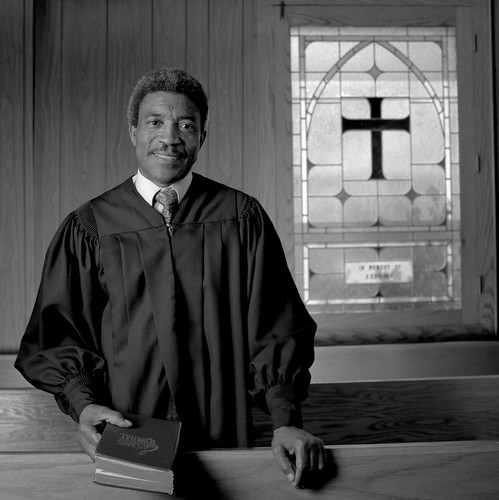
The Perfect Pastor

Photo Credit: ben110
The job of the pastor is a rewarding, yet difficult assignment. Not only are pastors expected to faithfully teach their congregation the Word of God and play a nurturing role in the spiritual lives of others but they are also saddled with a number of expectations that can, at times, require extraordinary powers to fulfill.

Here is a bit of a humorous look at "The Perfect Pastor":
"The perfect pastor preaches exactly 10 minutes. He condemns sin roundly but never hurts anyone’s feelings. He works from 8 AM until midnight and is also the church janitor. The perfect pastor makes $40 a week, wears good clothes, drives a good car, buys good books, and donates $30 a week to the church. He is 29 years old and has 40 years experience. He never forgets a name and spends most of his time praying to God. Above all, he is handsome.

He also knows when somebody is sick and needs visitation even without anyone telling him about it. He loves to spend time with his family and the perfect pastor has no problem with you dropping in unexpectedly. And he also spends most of his time in preparation to speak God’s Word. He remembers everyone’s birthdate and of course, their anniversary dates as well. Before and after services, he never fails to speak to each person present and will also take the time to listen to you for 15 minutes and pray for each person no less than 10 minutes after listening to them.

The perfect pastor always smiles and tells you what you want to hear. He also goes out to eat after church with each individual family, spreading his time evenly between all, and he also pays for all their meals. The perfect pastor eats nutritiously, gets his rest, exercises daily, and is always there to listen to you night or day. The perfect pastor has a burning desire to work with teenagers, and he spends most of his time with the senior citizens. He smiles all the time with a straight face because he has a sense of humor that keeps him seriously dedicated to his church. He makes 15 home visits a day and is always in his office to be handy when needed.

The perfect pastor always has time for church council and all of its committees. He never misses the meeting of any church organization and is always busy evangelizing the unchurched. He meets with the all the other pastors in town because they all have so much time on their hands. He also stays focused on the vision of the house. And he attends all the town meetings for PR’s sake. He takes family vacations and attends all the latest church and ministers conferences and listens to your favorite TV preachers and is completely up to date on each prominent TV preacher’s messages. He spends all day each Saturday preparing the Sunday sermon, and he focuses on his family too. He also doesn’t overburden the church finances, so he holds down a full time secular job as well. He never spends your tithes on his children’s Baskin Robins Ice Cream cones." (Author unknown)
Why don't you take a moment today to thank your pastor for the role they play in your life and let them know that you are thankful for them. I'm sure they'll appreciate it.

(h/t Bill Reichart via Buzzard Blog)