Sunday, February 24, 2013

Five Things On Social Justice

Photo Credit: crunklygill
Here are 5 Things About Social Justice from Tall Skinny Kiwi:
"1. We won't solve the problems of our city by loving the poor but despising the rich. The poor need resources and the rich have resources. Lets bring them together.
2. We won't solve the problem of hunger by throwing cans of food at people without empowering them to grow and cook their own food.
3. We won't solve the problem of homelessness by sentencing people to a lifetime of unaffordable mortgage payments for a house that is too large for their needs and too expensive to heat or cool when we can offer sustainable building solutions and alternative residential communities.
4. We won't solve the problem of unemployment by crippling people with student debt for a qualification that might not actually land them a job when we could assist them to become creative and successful entrepreneurs.
5. We won't solve the problem of global poverty by sponsoring people to do nothing except to look poor and needy for our photos (somebody say mission porn) without freeing them to live sustainably, creatively and to put their gift into the world."
To read the rest of this post please click here.

Tuesday, January 29, 2013

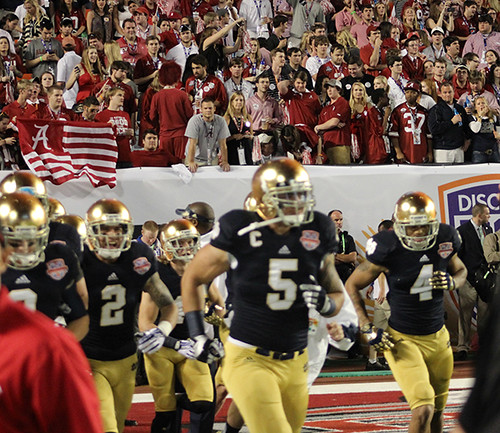
How Culture Might Have Influenced The Manti Te'o Hoax

Photo Credit: Matt_Velazquez
There are many questions that still remain about the hoax that led many to believe that Notre Dame football player Manti Te'o had a girlfriend that passed away in September of 2012. As we now know, his girlfriend was not real and it was all just a cruel prank.

The question that is forefront in many of our minds is: How could Te'o have been fooled? He appears to be an intelligent guy, and is well-known. How could this have happened? Remarkably, it seems that other athletes have also fallen victim to the trap of entering into online relationships with "imaginary" individuals.

In Te'o's case it seems that there may have been cultural factors that were at play that contributed to his involvement in this hoax. For many of us in the majority culture, we may be quick to dismiss the suggestion of cultural influences on something such as this. But in an intriguing piece in The Atlantic Monthly, Ilana Gershon offers some insights into Samoan culture that may explain some of the dynamics affecting the Te'o story.

Gershon writes:
"As an ethnographer, I heard a number of stories that sound almost exactly like Te'o's story—naïve Christian golden boys who had been fooled by other Samoans pretending to be dewy-eyed innocents. Leukemia was even a theme—I guess Samoan pranksters keep turning to the same diseases. 
I heard these stories as gossip—women in their late teens or early 20s would tell me about how a much sought-after man in their church had been fooled. I never talked directly to a victim or a hoaxer about this, so I didn't write about this in any of my academic work. I did this fieldwork before Facebook or cell phones, and even before email became widespread outside of college circles. All the stories I heard involved husky voices on telephones, and maybe a letter or two.
What strikes me as particularly Samoan about Te'o's comments to ESPN is that he opens with a very familiar Samoan worry. It is not his own shame he is concerned about; he is worried about the shame this will bring to his whole family, all those who share his last name. Concern about family comes up time and time again in his tale. 
So much of this news story is hauntingly familiar to me from fieldwork with Samoan migrants: the role of family, the half-hearted attempts to verify a person's identity that fail, the strong spiritual connection Te'o thought he felt with Kekua, and the hoax itself. He chooses family reunions over possibly seeing his elusive girlfriend. He understands when she is forced to do the same. In Samoan life, family obligations always triumph, and often seem to keep lovers apart.
Te'o was deeply concerned about how his parents would react to his new girlfriend, with the tacit undercurrent that this was not just about two people falling in love, but about two families entering into a complex alliance that will involve many mutual obligations. 
He tried to find ways to have Kekua enter into his family's circle as a potential Christian daughter-in-law, encouraging her to text passages of scripture to his members of his family.
And I am not surprised that the Samoans playing the hoax felt the need to tell Te'o that his girlfriend died only hours after Te'o texted them that his grandmother had died. His girlfriend's family might have been obligated to send money for the funeral. If they did, the family name would be announced publicly at a large Samoan funeral in thanks. The hoax might have started to cost the hoaxers money and they would risk exposure, unless they took drastic measures, like pretending the girlfriend had died. 
The only part of Te'o's story that I found strange was that, upon hearing that his girlfriend had died, he only sent white roses to her family, and his parents also only sent flowers. The Samoan migrants that I knew would have sent money, and the amount would have signaled how much the family valued the potential alliance. Flowers alone really wouldn't have cut it."
After considering this whole situation through a cultural lens, perhaps this may not seem as odd to many of us as it initially appeared to be. Our cultural background often influences how we behave and also how we respond to the behavior of others. I'm willing to consider that at least some of these cultural factors may be a part of this developing story.

To read the rest of Ilana Gershon's piece on Te'o please click here.

(h/t to friend John Waidley for the link.)
Tuesday, January 22, 2013

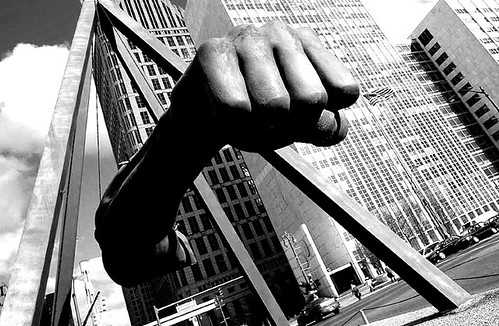
Christians Are Making A Difference In Detroit

Photo Credit: Dogs New Clothes
Katelyn Beaty of Christianity Today has written a compelling article highlighting some of the work of Christians that is helping to revitalize the Motor City. Though many people have given up hope on a city that is close to my heart, God is not finished with Motown. Many followers of Christ are faithfully seeking to be God's hands and feet in this great city.

A highlight from the article:
"Glimmers of hope—economic hope, at least—have begun flickering throughout the Motor City. Start-ups pushing tech innovation and sustainability have flocked to Detroit, drawing young entrepreneurs from New York City and Silicon Valley. Stik.com moved its headquarters from San Francisco to the M@dison Building (purchased by billionaire Dan Gilbert) recently. A Whole Foods is slated to open in the hip Midtown area early this year. 
Among these giants, young entrepreneurial Christians are joining Detroit's slow turnaround. Margarita Barry, a Detroit native, has at age 26 launched three start-ups: 71-Pop, a retail store that carries locally designed clothing and wares; Detroit Design Lab, a web development firm for local nonprofits; and I Am Young Detroit, a website that spotlights other entrepreneurial Detroiters and will this year begin offering them micro-grants. 
"I want to empower young people to pursue their passions within the city, so they're putting their dollars in the city and creating jobs," says Barry, who came back to Detroit in 2007 after earning her bachelor's degree in Ohio. "You don't have to be a Donald Trump to change Detroit." 
Diallo Smith was "bent on making money" as a financial analyst in Houston when, he says, God intervened and redirected him to pastoral ministry. When he and his wife returned for a wedding in 2006, "we both felt God calling us back to Detroit," says the pastor of Awakenings, which meets at the Detroit School of Arts in Midtown. But Smith found that "newer churches in urban centers [face] sustainability issues, because economic realities are different than in the suburbs." To both bolster the downtown economy and offer a unique third space for locals, Smith is launching a table tennis social club, the first of its kind anywhere. 
"Imagine Kanye West playing Ping-Pong with Tony Blair with dub-step playing in the back-ground, surrounded by a café and wine boutique—that gives you a sense of what Drive is." Located in a downtown commercial hub, Drive will operate much like a bowling alley, charging visitors per hour per table, or for unlimited membership. Smith says the model is strategic in more ways than one, allowing Christians to form relationships with Detroit entrepreneurs, which is what has happened at Awakenings' art gallery. 
"We Christians need to be at the forefront of being imaginative, creative, and innovative in bringing economic viability for cities that are hurting," he says. The key for Christians, though, will be doing so in a way that rightly remembers their city's history—and their neighbors. "Newcomers come in without a sense of history and act as though Detroit is a blank canvas," notes Mark VanAndel, pastor of discipleship at Citadel of Faith. 
Pastor Carey remembers watching Detropia, a new documentary about post-industrial Detroit. "One interviewee said, 'I'm an artist and could never afford to live like this anywhere else; if this doesn't work out, we don't lose anything because we're at the bottom.' 
"When he said that, it was like a knife went through me," says Carey. "This is 'the bottom'? You can't imagine the grief a person feels when this is the place that is home. I didn't realize how deeply I'd be offended when other people, even Christians, would joke about Detroit," says Foster. "It's like they were making fun of my kid."
To read the rest of the article please click here.