Showing posts with label schools. Show all posts

Saturday, January 14, 2017

Weekly Web Roundup (1/14/17)

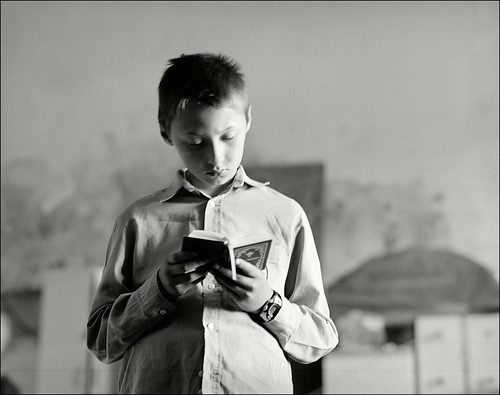
Photo Credit: misha maslennikov
Here is a collection of items from around the web that caught my attention this past week:

The 5 (Unwritten) Rules of Honor-Shame Cultures  (HonorShame.com)
"In collectivistic societies, identity is defined by the group you belong to. When two people meet, one of the first items of conversation is figuring out which family, clan, or village the other person is from. Since honor is a shared commodity, what one person does brings honor (or shame) upon the entire community. Children are taught from an early age how to bring honor to the family, and people are expected to be loyal to their community, even at personal cost. In Western cultures, family is much more of a voluntary association. At the age of 18 or so, young adults are encouraged to venture out from the home to “find themselves” or “establish their own lives.”"
How to Destroy Your Child Through Sports by Ed Uszynski (Athletes in Action)
"In spite of mini-movements of outcry regarding poor parent and coach behavior at youth events and the intense pressure being put on kids to perform, many of us seem committed to staying on a course that ruins our children’s ability to enjoy games. Instead of sports being experienced as something good, a category called “play” that God created for our good and His glory, too often we use our kids’ playground to exorcise our own demons. 
In more than 25 years of listening to athletes from youth to professional levels process their experience of sports, I’ve learned that these parental behaviors can be counted on not only to ruin their experience of play, but also to create multi-layered psychological and spiritual maladies that stick throughout life."
9 Steps to More Ethical Fundraising (A Life Overseas: The Mission Conversation)
"We were doing all the things we were taught to do—pray, write newsletters, make calls, send letters, schedule meetings—but after two years, we felt stuck. We were at about 50% of our goal and couldn’t seem to make any traction. One day, I just felt I needed to do something to make a statement to our potential supporters that we were as serious about this as we possibly could be and that we held them and their potential donations in the highest esteem. So I decided to write down the ways in which we were committing to respect them and their sacrifice. 
I called this our “Fundraising Code of Ethics.” To me, it was a public covenant we were making to hold ourselves to a standard of maturity, transparency, and responsibility. By making it public, we were welcoming our supporters to hold us to this standard, but we also warned them we would never have a perfect record and asked them to be gracious with us. Like every healthy relationship, trust is absolutely crucial. We are all aware if donors trust you they are more likely to support you. What we learned is that we also need to have enough faith in our supporters to be transparent with them."
Racial Divides in Spiritual Practice (The Barna Group)
"Black communities tend toward communal rhythms of spiritual development while white communities prefer a more individualistic setting. It is unsurprising therefore that white Christians are more likely to view their spiritual life as “entirely private” (42% compared to 32%). Black Christians, on the other hand, are much more likely to believe their personal spiritual life has an impact on others—whether they are relatives, friends, community or society at large. For instance, black Christians are much more likely to believe that their personal spiritual lives have an impact on broader society (46% compared to 27%). 
This was a strong belief of Martin Luther King, and it appears to have had great staying power. He fundamentally believed that one’s personal spiritual life had implications for societal justice, and he called Christians—on both sides of the debate—to bring their faith to bear on the struggle for civil rights, to which he dedicated his life. This impact is also tied to the approach to evangelism: half of black Christians (50% compared to 34%) believe it is their responsibility to tell others about their religious beliefs, further reinforcing the public / private contrast between both groups."
The Longstanding Crisis Facing Tribal Schools by Alia Wong (The Atlantic)
"Children who are disciplined in school are far more likely to end up in prison as adults; it goes without saying that being disciplined as a child via formal law enforcement has similarly deleterious, if not worse, effects. The alleged practices at Havasupai Elementary are, the suit contends, characteristic of those at tribal schools across the country. Indeed, a March 2014 U.S. Department of Education report found that Native Americans across the country are disciplined at disproportionate rates. Unsurprisingly, they’re also incarcerated at a rate 38 percent higher than the national average."
Repealing Obamacare without a Replacement: How It May Hurt Small Church Pastors and Church Planters Near You by Ed Stetzer (Christianity Today)
"I’m not defending Obamacare, it’s success, and certainly not its implementation. And, furthermore, this is not just about pastors—it impacts a whole lot of people in your church (and not in your church). But, I’ve talked to a lot of pastors about this topic, so I’ve made that my focus here. In short, the point here is that big policies aren’t simply big policies. And when they appear (or actually are) broken, there isn’t a simple answer. Big policies impact real people. A plan approved by Congress impacts millions of everyday, hard-working people. And I’ve only focused on one group here, small church pastors and church planters, since I have often heard about this from church planters. Actually, I have spoken in conferences on this very topic: how the ACA has opened the door for many church planters to get insurance."
Twin Sisters Separated at Birth Reunite on Good Morning America

Two sisters, each adopted from China by different American families, meet in person for the first time on ABC's "Good Morning America." Here is their touching story.


Saturday, September 24, 2016

Weekly Web Roundup (9/24/16)

Photo Credit: Victor Björklund
Here are some interesting stories from around the web that I've seen during this past week:

Segregation Is Still Alive at These Christian Schools by Jonathan Merritt (The Daily Beast)
"While Catholic schools have existed throughout U.S. history, private Christian schools emerged en masse in the aftermath of the civil-rights movement. The Supreme Court declared public-school segregation unconstitutional in its unanimous Brown v. Board of Education decision in 1954. Many school systems, particularly across the South, resisted compliance while some families saw the handwriting on the wall and decided to act. Fearful at the thought of their children mingling with black students, many white Christian families founded private “segregation academies” to skirt the law. Many were “Christian” institutions, and fundamentalist evangelicals founded several of the most prominent ones. Non-Catholic Christian schools doubled their enrollments between 1961 and ’71."
I Used to Be a Human Being by Andrew Sullivan (Select/All)
"I tried reading books, but that skill now began to elude me. After a couple of pages, my fingers twitched for a keyboard. I tried meditation, but my mind bucked and bridled as I tried to still it. I got a steady workout routine, and it gave me the only relief I could measure for an hour or so a day. But over time in this pervasive virtual world, the online clamor grew louder and louder. Although I spent hours each day, alone and silent, attached to a laptop, it felt as if I were in a constant cacophonous crowd of words and images, sounds and ideas, emotions and tirades — a wind tunnel of deafening, deadening noise. So much of it was irresistible, as I fully understood. So much of the technology was irreversible, as I also knew. But I’d begun to fear that this new way of living was actually becoming a way of not-living."
How Apartheid Haunts a New Generation of South Africans by Kenichi Serino (The Atlantic)
"Over two decades after the end of apartheid, a vast gulf remains between the experiences of South Africa’s white students and black students, like Shikwambane, who’d managed to gain entry to Wits despite the poor facilities and shoddy resources at the public schools in the rural areas and townships where many of them grew up. Formerly all-white high schools, by contrast, are well-resourced and supplemented by contributions from parents and alumni. They also send students to South Africa’s best universities, and provide opportunities for black students from poor backgrounds. 
As a result, universities are now among the places that best represent the anger of the post-apartheid, or “born free” generation. This is a generation facing a grim irony: freer than their parents, but lacking the means and institutions to truly capitalize on that freedom. Many find themselves limited by what they’ve increasingly come to view as an incomplete social and political transformation, one that has simply entrenched the inequities of an age they’d been taught had long since passed."
The Origins of 25 Fall Traditions (Mental Floss)
"If your fall bucket list includes carving jack-o’-lanterns, sipping apple cider, and toasting s’mores over a bonfire, you’re in good company. But when you stop to think about it, many of our autumnal traditions—like scooping out pumpkin guts, asking strangers for sugar, and wandering aimlessly through cornfields—are pretty bizarre. Here are the reasons behind some of our favorite fall pastimes."
Today's Kids Don't Quite Know What to Make of the Atari 2600 (Mental Floss)
"Technology has changed a lot in the past four decades, which means that kids today sometimes don’t know what to make of the gadgets their parents grew up with. Video game fans might remember the Atari 2600 (originally called the Atari VCS), the retro home console that helped rec room gaming go mainstream after its initial release in 1977. At the time, the bulky Atari 2600 was the height of sophistication. Now, as YouTube channel Fine Brothers Entertainment captures in its latest “Kids React” video, it’s simply a puzzling relic from the past for Generation Z."

Tuesday, August 30, 2011

How Children Can Thrive In Public Schools

Christian parents have a variety of options these days for educating their children. From homeschooling to private schools to charter schools to public schools, I am of the persuasion that there is no "one size fits all" approach to schooling options for Christian parents. We must each seek the Lord on what would be the best approach for our family and trust Him with how He leads us.

For our family, my wife and I have chosen to send our children to public schools. We have been pleased with their teachers, the education they have received and the environment in which they are able to receive their formal education. We know that for some families public schools may not be the best choice but for ours we believe it is.

Tim Challies has written a wonderful review of a new book, Going Public: Your Child Can Thrive in Public School by David & Kelli Pritchard with Dean Merrill. The purpose of the book is to help guide parents that have children in public schools on how to make their children's experience the best possible. Challies says this:
"What the Pritchards do is simple: they allow us into their home and family, telling us why they made the decision to public school and then showing us how they have gone about it. It’s not like they public school out of ignorance. To the contrary, they do what they do out of conviction that this is the way they can best raise their children in the fear and admonition of the Lord. That word “fear” is important to them. Following Proverbs, they say that the fear of the Lord “is the foundation on which all learning, all knowledge-gathering, all schooling should be built.” To do that, they focus on instructing their children from their earliest days in loving the Lord with all of their heart, soul, mind and strength; on learning unconditional obedience to their parents; and on attaining self-control. With these values being instilled in their children, they are ready to guide them through their education.

The most valuable lesson of all, at least in my view, is that public schooling is a family affair. The decision to place children in the public education system is a decision to have the whole family involved in this system. They say, “We should not think in terms of sending our child off by himself to ‘the mission field.’ We go there together. This is a family expedition. When we show up each August to enroll our kids for another school year, we are enrolling our family into the life of this institution. This is a joint venture.” This means that mom and dad are involved not just with the children, but with the school and teachers and leaders.

A second valuable lesson is that is the lesson that all parents are homeschoolers. The Pritchards make it clear that public schooling still calls for the parents to teach their children and to be involved in all that they learn. No good parent can abdicate all of the children’s education to other people.

There are many other lessons, of course. Some of them are broad in application while others are more specific. What I appreciate, though, is that all have come out of the testing ground of their own family. Through it all the Pritchards show their unshakeable belief in the sovereignty of God, their trust in his promises and their heartfelt desire to honor him in all things."
Having our children involved in the public school system can be a wonderful opportunity for Christian parents and families. But so, too, can other schooling options. Raising children in today's society is no easy task but I believe we can trust God to care for children no matter where they receive their formal education.

To read the complete post by Tim Challies please click here.